Two Days in Cheongsong: Sleeping in a 200-Year-Old Hanok, Hiking Misty Juwangsan, and That One Perfect Apple Hotteok
Four hours by bus from Seoul, the Slow City of Cheongsong waits. Sleep on heated floors in an 1800s hanok, hike through fog-wrapped Juwangsan peaks, and reward yourself with apple honey hotteok on the way down. A place where time forgets to rush.

Fog clung to the peaks like something alive. Standing under the hanok eaves, looking up, the mountains seemed to float inside the clouds. No sound. One bird call, one breath of wind. That's how Cheongsong begins.
At a Glance
| Item | Details |
|---|---|
| Route | Seoul → Cheongsong → Deokcheon Hanok Village stay → Juwangsan hike → apple snacks → Seoul |
| Recommended Days | 2 days (1 night, 2 days) |
| Budget | ₩150,000-250,000 (per person, hanok stay included) |
| Best Season | Oct-Nov (autumn foliage), Jan-Feb (frozen waterfalls) |
| Highlights | 1800s hanok overnight, misty Juwangsan, apple honey hotteok, Slow City silence |
Seoul to Cheongsong: Four Hours by Bus
The express bus from Seoul takes about four hours and costs ₩20,000-25,000. Slower than a train, but this is the only way into Cheongsong.
You can feel the city falling away through the window. Apartment towers give way to rice paddies, then mountains closing in. There's a rest stop halfway, stretch your legs, grab a snack. When you step off at Cheongsong Terminal, you'll find a handful of small restaurants and cafes. Eat first. Everything else can wait.
Getting around: Public transit inside Cheongsong is sparse. Your hanok host will likely offer rides, or you can call a taxi.
Deokcheon Village: Sleeping in an 1800s Hanok
Drop your bags at the hanok and your first day begins.
Deokcheon Village is a cluster of hanok houses built in the 1800s, once home to wealthy families whose estates still stand. The scale surprises you. People say hanok architecture is built in harmony with nature, here, you actually feel it. Stand in the courtyard and there are mountains behind you, open fields ahead, sky above the eaves.
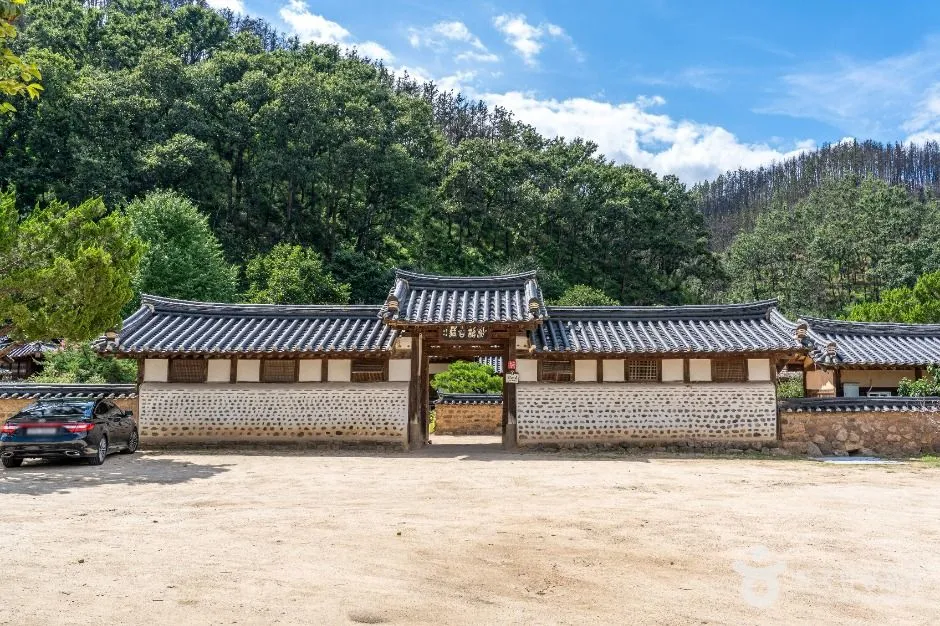

Ondol, Korea's traditional underfloor heating. Even in winter, one blanket is enough. The wood smells like something old and alive, and morning light filters through the hanji paper doors. No hotel can give you a night like this.
The village holds a "Slow City" designation, and the name delivers. Time genuinely moves differently here. In early autumn, the village supposedly fills with pink cosmos flowers, we missed the season this time, but that's a reason to come back.
Stay: ₩50,000-100,000/night for hanok stays. Weekends are pricier; weekdays are quieter and more peaceful.
An Afternoon That Stopped at a Hanok Cafe

Wander through the village and you'll find a hanok cafe tucked away.
Order the green tangerine tea. The tangerine tartness hits first, bright, citrusy, then a slow warmth settles in. Get the apple toast too. Sliced Cheongsong apples with melted cheese on top, sweet and savory colliding in a way you didn't expect. ₩6,000-8,000 for tea and toast.

From the maru floor, you can see hanok rooftops and mountains through the window. Bring a book. There's no reason to rush this afternoon.
Juwangsan: A Different World Inside the Fog

Day two. Your host drives you to the Juwangsan entrance.
Apple orchards line both sides of the road, Cheongsong is famous for its apples, after all. At the entrance, vendors sell apple hotdogs, apple bungeo-ppang (fish-shaped pastries). You tell yourself you'll eat on the way back. Keep walking.
Three Hours Round Trip to Yongchu Waterfall
Juwangsan National Park entry is ₩3,000, less than a cup of coffee to enter a national park.
The trail is well-maintained. Beginners can handle it comfortably. Rock formations rise on both sides like walls, and stream water runs beneath your feet. In autumn, fallen leaves cling to the rocks, red, orange, yellow scattered across stone.


When you reach Yongchu Waterfall, the water is startlingly clear. You can see the bottom. On dry days the flow is gentle, but that glassy depth is enough. In winter, the entire waterfall freezes solid, people come back in January and February just to see it.
Trail info: Yongchu Waterfall round trip takes about 3 hours. You can see both the upper and lower falls. There's a small cave along the way. Take your time with photos, the distance is perfect for a relaxed pace.
Apple Honey Hotteok on the Way Down: This Is Cheongsong
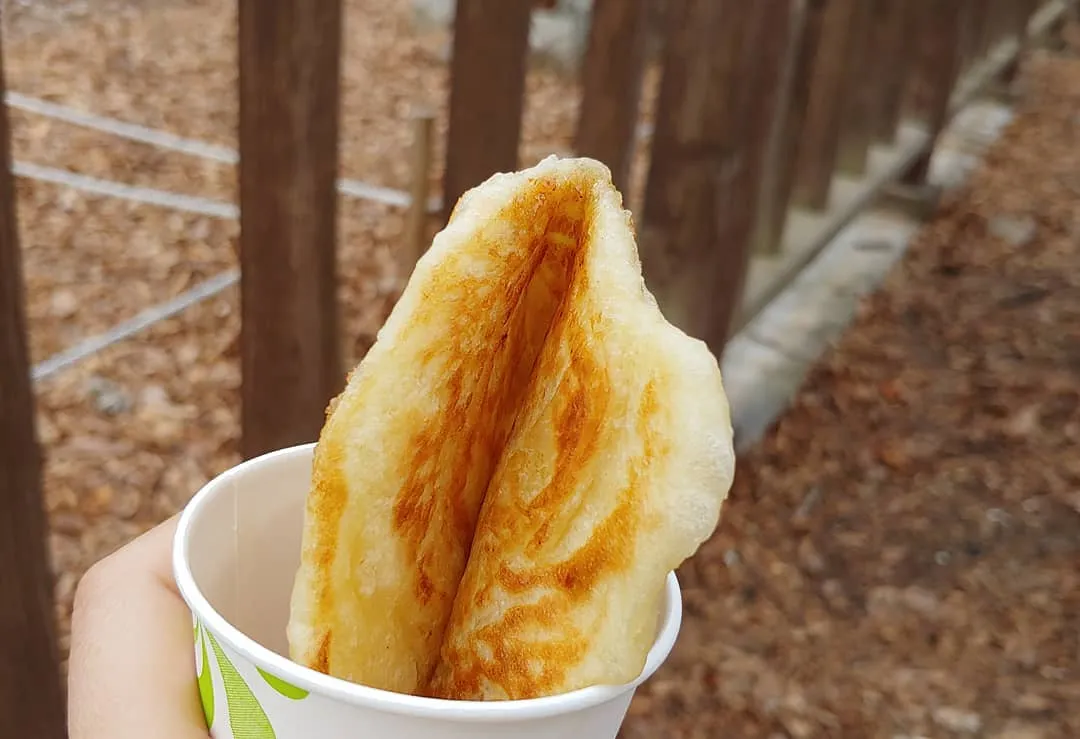
Back at the trailhead, you finally get that apple honey hotteok.
Bite through the chewy dough and hot honey bursts out. Apple chunks crunch between your teeth, followed by the nuttiness of roasted seeds. ₩2,000-3,000, pocket change for a snack, but after coming down the mountain, nothing tastes better.
Back at the hanok that evening, pour yourself a glass of Cheongsong apple makgeolli. Makgeolli is Korea's traditional fermented rice drink, and in Cheongsong they brew it with local apples. It's cloudy, smooth, with a gentle apple note underneath. Low alcohol, one glass after a long day and sleep comes easy.

Practical Info
| Item | Details |
|---|---|
| Seoul → Cheongsong | Express bus ₩20,000-25,000 (approx. 4 hours). Direct bus to Cheongsong |
| Getting Around Cheongsong | Public transit is limited. Use taxis or ask your host for pickup |
| Hanok Stay | ₩50,000-100,000/night (Deokcheon Village). Ondol floors are the experience |
| Juwangsan Entrance Fee | ₩3,000 (adults) |
| Hiking Trail | Yongchu Waterfall round trip approx. 3 hours. Beginner-friendly |
| Meals | ₩8,000-15,000 per meal. Restaurants near Cheongsong Terminal |
| Apple Snacks | Hotteok ₩2,000-3,000, apple hotdog ₩3,000 |
| Apple Makgeolli | ₩5,000-8,000 per bottle. Great as a souvenir too |
| Best Season | Oct-Nov (foliage), Jan-Feb (frozen waterfalls), Sep (cosmos flowers) |
| Recommended Duration | 1 night, 2 days. A day trip from Seoul doesn't work |
| Currency | Korean Won (₩). Check current rates at XE.com |
What Cheongsong Leaves You With
Standing under the hanok eaves on that foggy morning, looking up at the mountain, there was no sound. One bird call, one gust between the trees. Sounds you'd never hear in Seoul.
Cheongsong isn't flashy. It's deep. The smell of old wood in an 1800s hanok. The warmth of an ondol floor against your back. The impossible clarity of Juwangsan's stream water. The moment hot honey explodes from an apple hotteok between your teeth. These things stay in your body long after you leave.
Next time, winter. They say Yongchu Waterfall freezes completely, I want to see that with my own eyes. And September, too. The village draped in pink cosmos. There's always a reason to come back.
Resources
Helpful links mentioned in this article.
We may earn a small commission at no extra cost to you.


.jpg)