Gyeongju Day Trip from Busan: The Ancient Silla Capital in One Day
A complete Gyeongju day trip itinerary from Busan: Bulguksa Temple, Seokguram Grotto, royal tombs, and the best local food. Real prices, real timing, no fluff.

A city that was the capital of a kingdom for nearly a thousand years. Then the kingdom fell, and the city just... stayed. The tombs are still there. The temples are still there. The observatory that watched the stars in the 7th century is still standing in the middle of town. Gyeongju didn't become a museum. It just never stopped being one.
At a Glance
| Route | Busan → Bulguksa & Seokguram → Downtown Gyeongju (lunch) → Cheomseongdae & Tumuli Park → Wolji Pond → Busan |
| Duration | 1 full day (8 AM - 9 PM) |
| Budget | ₩50,000-80,000 per person (transport + admission + meals) |
| Best Season | Mar-May (cherry blossoms), Sep-Nov (autumn foliage) |
| Transport | KTX from Busan (30 min, ~₩10,000) or Express Bus (1 hr, ~₩6,000) |
Getting There from Busan
Two options. Both easy.
KTX (recommended): Busan Station → Singyeongju Station. 30 minutes. Around ₩10,000. Fast, comfortable, and you arrive rested. From Singyeongju Station, take bus 700 toward downtown Gyeongju (20 min) or grab a taxi (~₩15,000).
Express Bus: Busan Nopo Terminal → Gyeongju Express Bus Terminal. About 1 hour. Around ₩6,000. Cheaper, drops you closer to downtown, but slower. The terminal is walkable to the main sights.
Either way, aim to leave Busan by 8 AM. You want every hour.
KTX stops at Singyeongju Station, which is about 10 km from downtown Gyeongju. Factor in the 20-minute bus ride when planning your timeline. The express bus drops you right in the city center.
Morning: Bulguksa Temple & Seokguram Grotto
Start with the big two. These are east of downtown, up on Tohamsan Mountain, so hit them first before looping back to the city center.
Bulguksa Temple
UNESCO World Heritage Site. Built in 774 AD. This is the crown jewel of the Silla Kingdom.
Walk up the stone stairs and you pass through Cheongun-gyo and Baegungyo, the Cloud and White Cloud Bridges. They've been standing since the 8th century. Inside, two stone pagodas face each other across the courtyard: Dabotap and Seokgatap. One ornate, one simple. You'll recognize Dabotap from the ₩10 coin in your pocket.

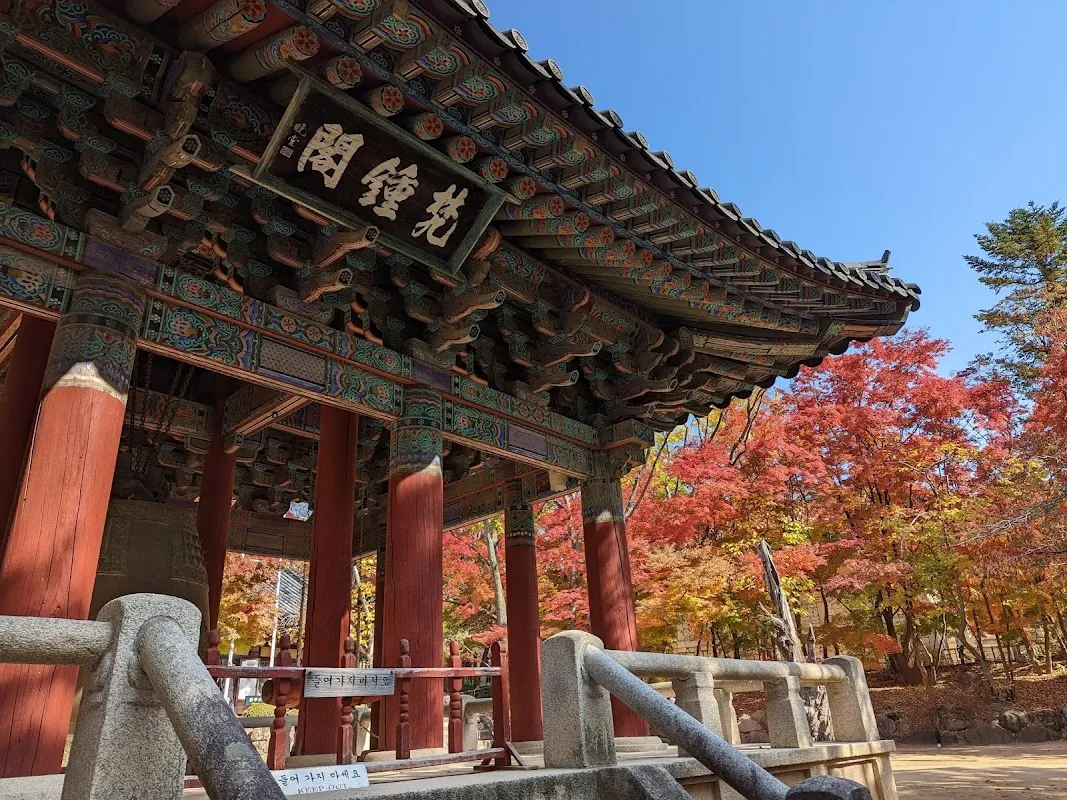
In spring, cherry blossoms line the path up to the temple. In autumn, the maples turn the whole mountainside red and gold. Either season and this place is unreal.
Hours: 09:00-18:00. Admission: ₩6,000 adults. Time needed: 1-1.5 hours.
Take bus 10 or 11 from Gyeongju Station, or a taxi from Singyeongju Station (~₩20,000).
Seokguram Grotto

From Bulguksa, it's a 15-minute drive (or a beautiful 1-hour hike on the 3 km mountain trail) up to Seokguram Grotto. An artificial stone cave carved into the mountaintop, housing a massive seated Buddha that faces the East Sea.
The engineering is the story. Eighth-century builders carved this grotto without mortar, designed the dome to control humidity, and positioned the Buddha so that the first light of sunrise hits it through the entrance. That's 1,300 years ago. No modern tools.
You view the Buddha through glass now, photography inside the grotto is not allowed. But the walk up through the forest is worth it on its own. Mountain air, pine trees, silence.
Hours: 09:00-18:00. Admission: ₩6,000 adults. Time needed: 30-45 minutes (plus the drive or hike).
No photography inside the grotto. And the grotto is small, it gets crowded fast. Visit early morning for a quieter experience.
Lunch: Gyeongju Specialties
By now it's noon. Head to downtown Gyeongju for lunch. You have three legendary options.
Gyori Gimbap

A gimbap shop near Gyochon Village that's been rolling rice and seaweed for over 40 years. Egg, carrot, burdock root, spinach, classic fillings, nothing fancy. But the rice seasoning and the tight roll make it different from anything you've had.
The line at lunch can be 30 minutes or more. Go before 11:30 or get takeout, the rolls travel well. Walk over to Cheomseongdae and eat them on a bench with a view of a 1,400-year-old observatory. Not a bad lunch spot.
Price: Around ₩5,000-6,000 per roll. Hours: 08:30-18:30.
Cheomseongdae Kongguksu

Right next to Cheomseongdae Observatory. They grind soybeans fresh and serve the noodles in a cold, creamy soy broth. Rich, nutty, and cooling, perfect after a morning on your feet. This is a summer signature dish, best between June and September. In winter, they serve warm kalguksu (knife-cut noodles) instead.
Price: Around ₩9,000-10,000. Hours: 09:00-19:30.
If you're visiting in summer, get the kongguksu. If it's winter, the kalguksu is just as good. Either way, this spot is a 5-minute walk from Cheomseongdae.
Afternoon: Downtown Gyeongju
The downtown core is compact. Everything is within walking distance. This is where you slow down and just wander.
Cheomseongdae Observatory

The oldest surviving astronomical observatory in East Asia. Built during Queen Seondeok's reign in the 7th century. A bottle-shaped stone tower, about 9 meters tall, made of 362 stones, said to represent the days of the lunar year.
It's a quick stop. Fifteen minutes to walk around it, read the signs, take photos. But knowing what you're looking at changes everything. This tower was tracking stars 1,400 years ago. Scientists, not monks. The Silla Kingdom was doing astronomy before most of Europe had calendars.
The surrounding field fills with wildflowers in spring and rapeseed in early summer. At sunset, the golden light on the stone is exceptional.
Hours: Open 24 hours (exterior viewing). The surrounding park area closes at dusk. Admission: Free.
Daereungwon Tumuli Park
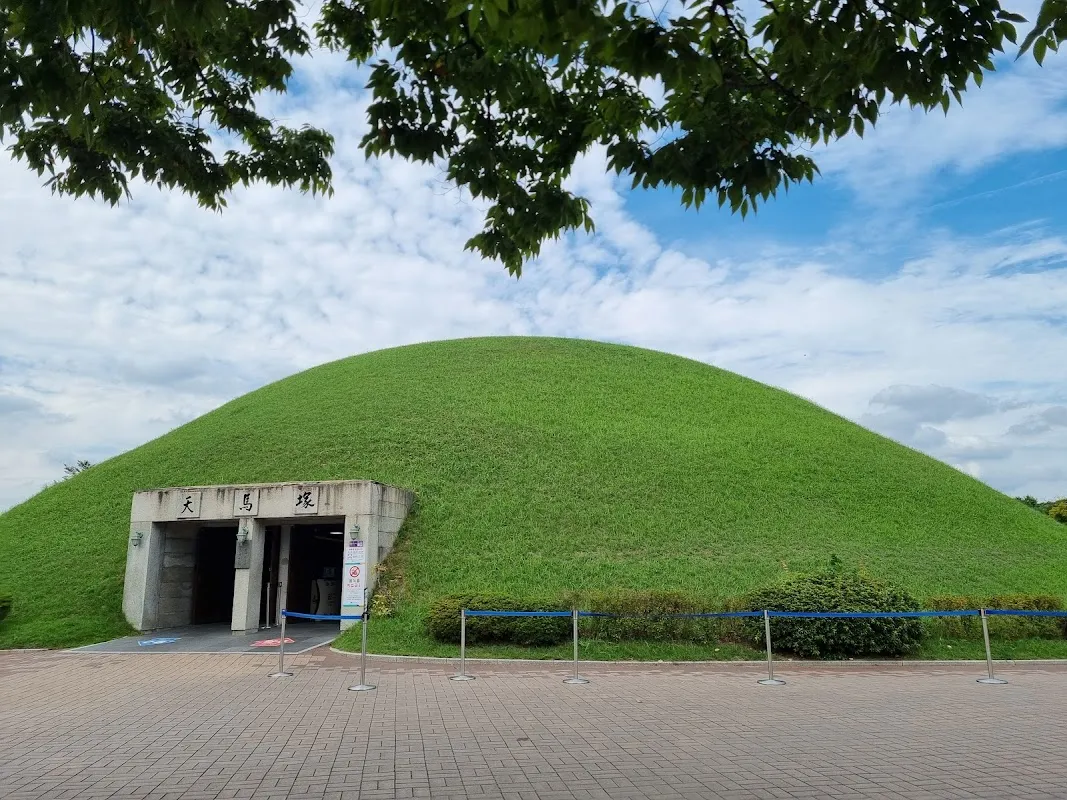
A five-minute walk from Cheomseongdae. Twenty-three enormous grassy mounds rise from the ground in the middle of the city. These are royal tombs of the Silla Dynasty. Kings and queens, buried with gold crowns, jade jewelry, and bronze weapons, right here, surrounded by apartment buildings and cafes.
The scale is surreal. Each mound is the size of a small hill. Walk between them and the city disappears. Just grass, sky, and ancient graves.
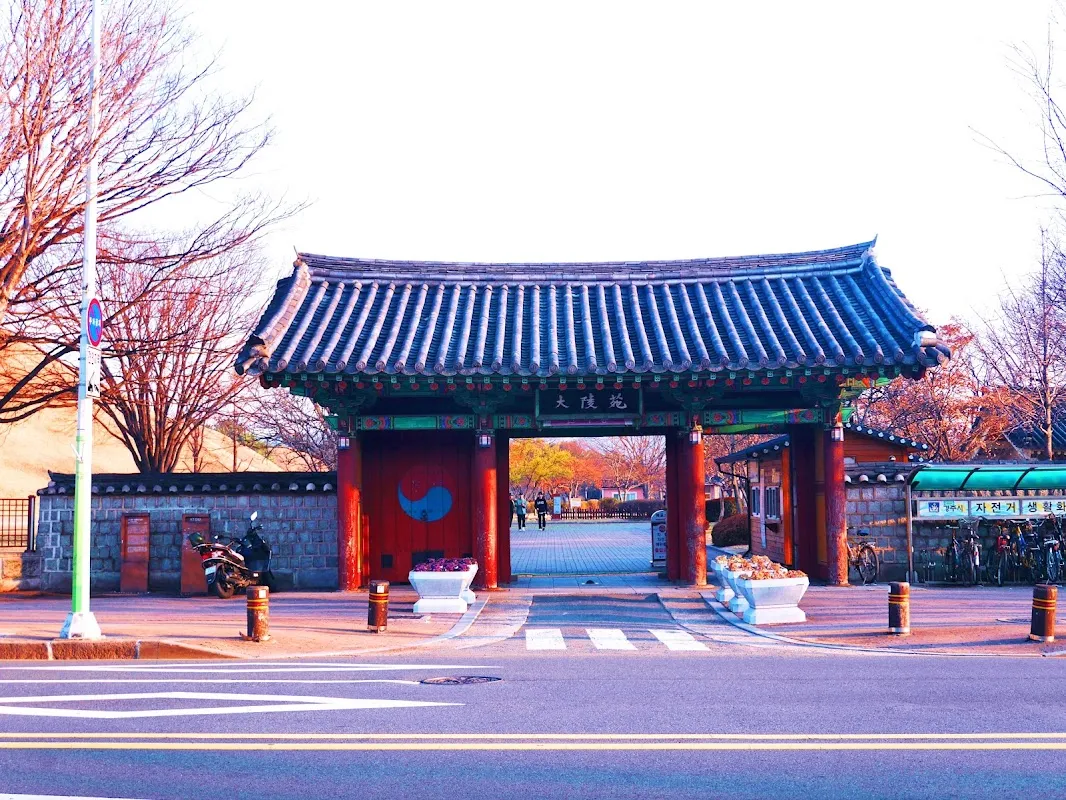
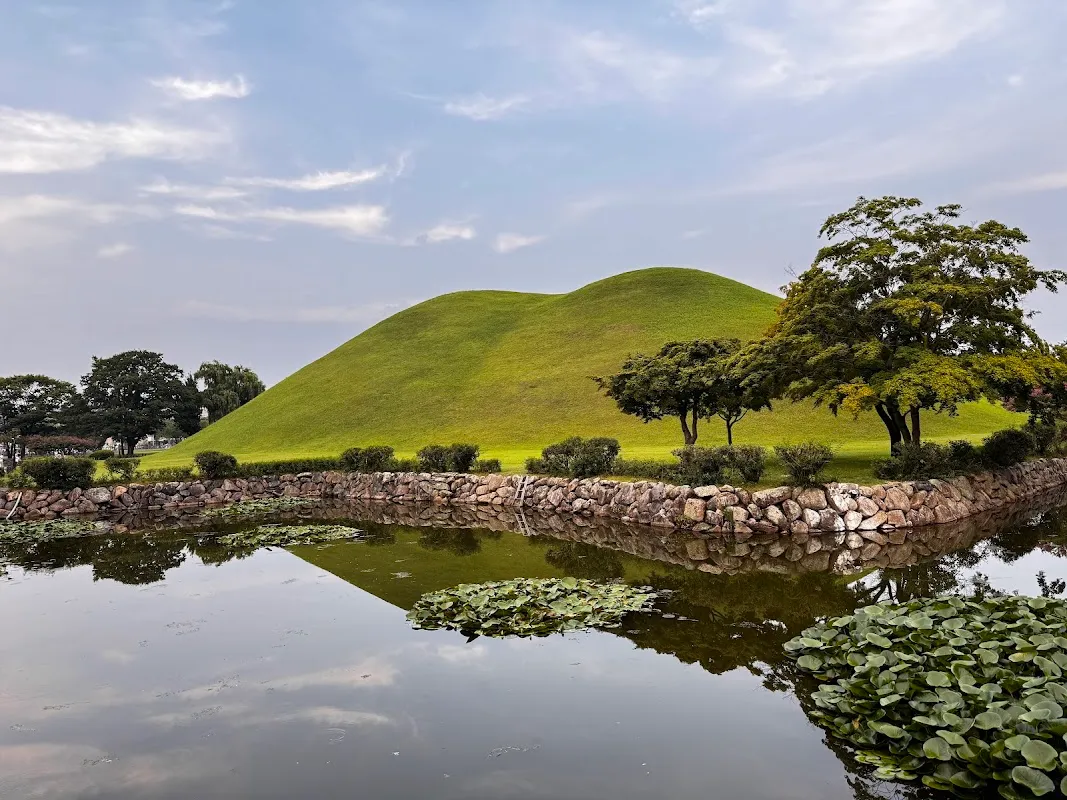
Cheonmachong (Heavenly Horse Tomb) is the one you can actually enter. Walk inside and you see the burial chamber, the stone walls, the position where the coffin sat, replicas of the golden crown and ornaments found inside. The original artifacts are at the Gyeongju National Museum. The painted birch-bark horse that gave the tomb its name is one of the few Silla paintings ever discovered.
Hours: 09:00-22:00. Admission: ₩3,000 adults. Time needed: 45 minutes-1 hour.
Hwangnam Bread

Walking distance from Tumuli Park. This bakery has been making the same red bean paste pastry since 1939. Thin, crispy shell. Dense, sweet red bean filling inside. Eat them warm, that's the rule. The ones straight from the oven are a completely different experience from the packaged ones you see at highway rest stops.
Buy a box of 10 for about ₩15,000. Eat a couple on the spot. Bring the rest back to Busan as gifts. Everyone in Korea knows Hwangnam-ppang.
Hours: 08:00-22:00.
Evening: Donggung Palace & Wolji Pond

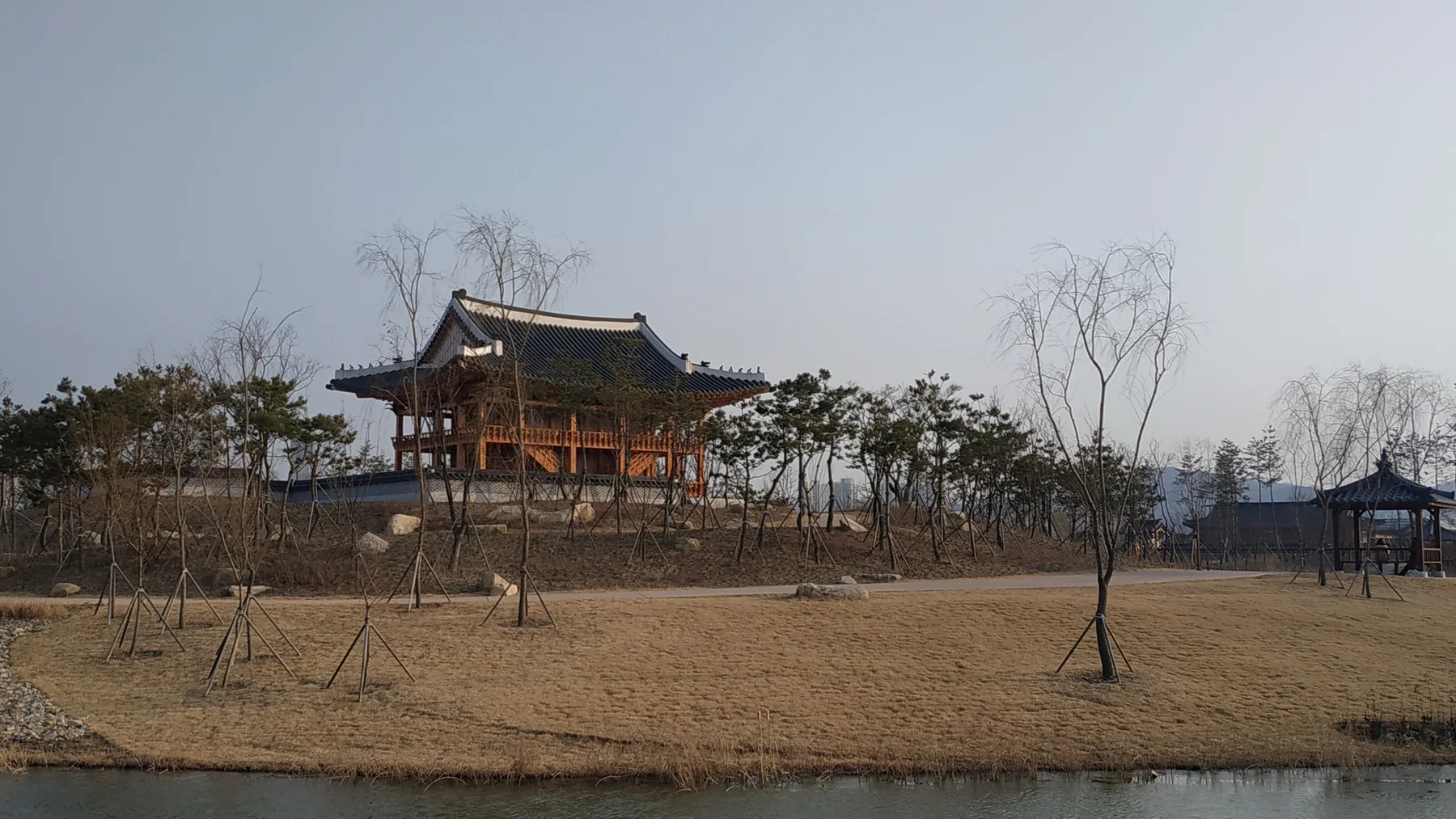
If you can stay past sunset, this is the reason. Donggung Palace and Wolji Pond (historically known as Anapji) is the single most beautiful night scene in Gyeongju. Maybe in all of Korea.
The palace pavilions sit along the edge of a pond built in 674 AD as a royal banquet site. During the day, it's nice. At night, it's something else. The pavilions light up and reflect perfectly in the still water. The symmetry is almost unreal. Every photographer in Gyeongju ends up here after dark.
When they drained the pond in 1975, they found thousands of artifacts at the bottom, dishes, tiles, a wooden boat, even dice used for a royal drinking game. History literally buried under water for 1,300 years.


Hours: 09:00-22:00 (last entry 21:30). Admission: ₩3,000 adults. Time needed: 30-45 minutes.
Blue hour, the 15-20 minutes right after sunset, is the sweet spot for photography here. The sky turns deep blue and the reflections are razor-sharp. Arrive about 30 minutes before sunset to get your position.
Suggested Timeline
| Time | Activity |
|---|---|
| 08:00 | Depart Busan (KTX from Busan Station) |
| 08:30 | Arrive Singyeongju Station → bus or taxi to Bulguksa |
| 09:00-10:30 | Bulguksa Temple |
| 10:45-11:30 | Seokguram Grotto (drive up, 30-45 min visit) |
| 12:00-12:45 | Lunch at Gyori Gimbap or Cheomseongdae Kongguksu |
| 13:00-13:30 | Cheomseongdae Observatory |
| 13:45-14:45 | Daereungwon Tumuli Park + Cheonmachong |
| 15:00-15:20 | Hwangnam Bread (snack + souvenir) |
| 15:30-17:00 | Free time: Gyochon Village, Hwangnidan Street, or a cafe |
| 17:30-18:30 | Donggung Palace & Wolji Pond (arrive before sunset) |
| 19:00 | Head back to Singyeongju Station or Bus Terminal |
| 19:30-20:00 | Arrive Busan |
Practical Tips
Getting around Gyeongju: Downtown sights (Cheomseongdae, Tumuli, Wolji, Hwangnam Bread) are all within a 15-minute walk of each other. Bulguksa and Seokguram are the outliers, 30 minutes east by bus. Plan those as your first stop, then come back to town for the rest.
Bus 10 and 11 run from Gyeongju Station to Bulguksa Temple. Frequency is every 15-20 minutes. Fare is ₩1,800. Or just grab a taxi, Gyeongju taxis are cheap.
Weekends and holidays are significantly more crowded, especially at Bulguksa. If you can do a weekday, do it. Your experience will be twice as good with half the people.
- Wear comfortable shoes. You'll walk 15,000+ steps easily. Bulguksa has stone stairs, Seokguram has a mountain path, and downtown is all on foot.
- Bring a T-money card. Works on all Gyeongju buses and in Busan. Recharge at any convenience store.
- Pack a light layer. Bulguksa and Seokguram are at elevation, it's 3-5 degrees cooler than downtown.
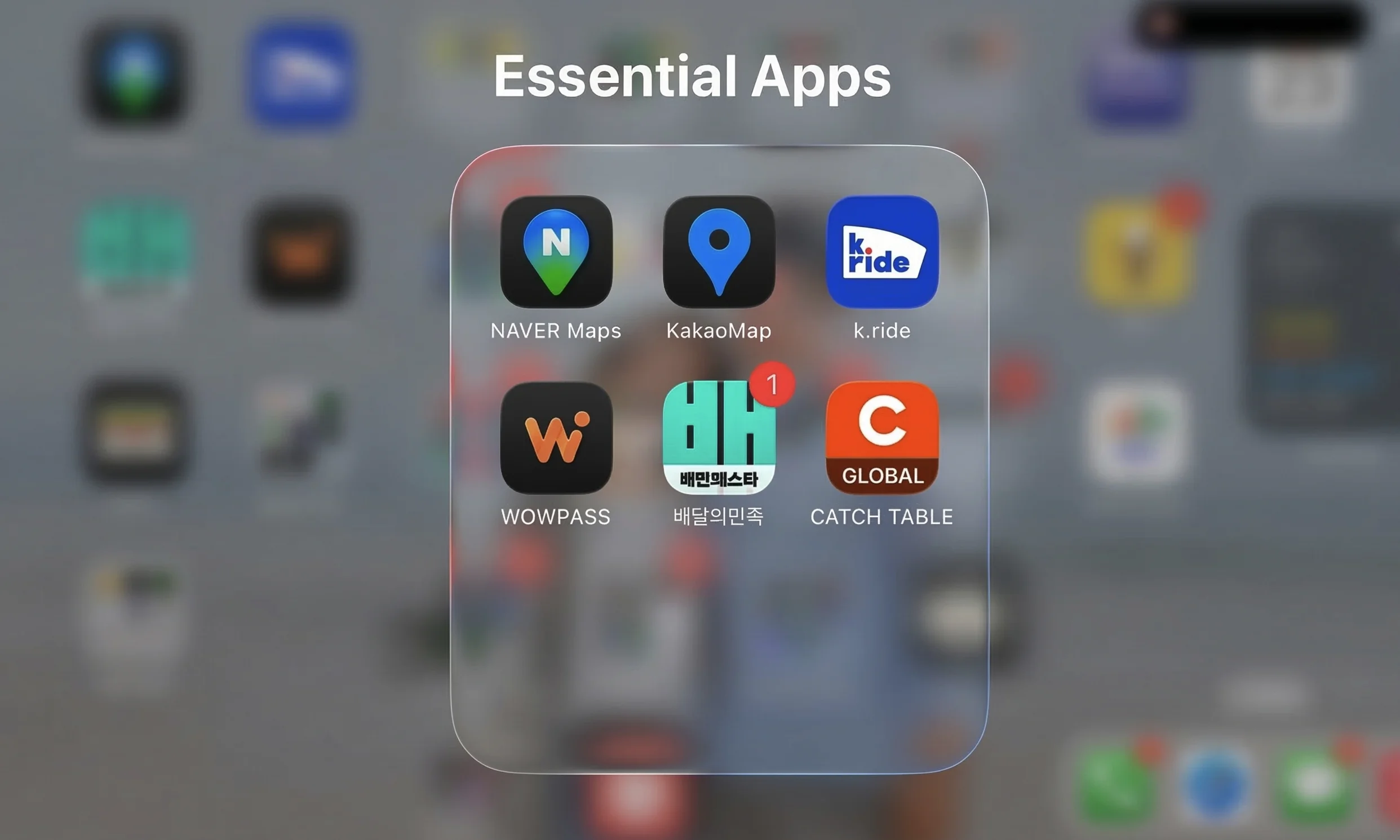
- Download KakaoMap. It's the best navigation app in Korea. Google Maps works but is less accurate for bus routes.
Why Gyeongju
Most ancient capitals are buried under modern cities. You have to imagine what was there. Gyeongju is different. The tombs are still in the middle of town. The observatory is still standing. The temple is still on the mountain.
For nearly a thousand years, from 57 BC to 935 AD, this was the center of the Silla Kingdom. One of the longest-ruling dynasties in human history. The golden crowns, the astronomical observations, the Buddhist art that rivaled anything in Tang Dynasty China, it all came from here.
And then you eat a warm red bean pastry from a shop that's been open since 1939, walk past burial mounds older than most European countries, and watch a 7th-century pond light up at night. All in one day. All from Busan.
That's Gyeongju.
Resources
Helpful links mentioned in this article.
We may earn a small commission at no extra cost to you.