2 Days in Jeonju Hanok Village: Bibimbap, Blood Sausage Alley, and a 100-Year-Old Teahouse
Walk through 700 hanok rooftops, eat where bibimbap was born, and drink soybean latte in a century-old teahouse. Jeonju in 2 days: 3 hours from Seoul.
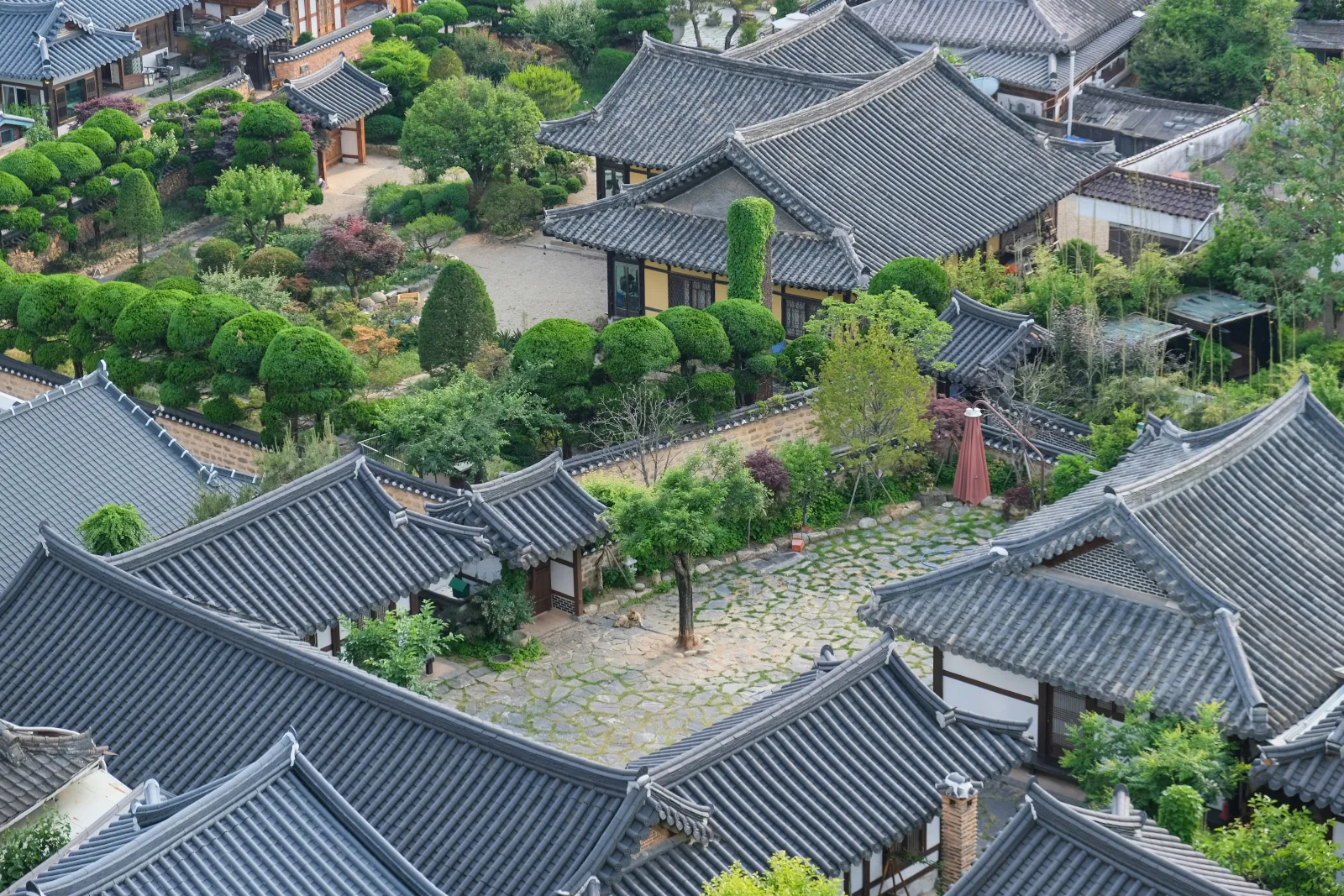
Stop on Namcheongyo Bridge and look up. Seven hundred tiled rooftops spread out in front of you, eaves curving toward the sky. Evening smoke rises between them. This is how Jeonju begins.
At a Glance
| Route | Hanok Village → Gyeonggijeon → Jeondong Cathedral → Bibimbap → Nambu Market → Mural Village → Omokdae → Night Walk |
| Duration | 2 days (1 night) |
| Budget | ₩150,000-250,000 per person (incl. hanok stay) |
| Best Season | Apr-May (cherry blossoms, azaleas), Sep-Nov (autumn foliage) |
| Highlights | Bibimbap pilgrimage, blood sausage alley, hanok stay, 100-year-old teahouse, night bridge walk |
Walking Into Hanok Village: Seoul Fades Away
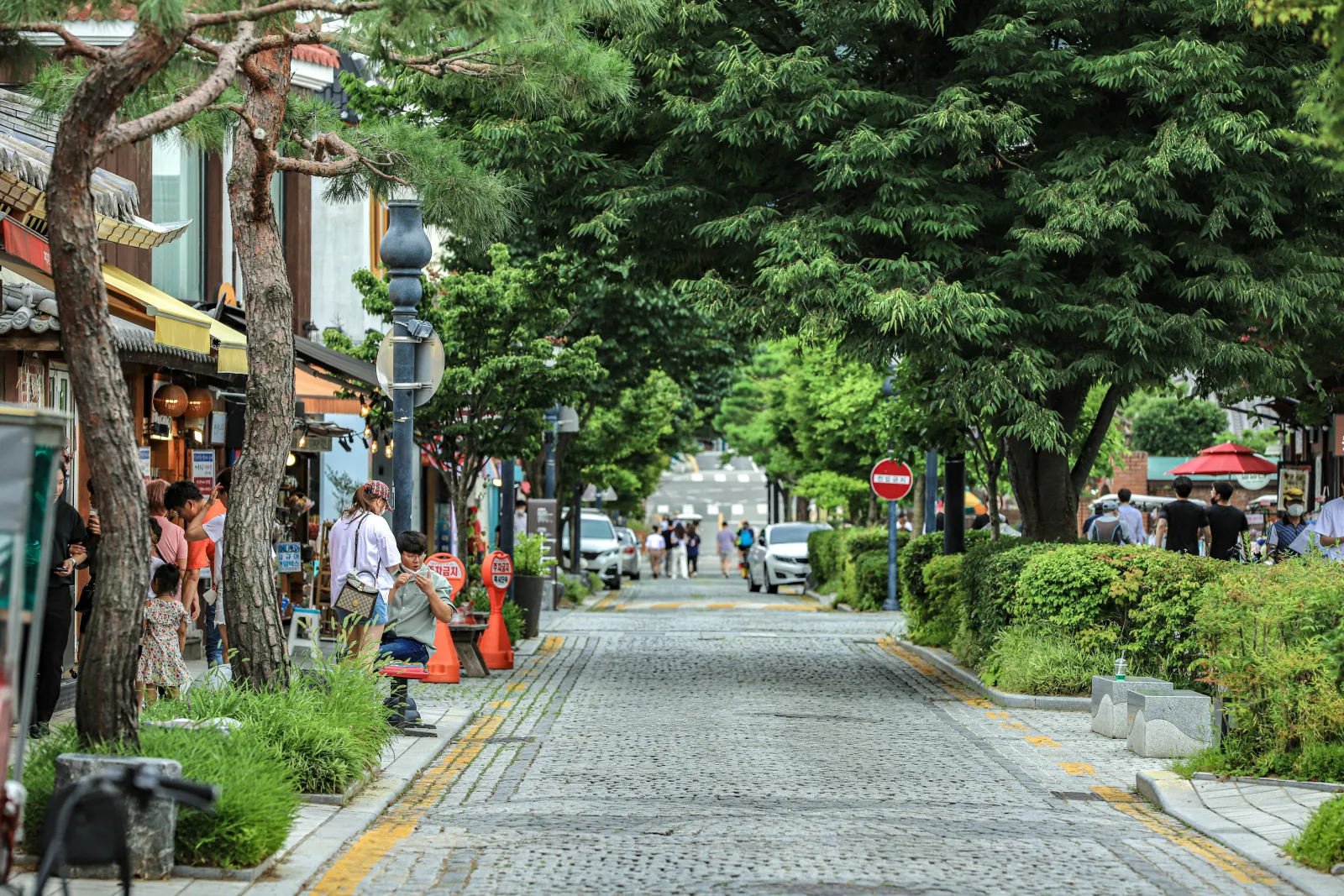
Three hours by express bus from Seoul. Fifteen minutes by taxi from the terminal. You're in Hanok Village.
You know immediately, this isn't Seoul. It's quiet, clean, and time moves slower. Two main streets, Eunhaeng-ro and Taejo-ro, are lined with hanok shops and restaurants. Duck into the side alleys and you'll find real homes where people actually live. This is the largest traditional hanok neighborhood in any Korean city center.
You'll spot people in hanbok (traditional dress) everywhere. Hanbok against hanok, the photos practically take themselves.
Hanok stays: Sleeping on ondol (heated floor) in a traditional wooden house. Warm underfoot, smelling of old timber. Weekends run ₩80,000-120,000, more than a hotel, but hotels can't give you this. Weekdays are quieter and cheaper.
Gyeonggijeon: A Morning 600 Years Ago
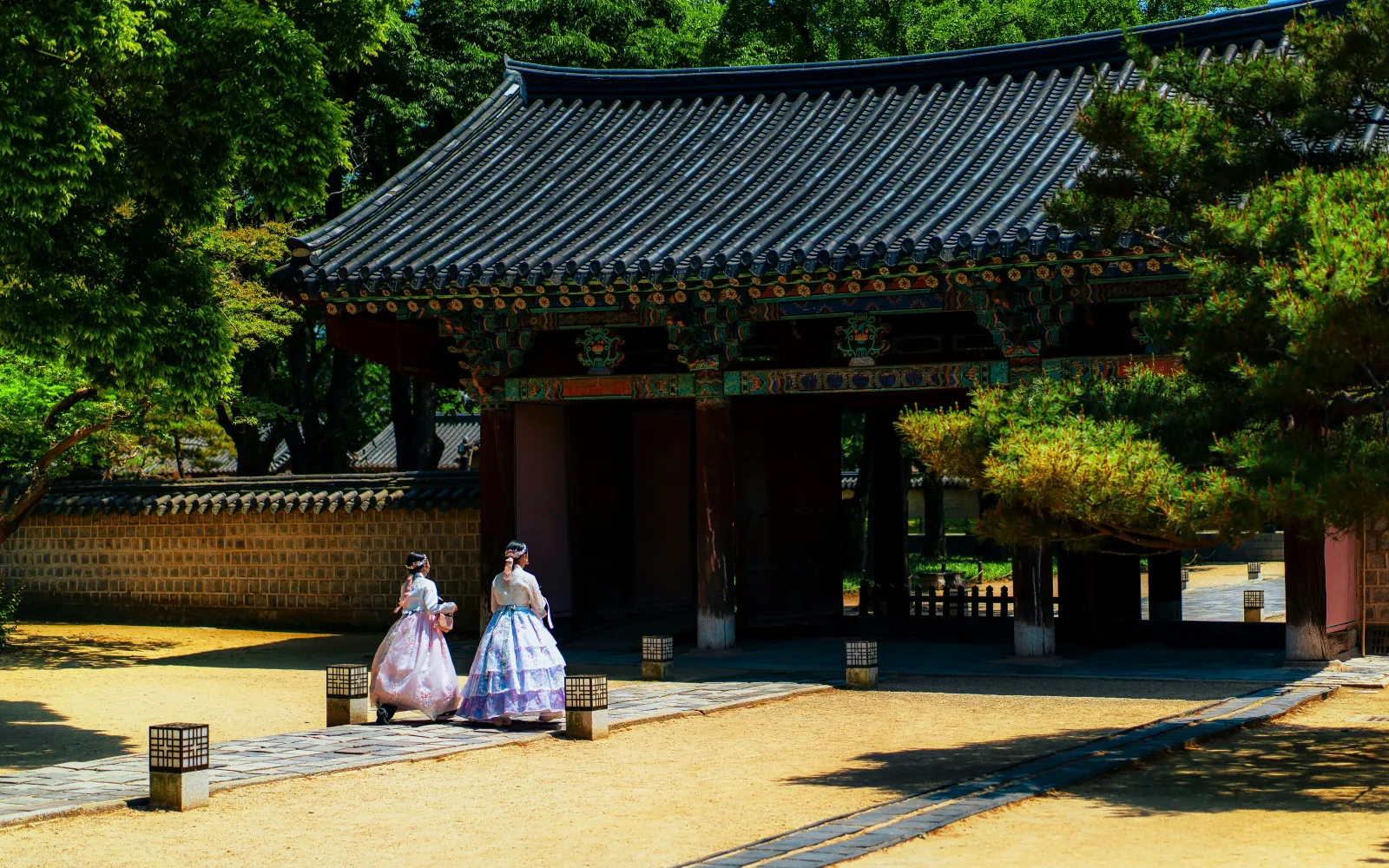
Gyeonggijeon sits right in the center of Hanok Village. Built in 1410, it's a shrine housing the portrait of King Taejo, the founder of the Joseon Dynasty.
Admission is ₩3,000, the price of a coffee. But once inside, it's worth far more. Walk the stone paths and you can almost hear 600 years underfoot. There's a bamboo grove, recreated Joseon-era living quarters, and if you're wearing hanbok, admission is free, and the photos here are the best you'll get.
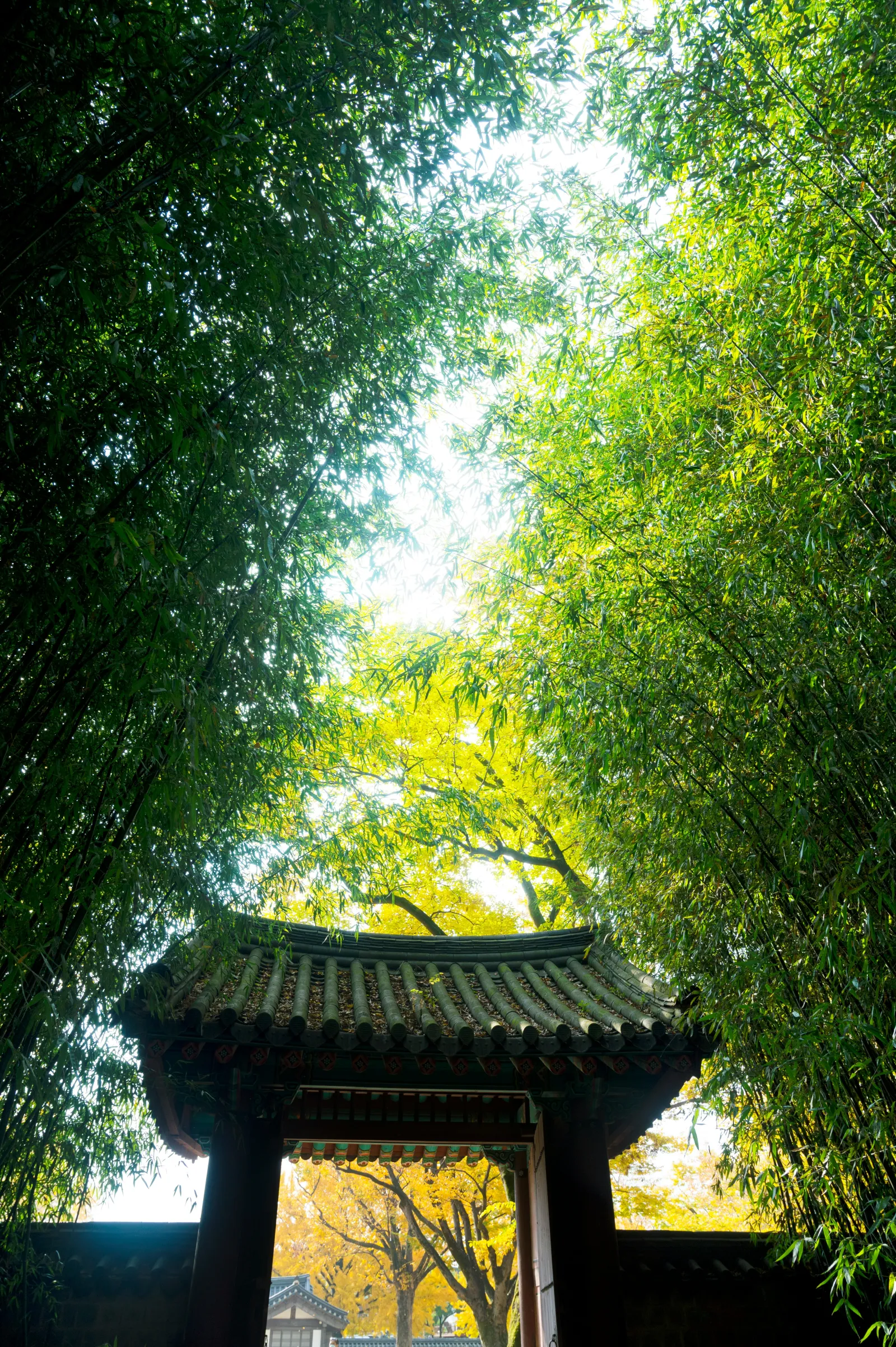
Tip: Go in the morning. Afternoons get crowded. The best light hits the stone walls early.
Jeondong Cathedral: Europe Between the Hanoks
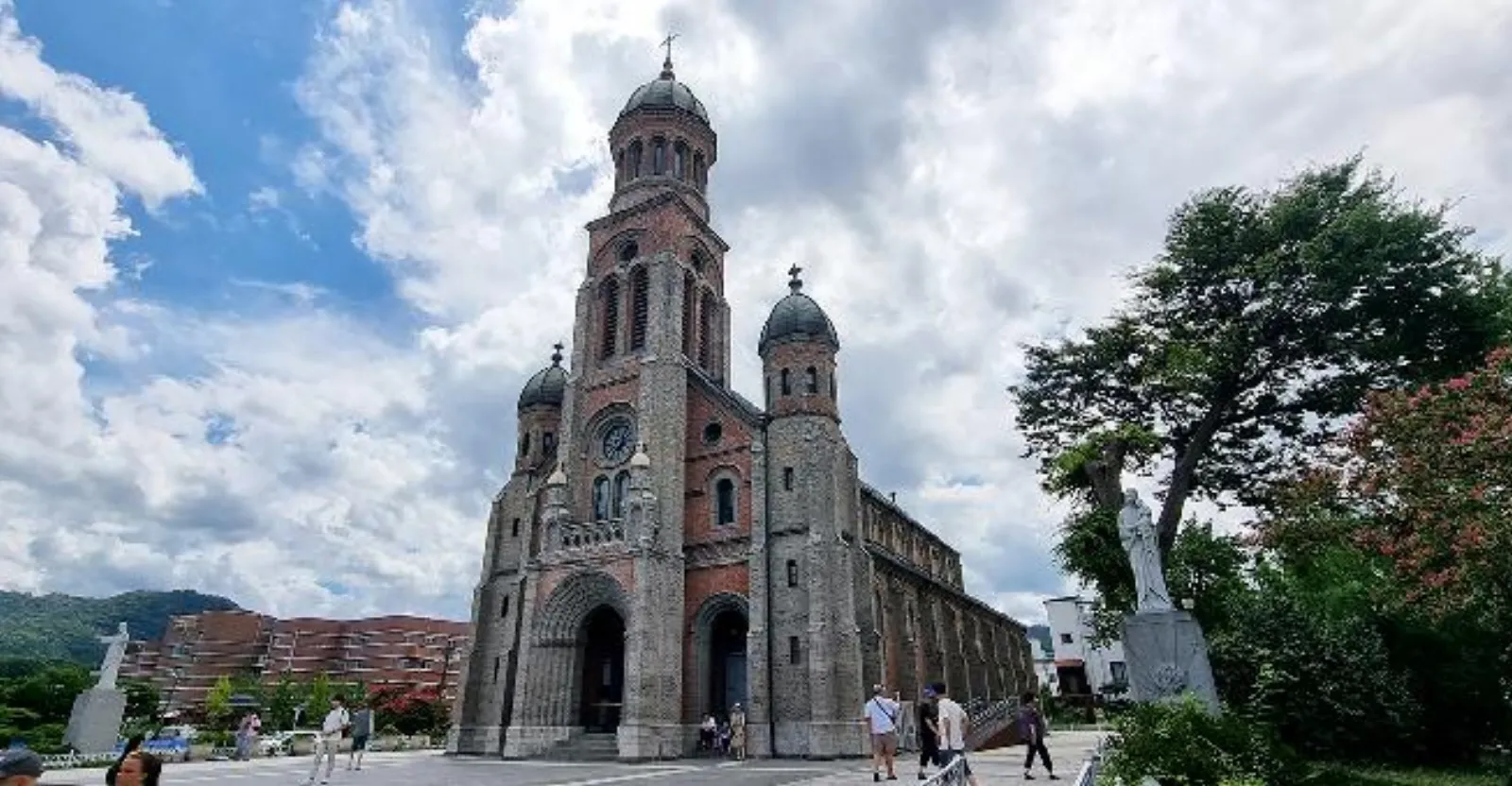
Two-minute walk from Gyeonggijeon. Jeondong Cathedral is the largest modern Western building in the Honam region.
The contrast is striking, a Romanesque church standing among tiled rooftops. Korea and Europe in one frame. No admission fee. Step inside and stained glass throws colored light across the floor.
Photo spots: Shoot from the front, beside the 350-year-old zelkova tree, and from behind looking up, three angles, three different buildings.
Bibimbap: This Is Where It Started
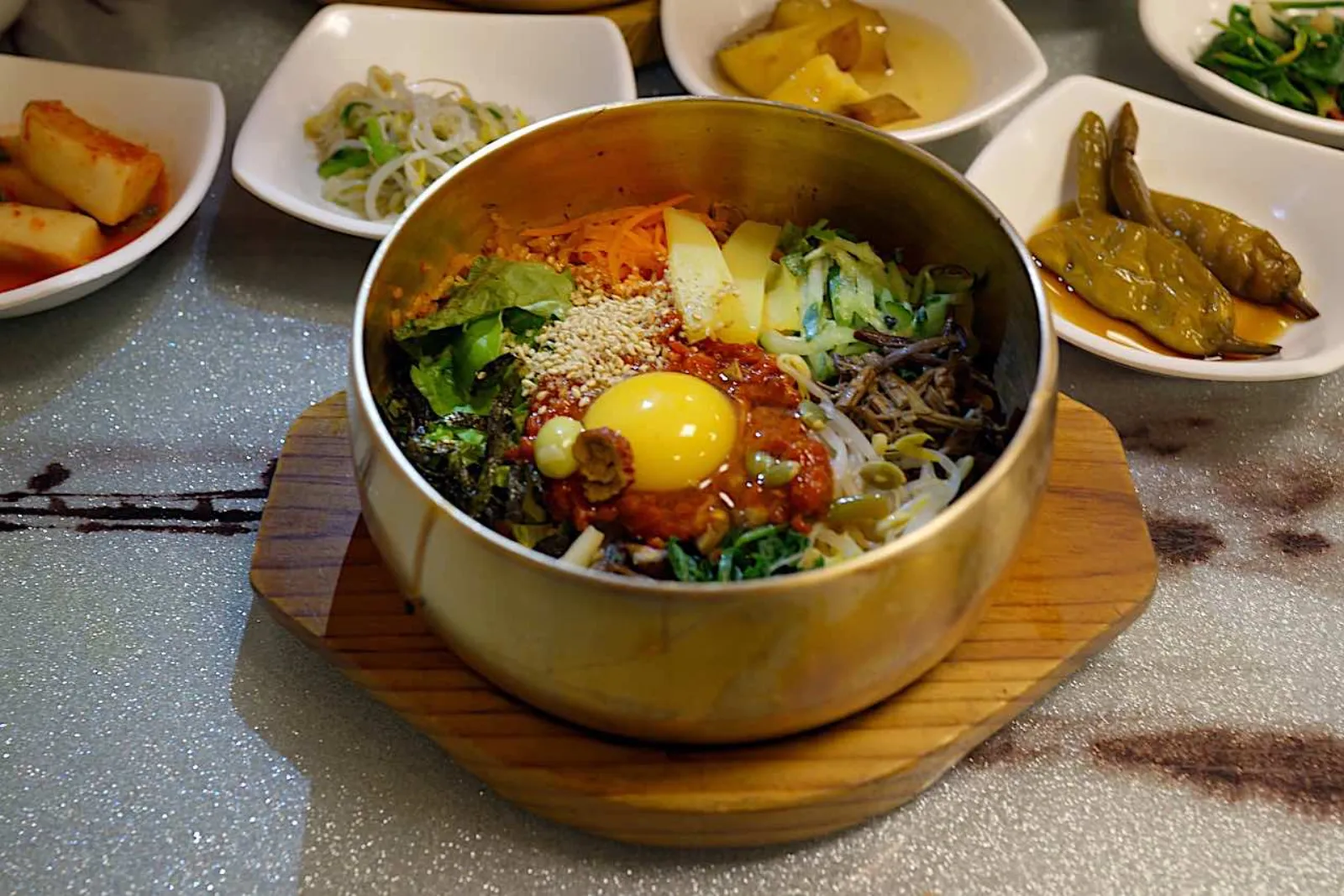
Come to Jeonju and skip the bibimbap (mixed rice bowl)? You haven't really come.
This is where bibimbap was born. Open the lid and sesame oil hits you. Five or more namul (seasoned vegetables), gochujang (red pepper paste), raw egg, dolsot bibimbap (hot stone pot version) sizzles at the table. Pour in a spoonful of bean sprout broth, mix it up, and the rice at the bottom turns crispy. That nutty, toasted smell.
Try yukhoe bibimbap (raw beef bibimbap) too. Thinly sliced raw hanwoo beef dressed in sesame oil sits on top, mix it in and let the heat cook it. That texture is something you'll only find in Jeonju.
₩10,000-13,000, a solid lunch. At this price, the 3-hour trip from Seoul pays for itself.
Where to eat: Restaurants inside Hanok Village are fine, but the ones inside Nambu Market are more local, and a bit cheaper.
Nambu Market: Blood Sausage, Soup, and Night Market
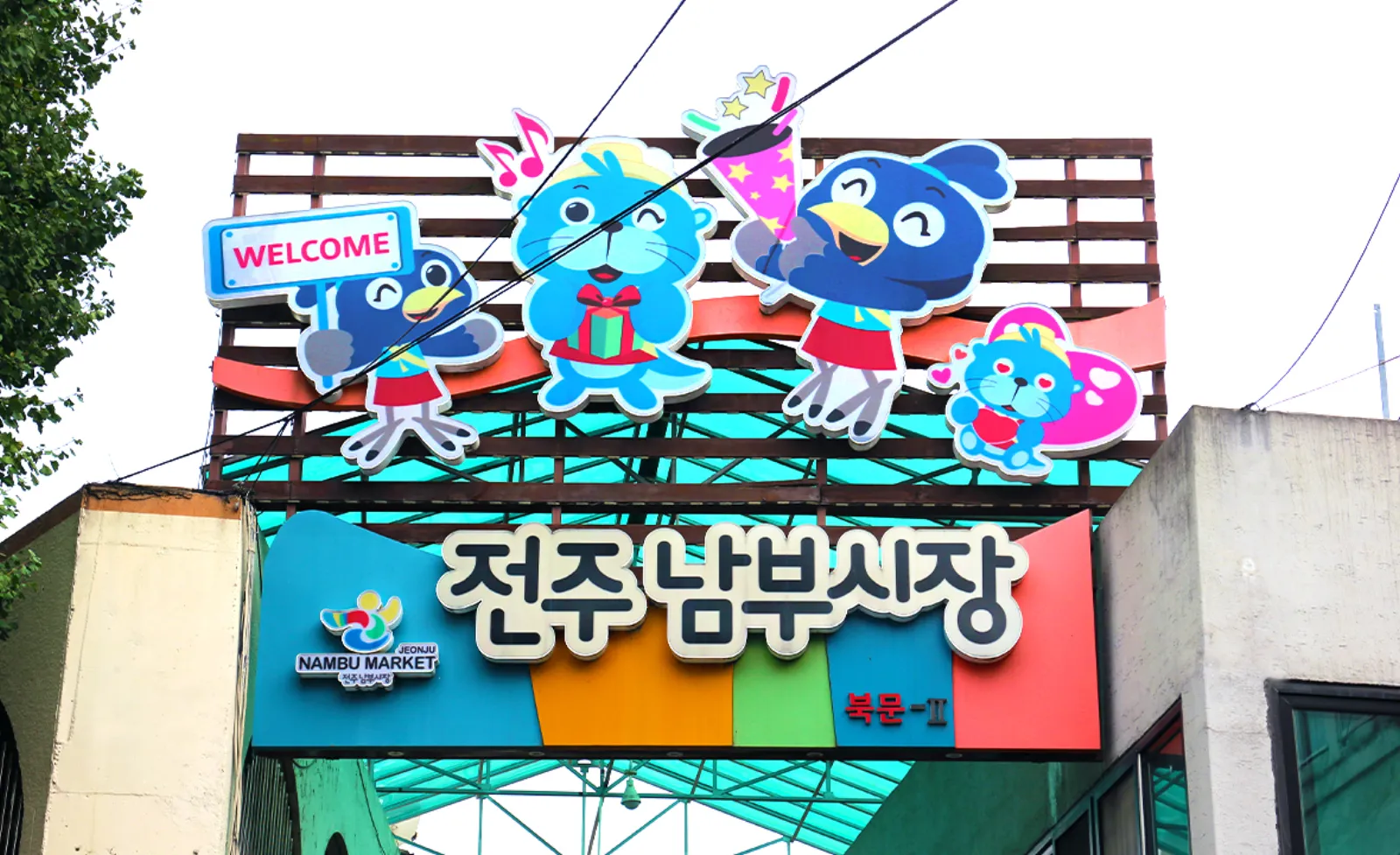
A market that's been running for over 100 years. This is Jeonju's kitchen.
Blood Sausage Alley
Inside Nambu Market, there's a whole alley dedicated to sundae (Korean blood sausage). Jeonju's version is different, more blood, darker color, packed with glass noodles, sticky rice, cabbage, and shiitake mushrooms. Wrap it in a perilla leaf with garlic, gochujang, and perilla seed powder. Expect something gamey, get something savory and clean instead.
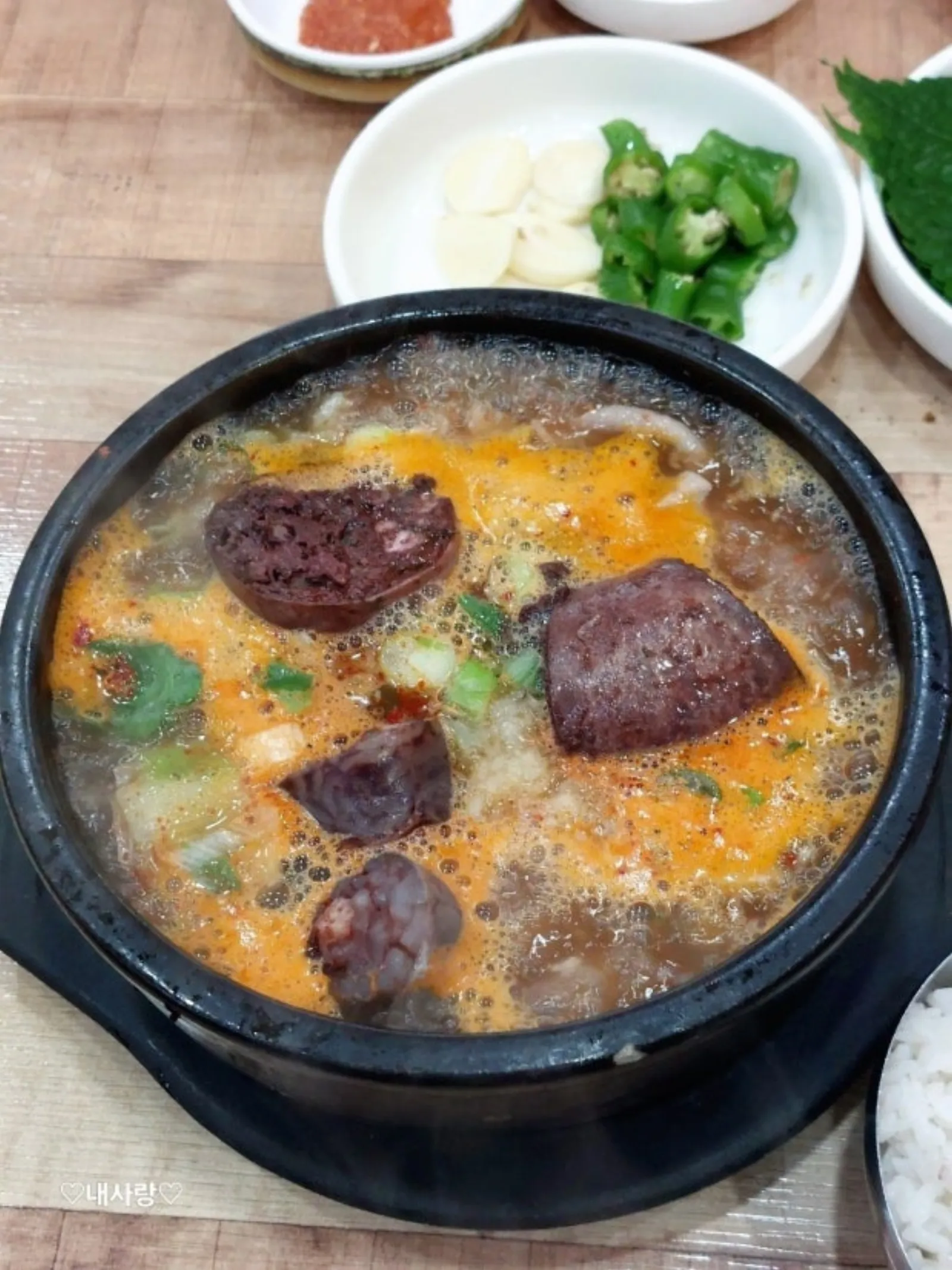
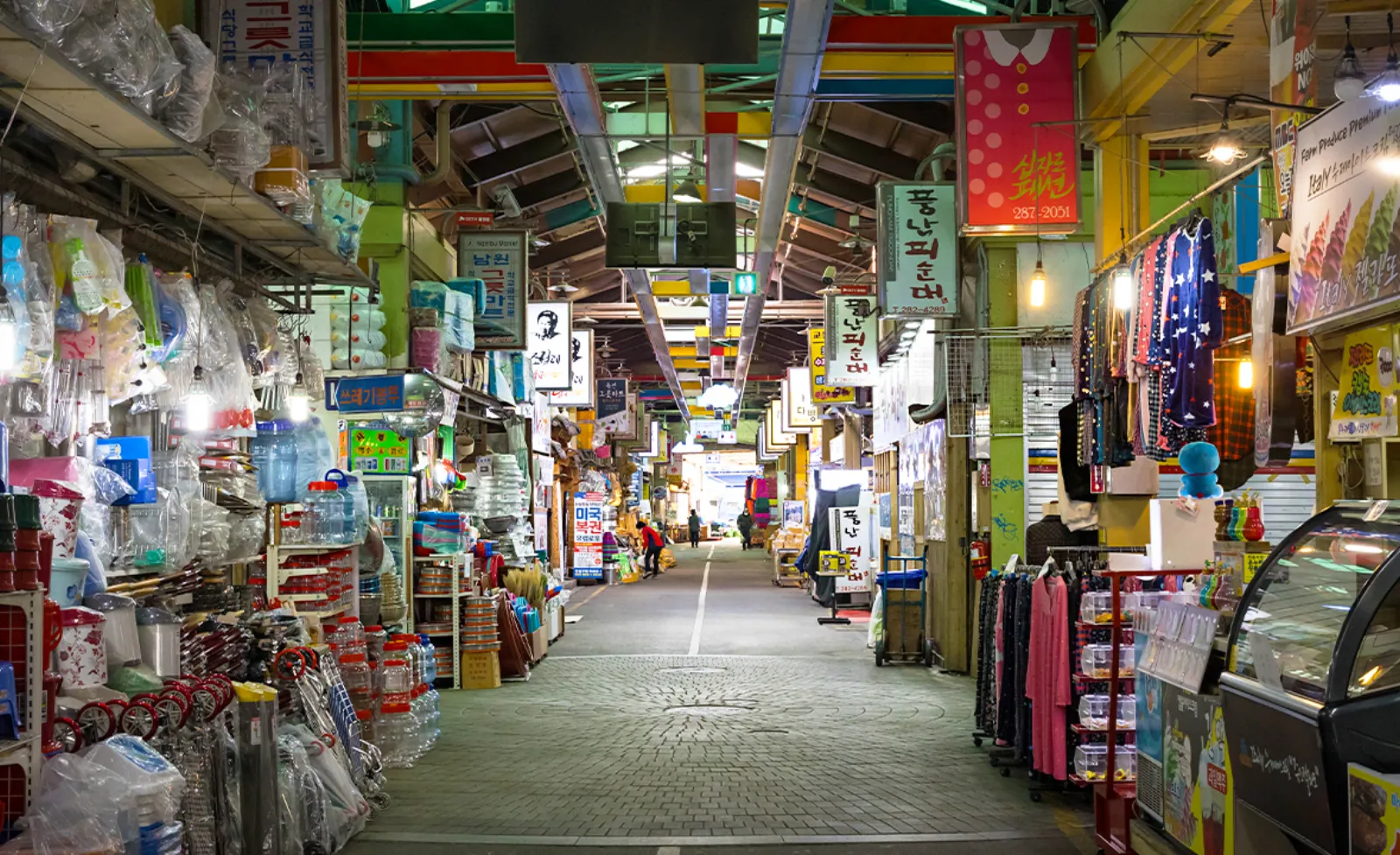
Don't skip the sundaeguk (blood sausage soup) either. ₩8,000, perfect morning hangover cure. The broth is clear and deep, not greasy. The best spots are often the shabby-looking places deep in the back alleys.
Night Market (Fri-Sat Only)
Time your visit for a Friday or Saturday. The youth market opens up, and street food spills out under the lights. Come on a weekday and you'll miss the real show.
10 Won Bread (Sipwon-ppang): Coin-shaped bread stuffed with stretchy mozzarella, warm, soft, and addictive. Worth the line.
Bean Sprout Soup for Breakfast: Not Just a Hangover Cure
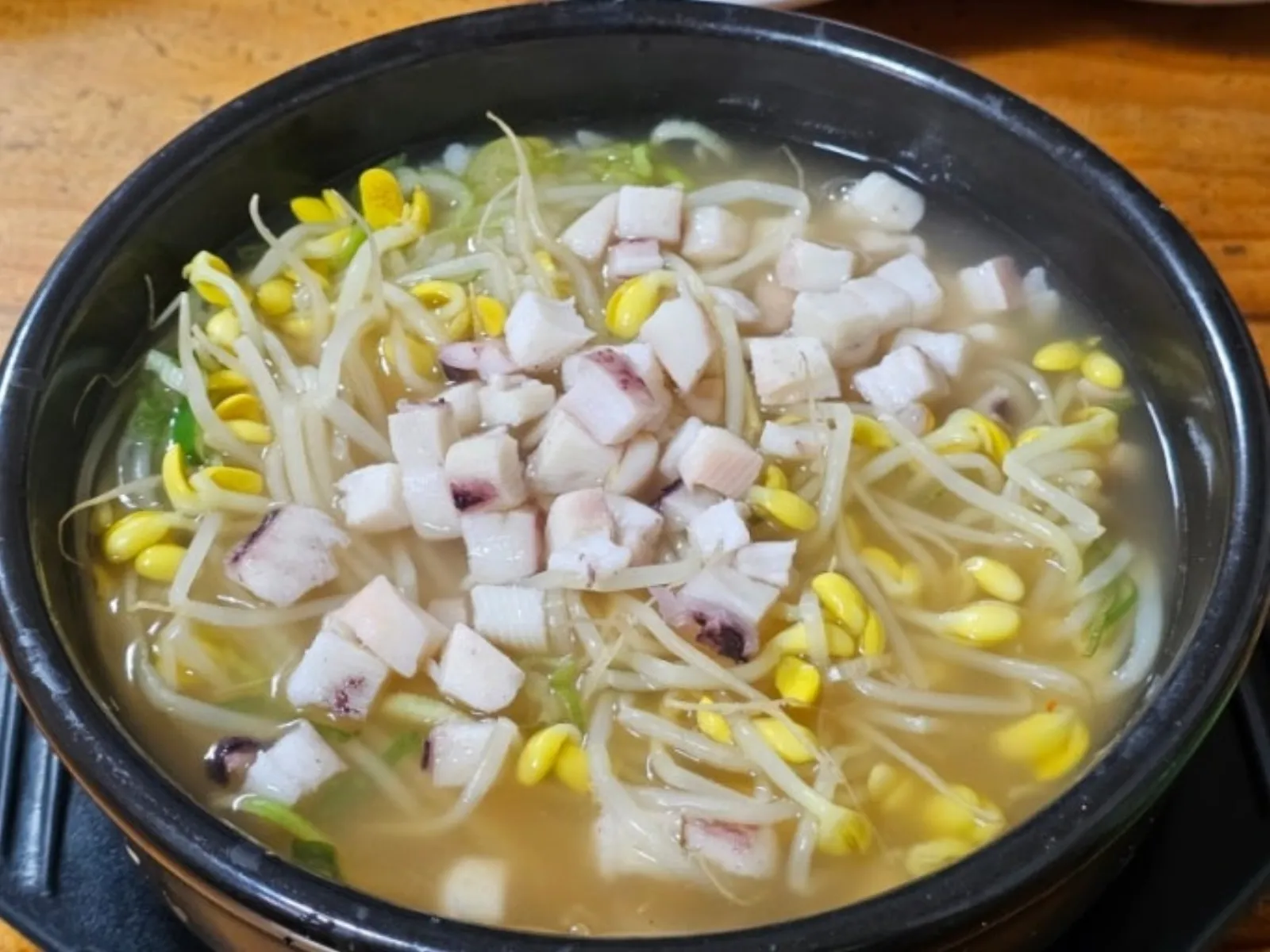
Day two morning. Start with kongnamul gukbap (bean sprout soup with rice).
Jeonju is the birthplace. Bean sprouts, rice, scallions, and chili all boil together in a stone pot. Here's the trick, crack the egg into a side bowl, sprinkle seaweed flakes, pour in five spoonfuls of the hot broth. It half-cooks into something salty and nutty. Alternate between that and the soup. Breakfast, done.
₩8,000, great for hangovers, but you don't need one to justify it.
Between the Alleys: Mural Village, Retro Museum, Teahouse
Jaman Mural Village: Walking Above the Rooftops
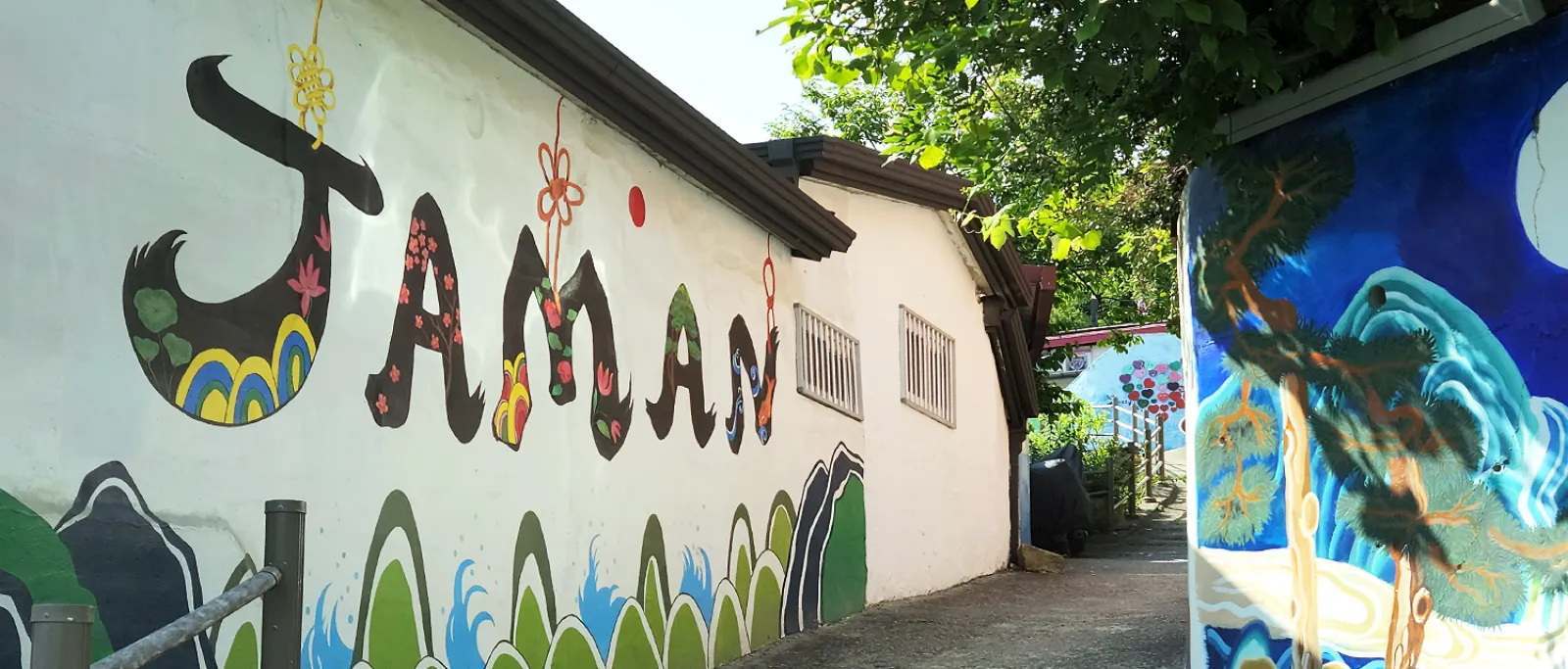
Right next to Hanok Village, up on the hill. Originally a settlement for refugees during the Korean War. Now every wall has a painting, cats nap in corners, and the whole Hanok Village spreads out below.
Climb up to Omokdae and you get the view, 700 hanok rooftops in one sweep. The best view in Jeonju.
Jeonju Nanjang: Back to the 1970s
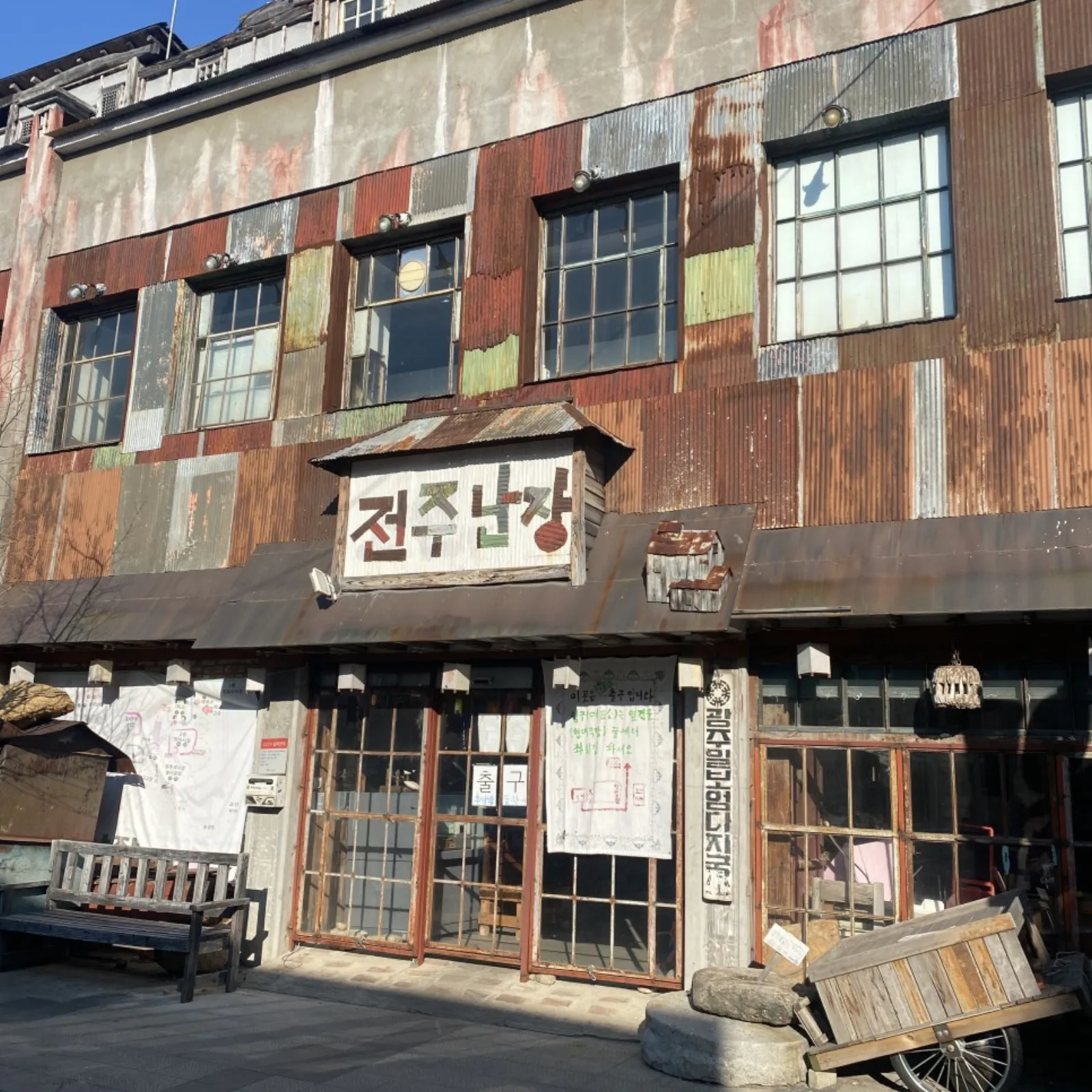
Ten hanok houses gutted and rebuilt into an immersive retro museum. Seventy themed rooms connected like a maze. 1970s-80s Korean schools, stationery shops, video rental stores, arcades, filled with props collected over 25 years. Play a round of Street Fighter at the arcade cabinet. Why not.
Three and a half years to build, 25 years of collecting. You feel that dedication in every room.
100-Year-Old Teahouse
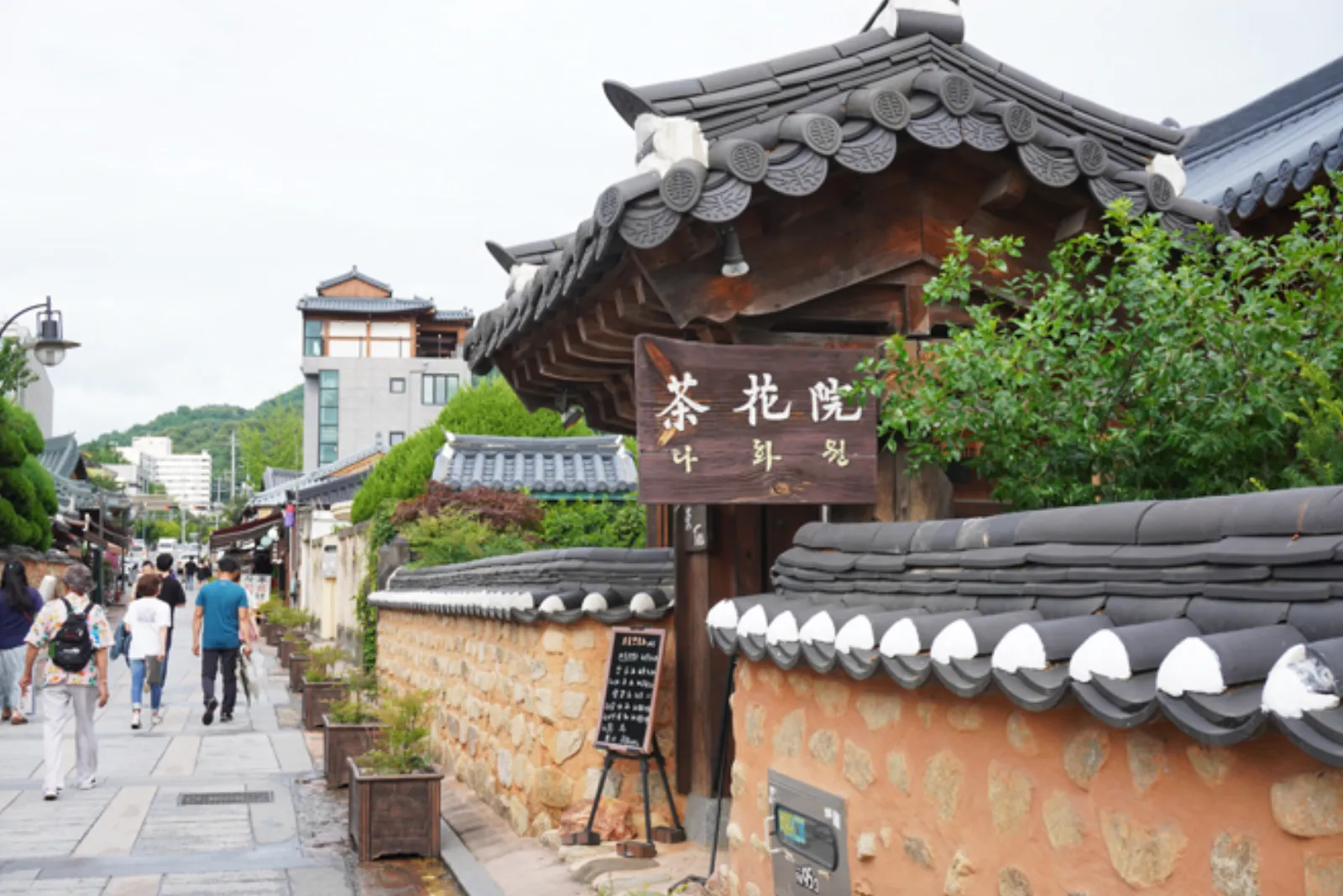
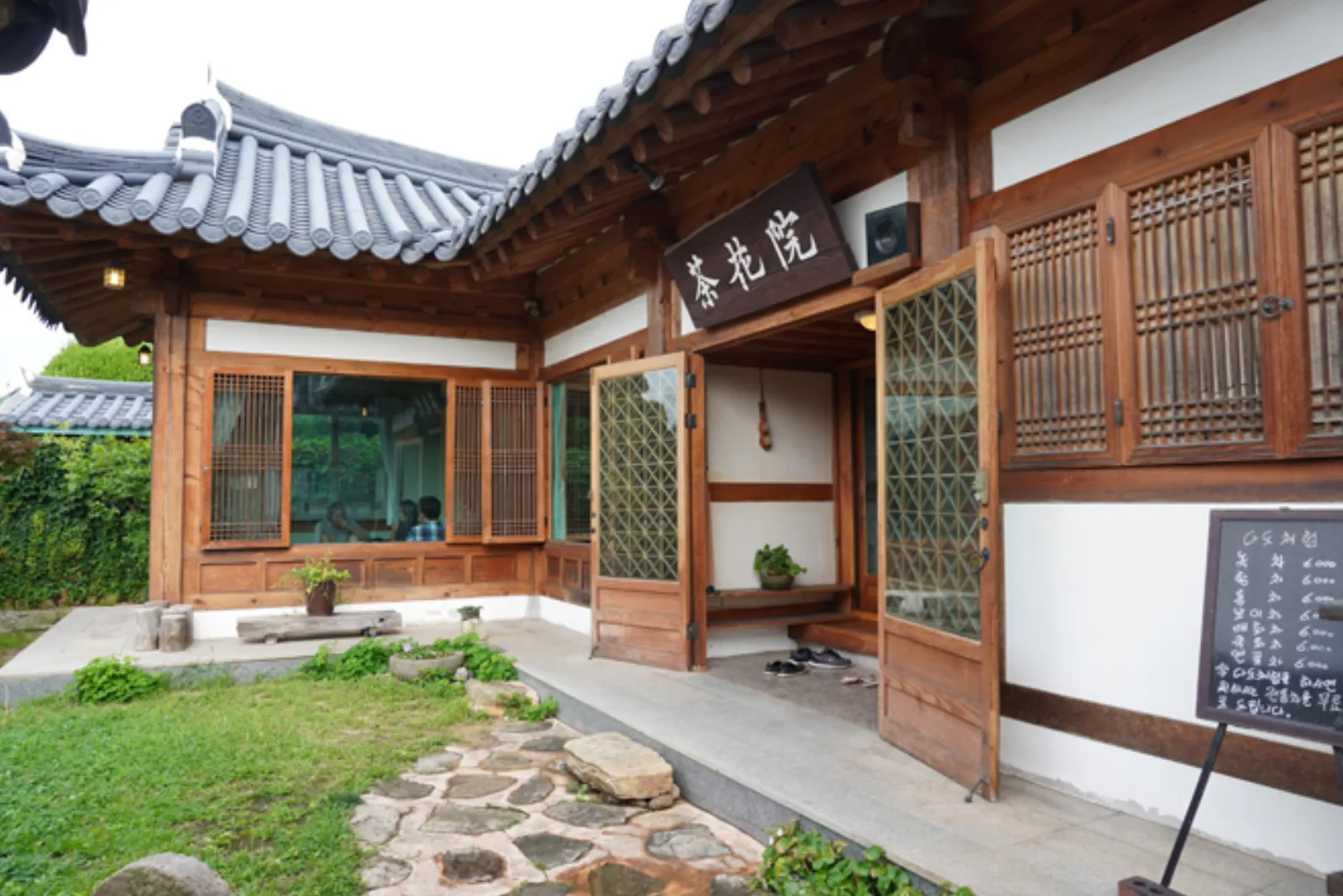
Inside Hanok Village, there's a teahouse operating out of a 100-year-old hanok. It's a registered cultural property.
Order the soybean latte, red bean paste, soybean powder, milk, condensed milk, ice cream, and injeolmi (rice cake) all in one cup. Rich, thick, like a peanut butter milkshake. Sit on the maru (wooden veranda), look out at the hanok garden, and let time stop.
₩8,000, the price of a drink. The time you spend on that veranda is priceless.
Hanok Village at Night: On Namcheongyo Bridge
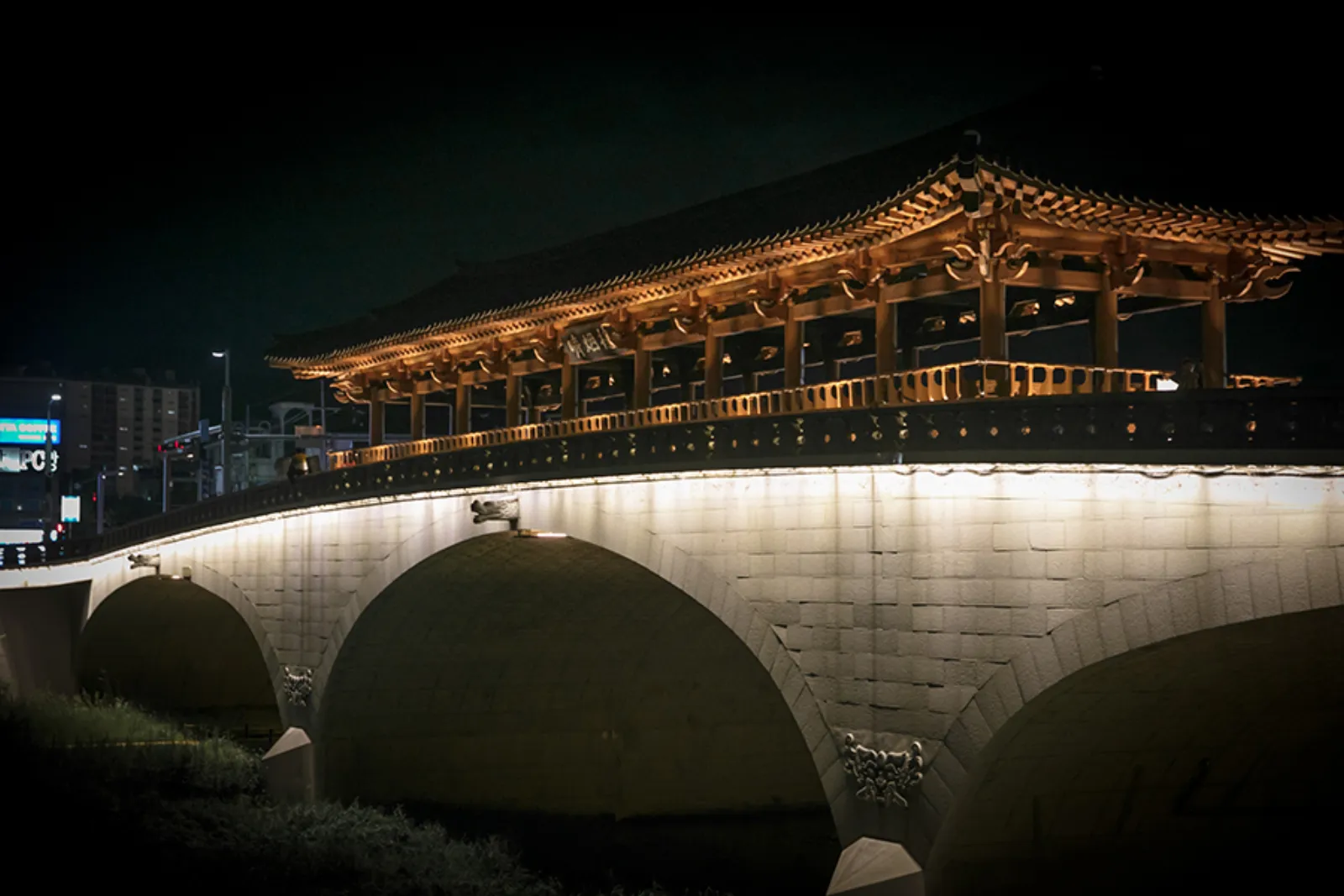
After dark, Hanok Village transforms.
When the lights come on at Namcheongyo Bridge and Cheonyeonru Pavilion, they reflect off the surface of Jeonjucheon Stream. The water is clear enough for sharp reflections. The view from the bridge is Jeonju's parting gift.
For a late dinner, finish with bulgalbi (fire-grilled ribs). Jeonju's signature style is mulgalbi, ribs simmered in broth. The longer it cooks, the deeper the broth gets and the softer the meat becomes. ₩15,000-20,000 a bowl, the right way to end the day.
Practical Info
| Seoul → Jeonju | Express bus ₩22,000-28,600 (3 hrs), KTX ₩34,600 (1 hr 30 min) |
| Jeonju Station/Terminal → Hanok Village | Taxi ₩7,000-8,000 (15 min), city bus also available |
| Hanok Stay | ₩50,000-120,000/night (weekends pricier). Ondol is the whole point |
| Bibimbap | ₩10,000-13,000 per meal |
| Kongnamul Gukbap | ₩8,000 per meal |
| Gyeonggijeon Admission | ₩3,000 (free with hanbok) |
| Hanbok Rental | ₩15,000-25,000 (4-hour rental) |
| Nambu Night Market | Fri-Sat only: plan around it |
| Duration | 2 days is right. 3 days if you want to take it slow |
| Must-Have Apps | KakaoMap (navigation), Papago (translation) |
| Currency | Korean Won (₩). Check current rates at XE.com |
What Jeonju Leaves You With
Three hours from Seoul. Sounds far, but once you arrive, you'll wish you'd come sooner.
Jeonju isn't flashy. It's deep. The sound of footsteps on stone under tiled roofs, sesame oil rising from a stone pot, the feel of 100-year-old wood under your hand, light reflecting off Jeonjucheon at night, these things accumulate.
Gochujang on your fingers from the bibimbap, smoke from the sundae alley still in your nose, that garden you stared at from the teahouse veranda, that's Jeonju. A city your body remembers before your camera does.
Next time, come on a Friday so you catch the night market. And Mokpo, head further south from Jeonju and there's raw fish, tteokgalbi, and the ocean waiting.
Resources
Helpful links mentioned in this article.
We may earn a small commission at no extra cost to you.
Got Questions? We Can Help
No question is too small. We'll look into it and get back to you.