Korean Street Food Guide: What to Eat, How to Order, What It Costs
Tteokbokki, hotteok, sundae, tornado potatoes: the essential Korean street food guide with real prices, ordering tips, and the best markets to hit in Seoul.
Steam curls off a vat of bright red tteokbokki. The vendor flips a hotteok on the griddle, the sugar inside hisses and pops. Two stalls down, a row of fish cake skewers sits in a bubbling broth. You grab one, sip the broth from a paper cup. It's salty and warm and exactly what you needed. Someone nudges past you to point at a pile of twigim. There's no menu. No English. No seats. Just food, cash, and the sound of oil crackling.
This is how you eat in Korea.
At a Glance
| Budget | ₩10,000-20,000 fills you up |
| Best Markets | Gwangjang, Namdaemun, Tongin, Myeongdong |
| Payment | Cash preferred at traditional stalls. Card works at larger vendors |
| Best Time | Late morning to early evening. Weekdays are less crowded |
| What to Wear | Comfortable shoes. You'll be standing and walking a lot |
| Must-Know Phrase | "Hana juseyo" (하나 주세요): "One, please" |
The 10 Street Foods You Need to Try
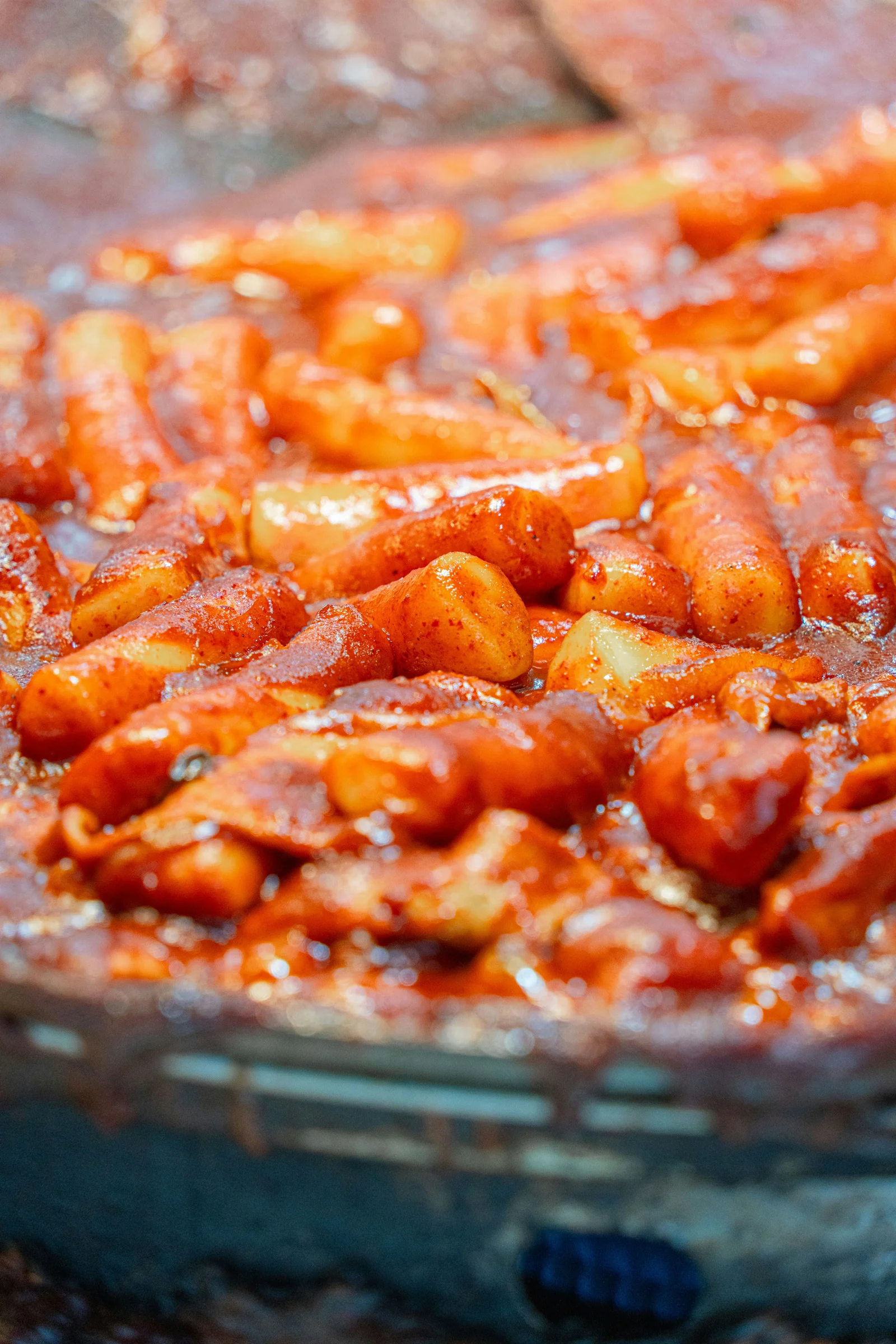
1. Tteokbokki (떡볶이): ₩4,000-5,000
Chewy rice cakes swimming in a thick, sweet-spicy gochujang sauce. This is the street food. Every market has it. Every Korean grew up eating it after school.
The texture is what gets you. Soft but with a bounce. The sauce clings to each piece. Some vendors add fish cake, boiled eggs, or ramen noodles to the mix. If you only try one thing on this list, make it this.
Tip: If you can't handle spice, ask for "an maepge" (안 맵게), "not spicy." Some stalls have a milder version. Some don't. But it's worth asking.
2. Hotteok (호떡): ₩1,500-2,000
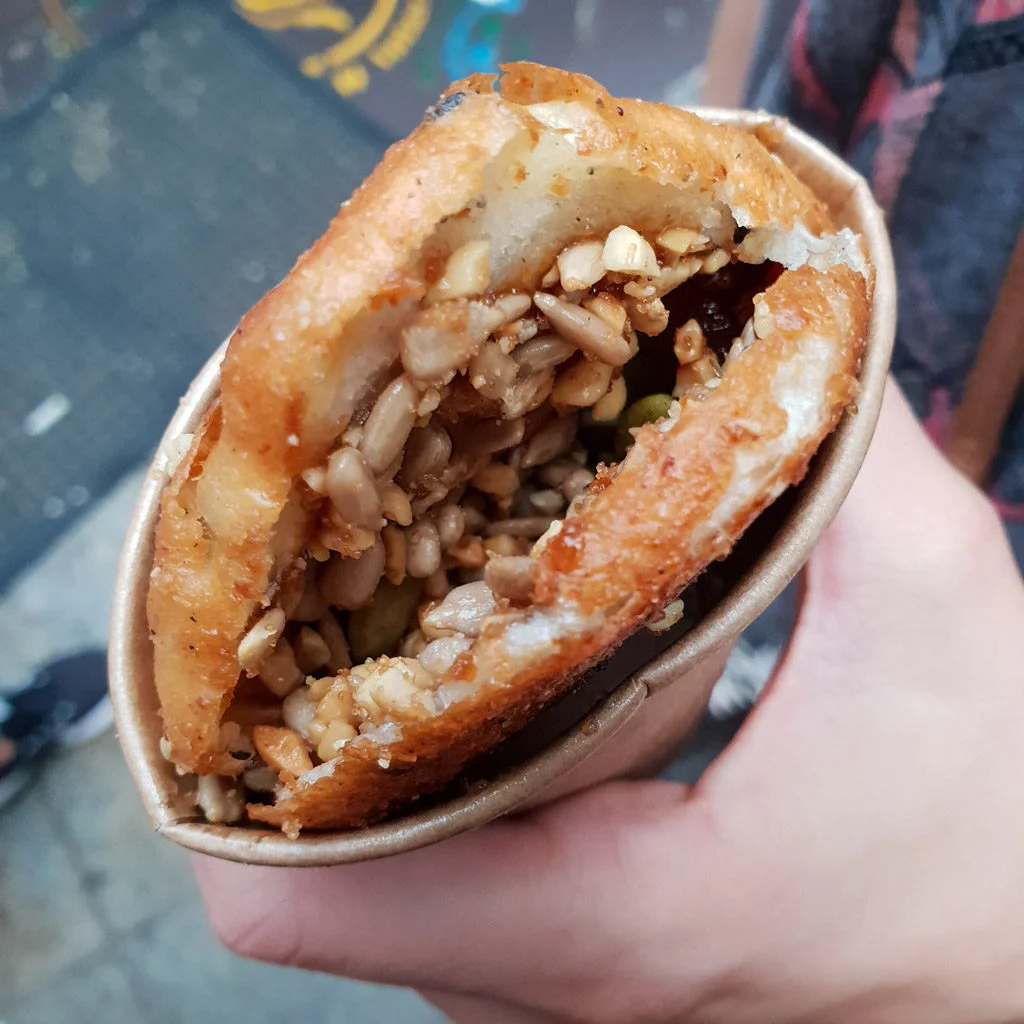
A flat, crispy pancake with a molten sugar filling. Brown sugar, cinnamon, and crushed peanuts ooze out when you bite in. It's a winter street food originally, but you'll find it year-round now.
The outside is golden and slightly oily from the griddle. The inside is liquid sugar. Seriously, wait 30 seconds before biting. The filling will burn the roof of your mouth. Every Korean has that scar.
Where to find the best: Namdaemun Market has a famous hotteok alley. The line is long. It moves fast.
3. Eomuk / Odeng (어묵): ₩1,000 per skewer
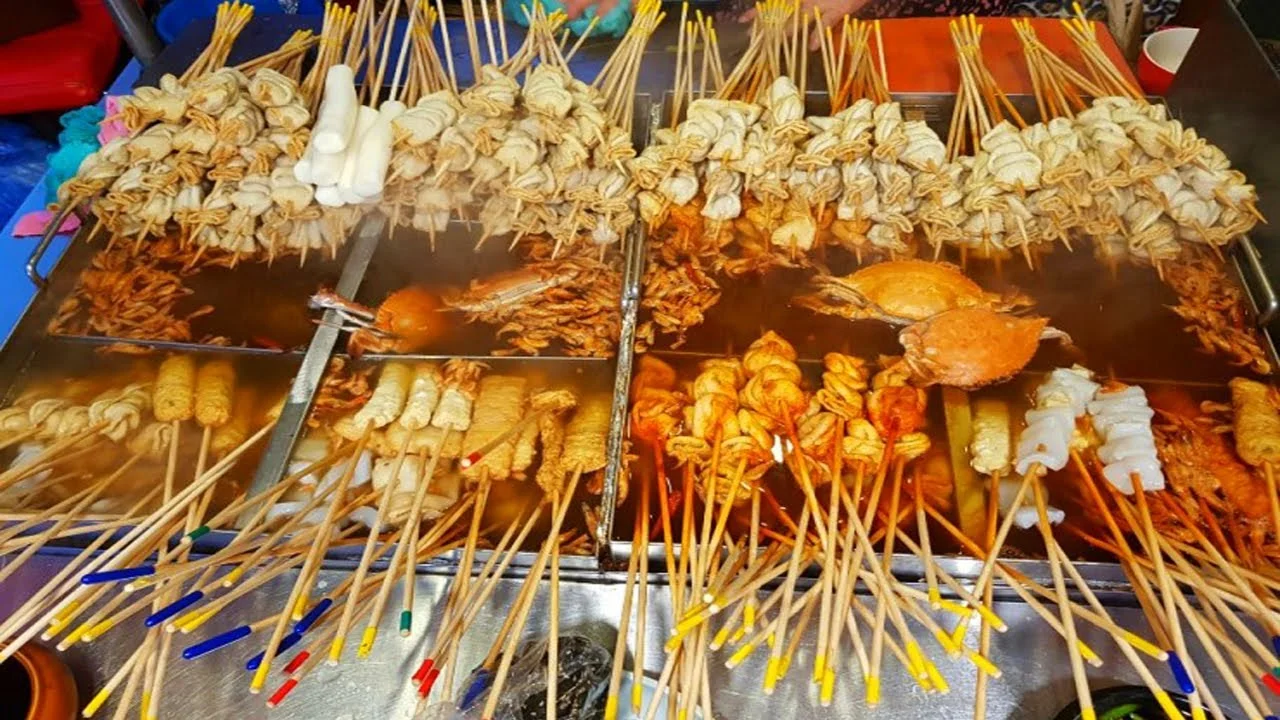
Fish cake threaded onto a stick, sitting in a hot anchovy-kelp broth. You pull a skewer from the pot, eat the fish cake, then pour yourself a cup of broth from the same pot. The broth is free.
This is the most underrated street food in Korea. Tourists walk past it. Koreans stop for it every time. On a cold day, that paper cup of broth hits different.
4. Gimbap (김밥): ₩3,000-4,000
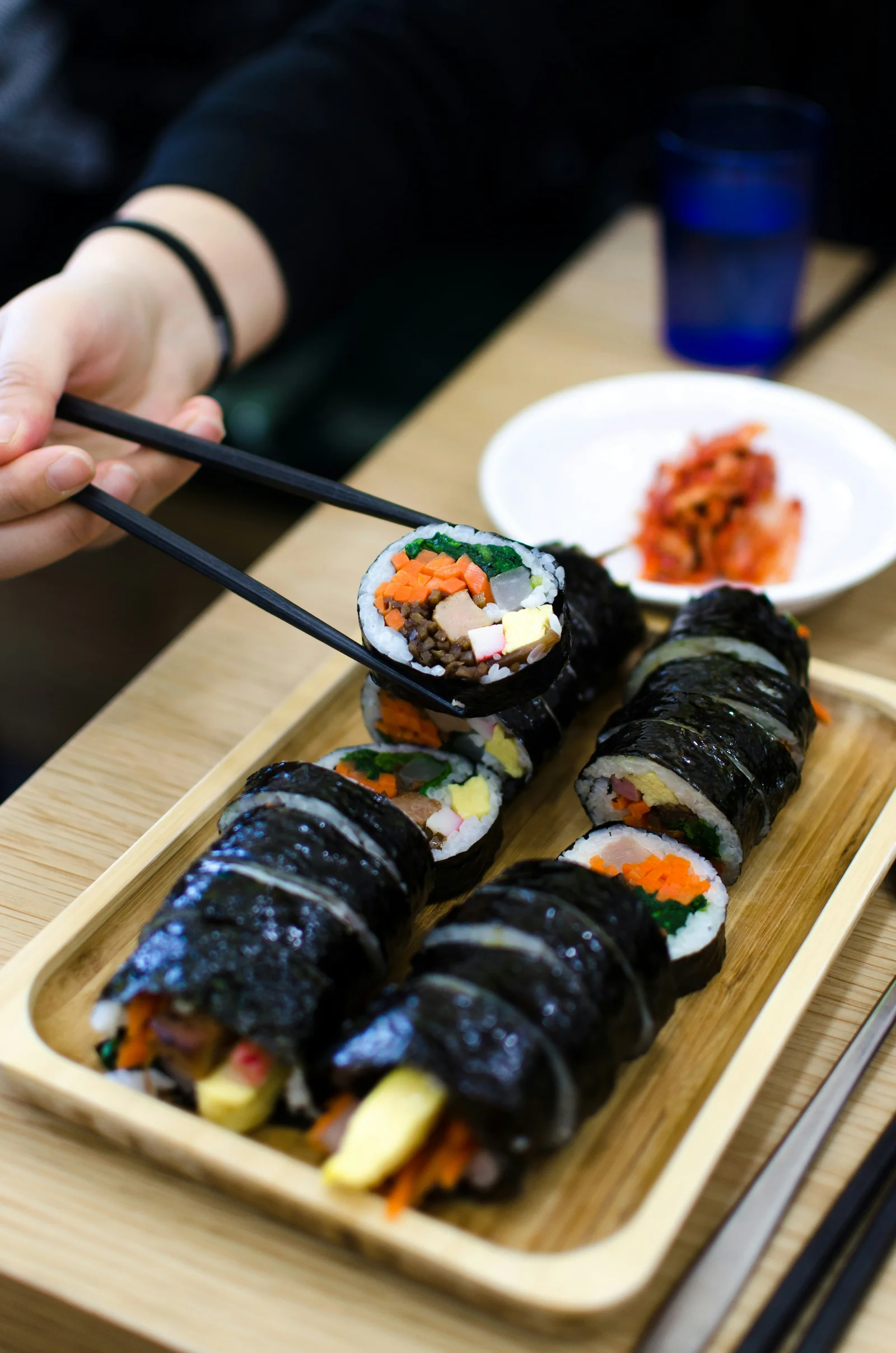
Rice, vegetables, and egg rolled in seaweed and sliced into bite-sized pieces. It looks like sushi. It's not sushi. The rice is seasoned with sesame oil, not vinegar. The fillings are cooked, pickled radish, spinach, ham, egg, carrot.
At Gwangjang Market, try "mayak gimbap" (마약김밥), tiny rolls served with a mustard-soy dipping sauce. "Mayak" means "addictive" in Korean. The name is accurate.
5. Bungeoppang (붕어빵): ₩1,000-2,000
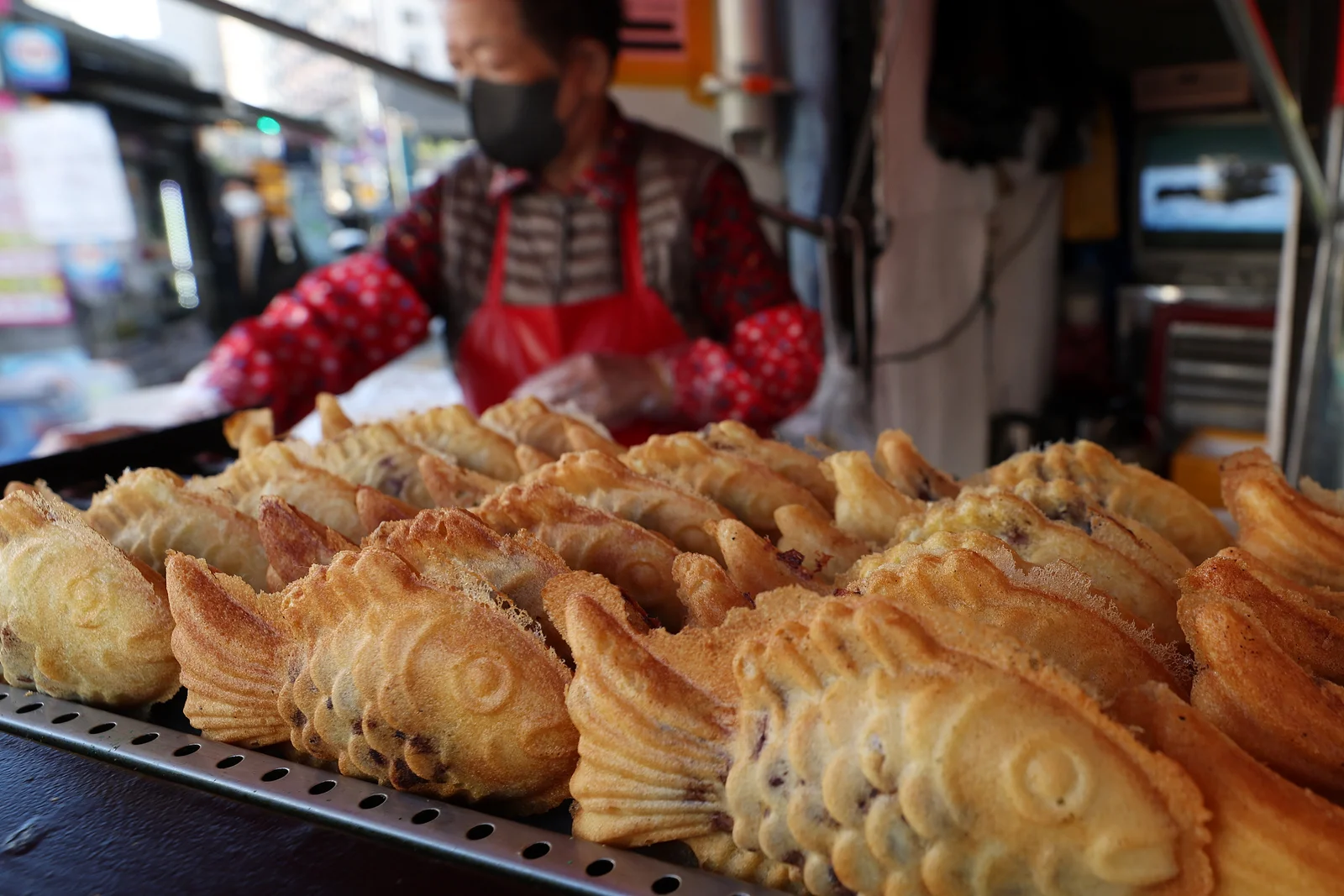
A fish-shaped pastry filled with sweet red bean paste. It's a winter street food, when the temperature drops, the bungeoppang carts appear on every corner.
The outside is crispy and slightly cakey. The inside is warm, sweet red bean. Some newer versions use custard cream or chocolate, but the classic red bean is still king.
Tip: The tail has the most filling. Koreans have strong opinions about whether to eat the head or tail first.
6. Twigim (튀김): ₩1,000-2,000 per piece
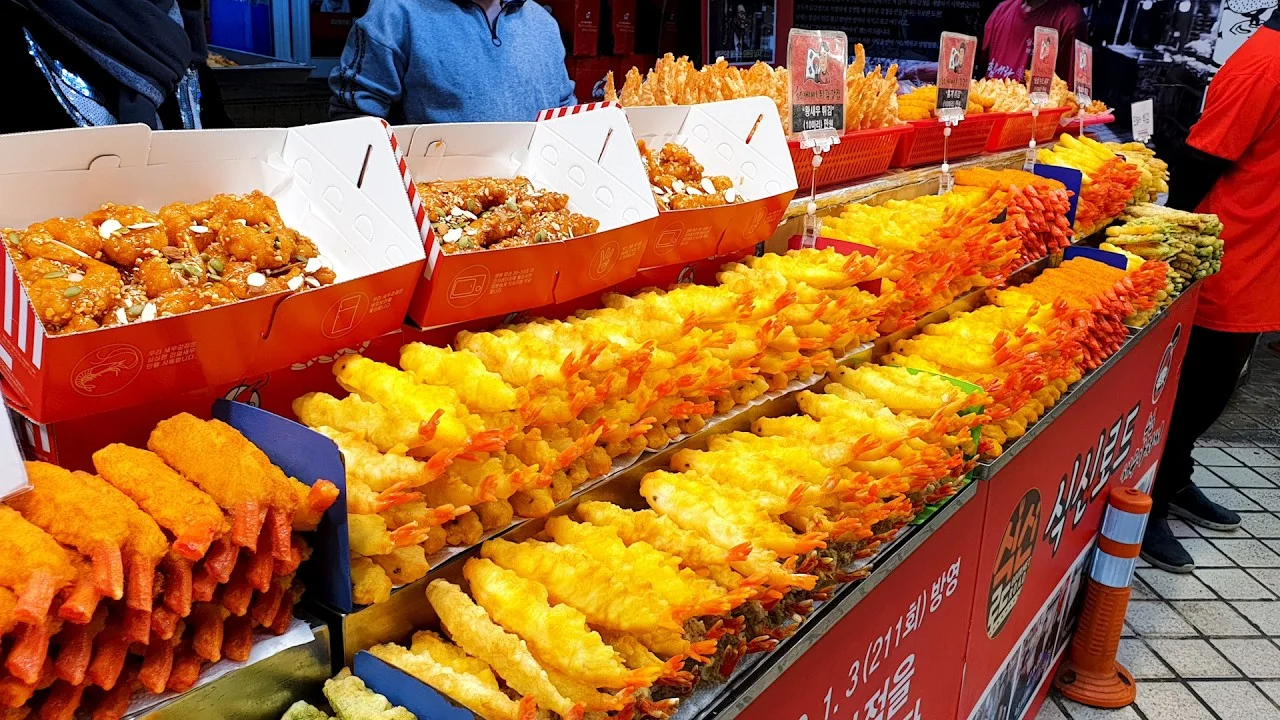
Korean-style tempura. Sweet potato, squid, shrimp, boiled egg, glass noodles, vegetables, all battered and deep-fried. You point at what you want. The vendor puts it in a paper bag. You eat it standing up.
The best move: get a few pieces of twigim and dip them into the tteokbokki sauce from the stall next door. That combo is a Korean street food cheat code.
7. Gyeran-ppang / Egg Bread (계란빵): ₩2,000
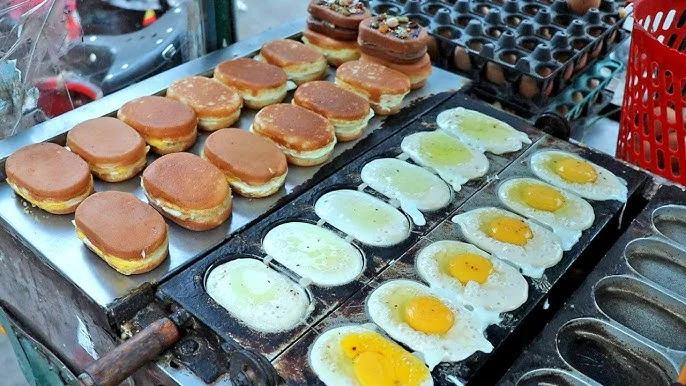
A whole egg cracked into a slightly sweet, fluffy bread and baked in a mold. That's it. No fancy technique. No secret sauce. Just egg and bread.
It's warm, filling, and costs ₩2,000. You'll find it at street carts near subway stations and tourist areas. Myeongdong has them everywhere.
8. Hoeori Gamja / Tornado Potato (회오리감자): ₩3,000-4,000
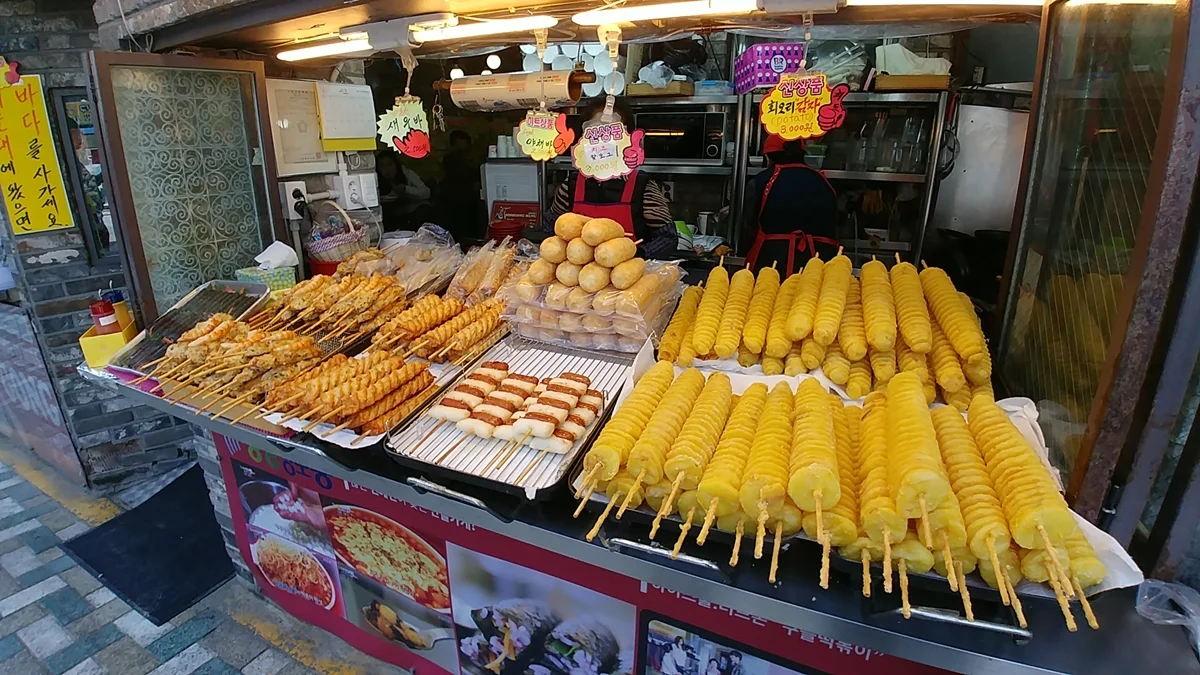
A whole potato, spiral-cut into a long ribbon, skewered on a stick, and deep-fried. It comes out looking like a tornado, crispy, salty, seasoned with cheese powder or barbecue spice.
Yes, it's a tourist magnet. Yes, it photographs well. But it's also genuinely good. Crispy on the outside, soft potato on the inside. You'll see them towering above the crowd in Myeongdong.
9. Mandu (만두): ₩4,000-5,000
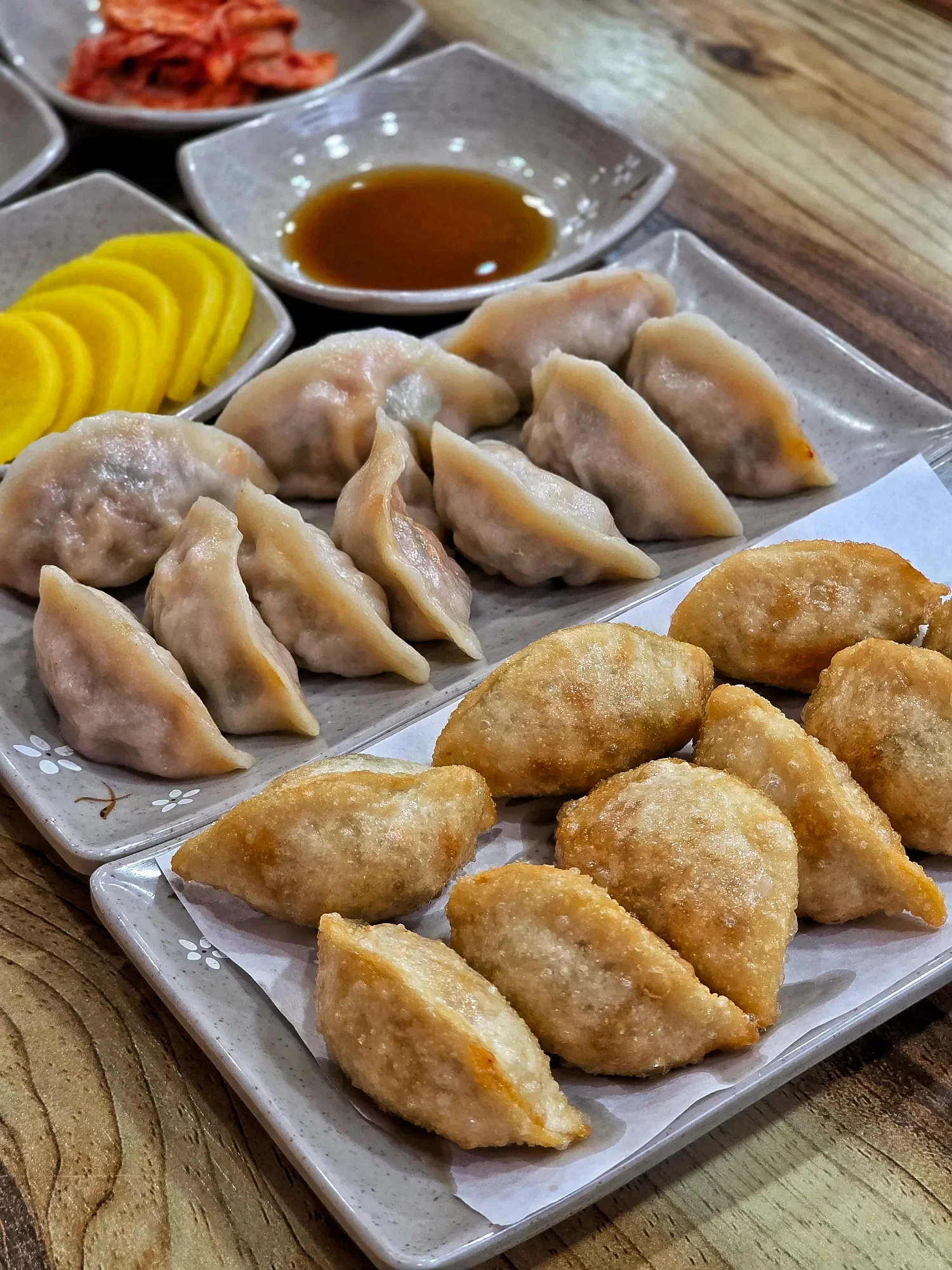
Korean dumplings. Steamed, fried, or boiled. Fillings range from pork and kimchi to glass noodles and tofu. You'll find them everywhere, but the market versions are bigger and messier and better.
At Gwangjang Market, the mandu are the size of your fist. Stuffed to bursting with pork, tofu, and vegetables. The wrapper is thick and chewy. Dip them in soy sauce with a bit of vinegar. Order four or five. You won't regret it.
10. Sundae (순대): ₩4,000-5,000
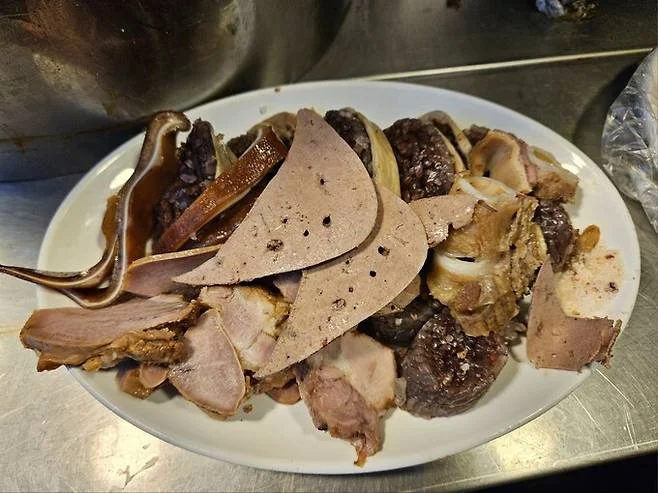
Not ice cream. Korean sundae is blood sausage, pig intestine stuffed with glass noodles, barley, and pork blood, then steamed and sliced. It sounds intense. The taste is mild.
The texture is soft and slightly chewy. You dip each slice in a mix of salt and pepper. Some stalls serve it with liver and lung on the side. Try the sundae first. If you're adventurous, try the rest.
Gwangjang Market has an entire section dedicated to sundae. The vendors there have been doing this for decades.
How to Order
You don't need Korean. Here's how it actually works at a street food stall.
Point and Show Fingers
Most stalls have no menu. The food is right there in front of you. Point at what you want. Hold up fingers for quantity. One finger = one serving. That's the whole system.
If you want to say something, these three phrases cover 90% of situations:
| Korean | Pronunciation | Meaning |
|---|---|---|
| 이거 주세요 | "Igeo juseyo" | "This one, please" |
| 하나 주세요 | "Hana juseyo" | "One, please" |
| 얼마예요? | "Eolma-yeyo?" | "How much?" |
Cash vs Card
Bring cash. Traditional market stalls, especially the smaller, older ones, are cash only. ₩10,000 and ₩5,000 bills work best. Some vendors don't carry change for ₩50,000 notes. Myeongdong and newer food stalls usually take cards, but don't count on it everywhere.
You Eat Standing Up
There are no tables at most street food stalls. You stand at the counter, eat, and move on. Some markets have shared seating areas, but expect to eat on your feet. That's normal. Nobody's judging you for eating tteokbokki while leaning against a wall.
Trash and Skewers
When you finish fish cake skewers, put them back in the container near the broth pot. For everything else, look for the trash bin near the stall. If you can't find one, hand your trash to the vendor. They'll take it.
Market-by-Market Recommendations
Gwangjang Market (광장시장)
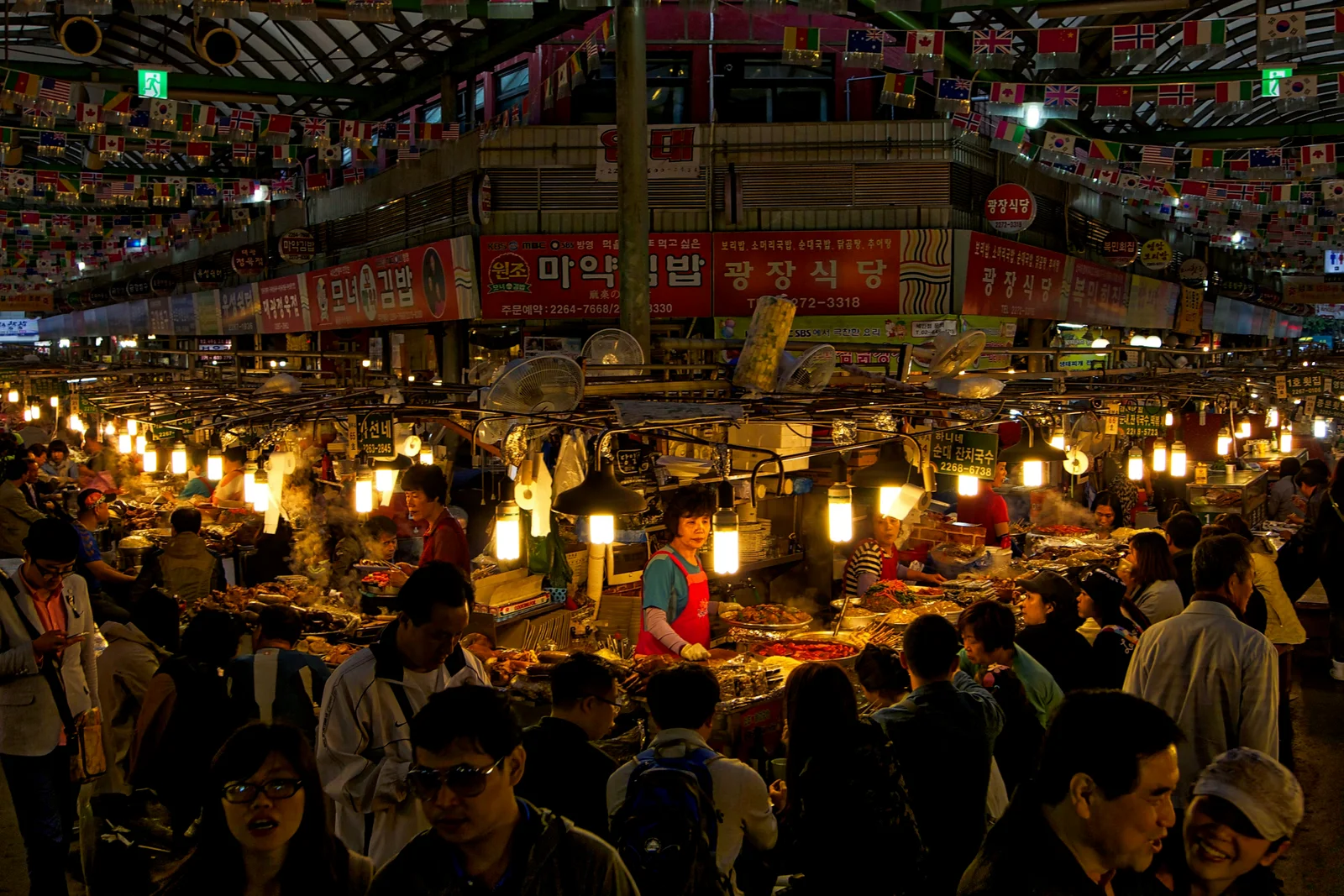
The most famous food market in Seoul. It's been here since 1905. The food alley is in the center of the market, rows of vendors on both sides, stools crammed between them, steam rising from every direction.
Must-try here: Mayak gimbap (tiny addictive rolls), bindaetteok (mung bean pancakes, fried crispy in oil, ₩5,000), sundae, and knife-cut noodles (kalguksu).
Tip: The stalls in the middle of the alley tend to be more expensive and tourist-heavy. Walk deeper in. The food is the same or better, the prices drop, and the crowds thin out.
Namdaemun Market (남대문시장)
The biggest traditional market in Korea. It's massive, over 10,000 stores. The street food is scattered throughout, not concentrated in one alley.
Must-try here: Hotteok (the famous seed-and-nut filled version), galchi jorim (braised hairtail fish, more of a sit-down meal but worth it), and japchae (glass noodle stir-fry sold by the scoop).
Tongin Market (통인시장)
A small, quiet market near Gyeongbokgung Palace. The famous thing here is the "dosirak cafe", you buy old Korean coins at the entrance (₩5,000 for 10 coins), walk through the market, and trade coins for small portions at different stalls. You build your own lunch tray.
Must-try here: The dosirak experience itself. Tteokbokki, japchae, fried chicken pieces, and whatever catches your eye, all assembled on your personal tray.
Myeongdong Street Food Alley
Not a traditional market. It's a tourist strip with food stalls lining the main shopping street. Prices are slightly higher. The variety is enormous.
Must-try here: Tornado potato, egg bread, lobster tail skewers, and strawberry mochi. This is where Korean street food meets spectacle, giant cheese corn dogs, rainbow ice cream, towering fruit sticks.
Best Times to Visit
Time of day: Late morning to early evening. Most market stalls open around 10:00-11:00 and close by 18:00-19:00. Myeongdong stalls run later, until 21:00 or so.
Day of the week: Weekdays are calmer. Saturdays at Gwangjang Market are shoulder-to-shoulder packed. Sundays, some traditional markets close entirely, check before you go.
Season: Street food is year-round, but the experience changes. Winter brings hotteok, bungeoppang, and fish cake broth, the cold-weather holy trinity. Summer shifts to shaved ice (bingsu) and cold noodles. Spring and autumn are the sweet spot for comfortable market walking.
Gwangjang Market is open daily, including Sundays. Namdaemun Market is closed on Sundays. Tongin Market is closed on the third Sunday of each month. Always double-check before heading out.
One Last Thing
Korean street food isn't fancy. It's not trying to be. It's fast, cheap, and made by people who've been cooking the same three things for 30 years. The tteokbokki vendor at Gwangjang Market doesn't have a Michelin star. She has a vat of sauce that's been simmering since 6 AM and a line of regulars who show up every week.
That's the whole point. You don't sit down. You don't look at a menu. You point, you pay, you eat. The best meals in Korea might not be at restaurants at all, they might be standing at a metal counter in a crowded market, burning your tongue on a hotteok, with nowhere to put your bag.
Bring cash. Wear comfortable shoes. Start hungry.
Resources
Helpful links mentioned in this article.
We may earn a small commission at no extra cost to you.
Got Questions? We Can Help
No question is too small. We'll look into it and get back to you.