Seoul's Palace Quarter in One Day: Gyeongbokgung, Bukchon, and Insadong
Walk from a 600-year-old palace through hanok alleyways to a street lined with traditional teahouses. The most Korean day you can have in Seoul: with real timing, routes, and photo spots.
Morning light falls across the eaves of a Joseon palace. Forsythia pushes through the stone wall. A hanbok skirt catches the wind. This is how a day in Seoul begins.
At a Glance
| Route | Gyeongbokgung → Bukchon Hanok Village → Insadong |
| Best Hours | 09:00 - 17:00 |
| Total Time | 6-7 hours (at a comfortable pace) |
| Budget | ₩30,000-50,000 per person |
| Starting Point | Gyeongbokgung Station, Exit 5 |
All three spots sit within 1 km of each other along the Line 3 corridor, west to east, then south. You walk the entire thing.
Bukchon Hanok Village: Start at the Top, Walk Down
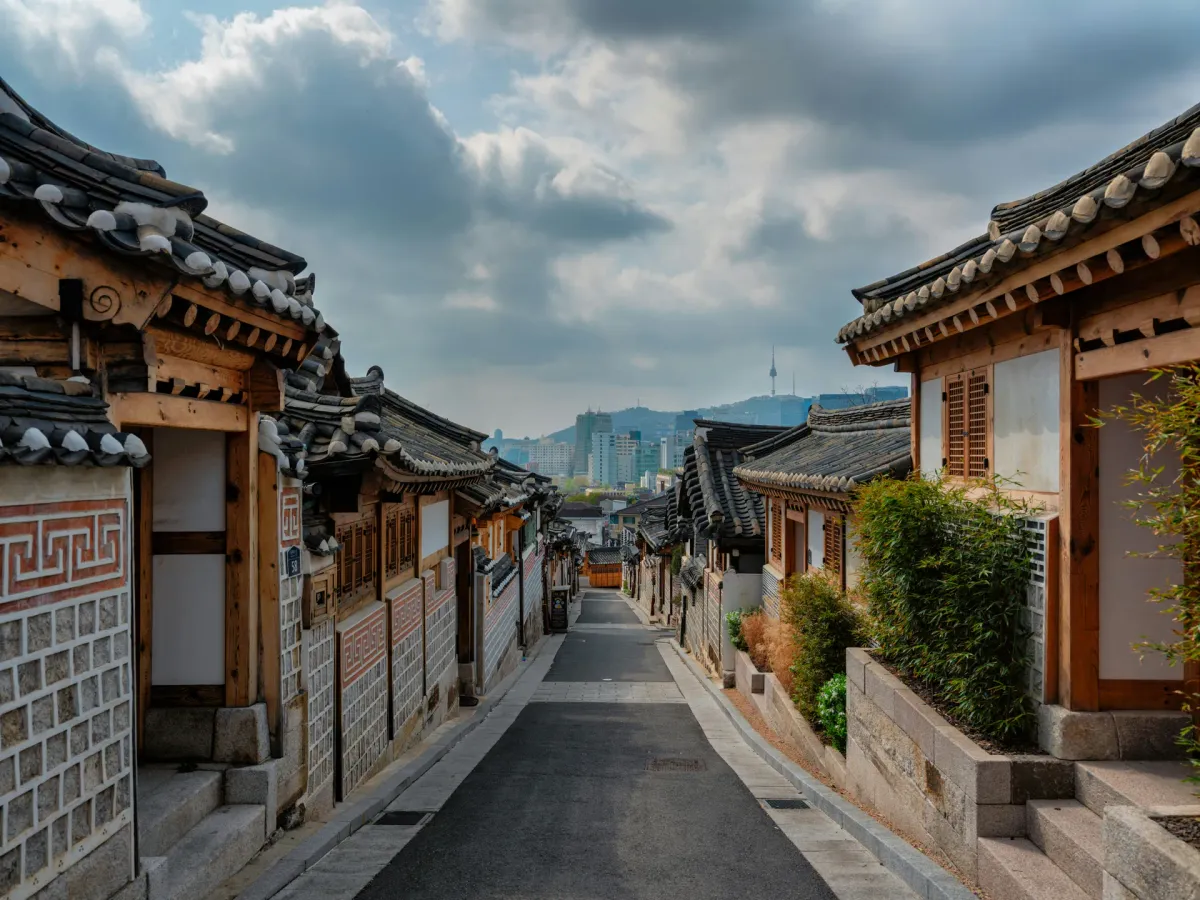
Between Gyeongbokgung and Changdeokgung palaces, hundreds of traditional hanok houses crowd along narrow lanes. This was a noble neighborhood 600 years ago. People still live here. Grey tile rooftops layer downhill and, between them, Gangnam's glass towers poke through. Tile over skyscraper. That's the view.
Go Top-Down
Bukchon is a hill. From Gyeongbokgung's east exit, it's a 15-minute walk to the entrance. Walking up through the alleys is fine, the grade is manageable. But if you'd rather save your legs, take the Jongno 02 village bus three stops to the top, then walk down. Seoul unfolds beyond the rooftops on the way down. You'll stop at every alley.
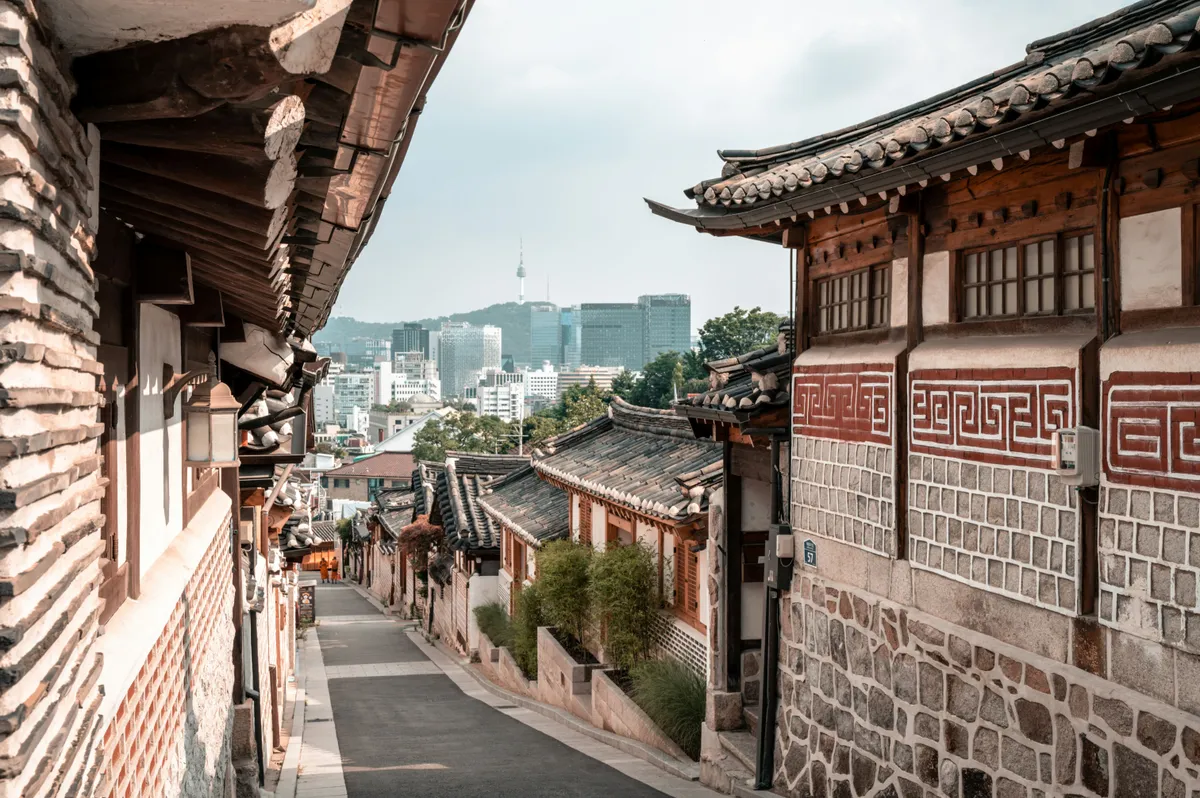
The village map marks 8 official photo spots, numbered 1 through 8. Follow them and you won't miss the key viewpoints. But the side alleys are better. Fewer tourists, and the small lanes where potted plants sit under wooden eaves, that's the real Bukchon.
Visiting Hours: Read This
Since March 2025, Bukchon-ro 11-gil, the so-called Red Zone, has restricted visiting hours. 10:00 to 17:00 only. Enter outside those hours and you face a ₩100,000 fine (~$70). With 6.6 million visitors a year, the regulation makes sense.
This is not a theme park. It's a residential neighborhood. Don't point cameras into courtyards. Don't crowd front doors. Walk quietly, travel light. That's how Bukchon is meant to be seen.
Hanok Cafes and Hanok Starbucks
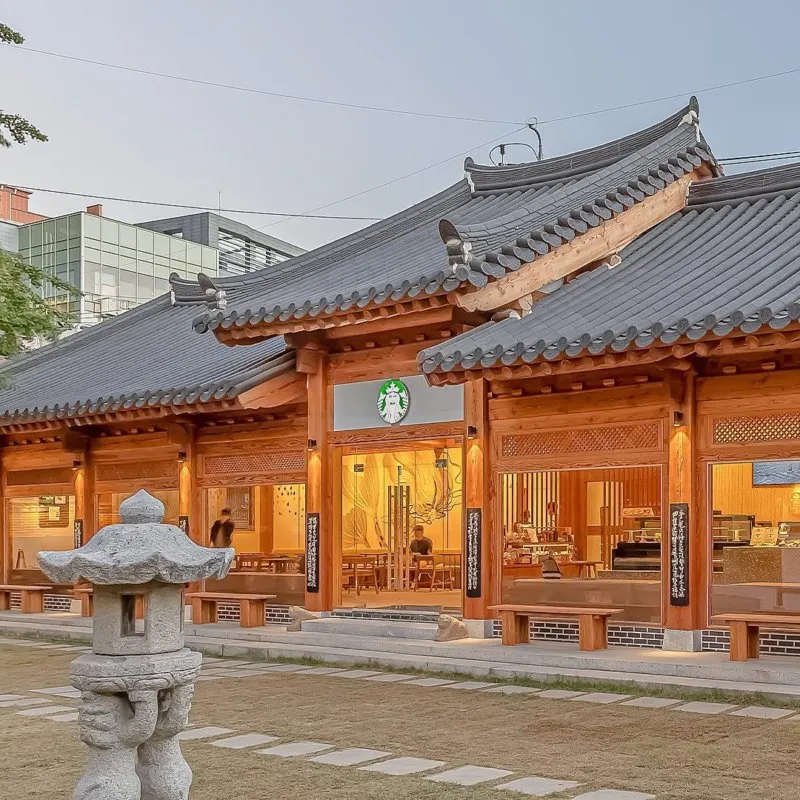
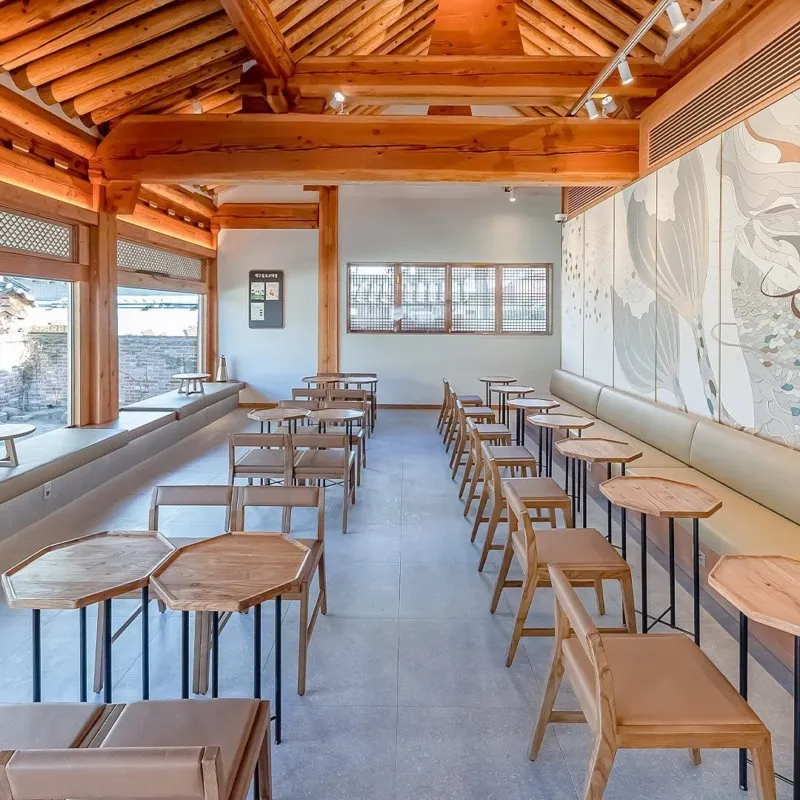
Several hanok houses along the lanes have been converted to cafes. Sit in a courtyard and the sky slices between the eaves above. The smell of roasting beans drifts through the wooden pillars, and the stone floor is cool under your feet. One cup of coffee and the whole setting comes with it.
There's a Hanok Starbucks here too. Low wooden ceiling, tables on the daecheongmaru veranda. Sitting there with an americano feels strange, you're basically drinking coffee in a Joseon nobleman's house.
Sleeping in a Hanok
If you have time, hanok guesthouses are worth considering. Lie down on an ondol floor and heat rises through the surface. Your back goes warm first. The old-wood smell of the pillars. A different kind of comfort from any hotel bed. One night and you'll know.
Note: Bukchon is a real residential area. Keep quiet. Be respectful.
Gyeongbokgung Palace: The Morning Quiet
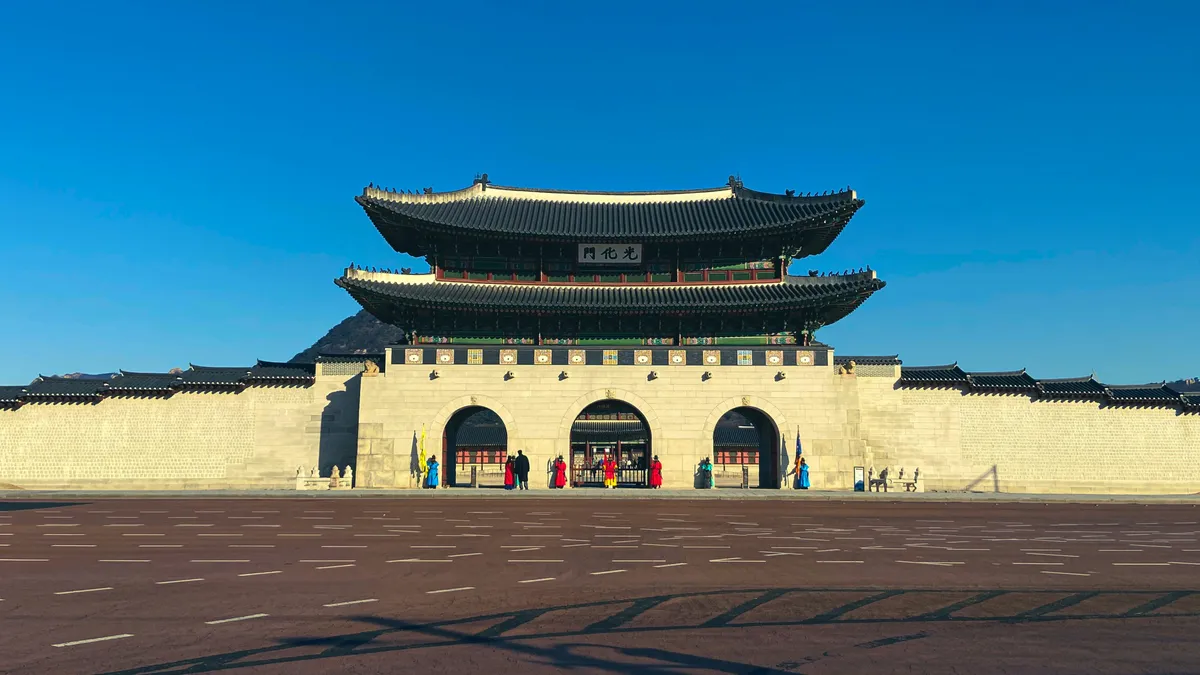
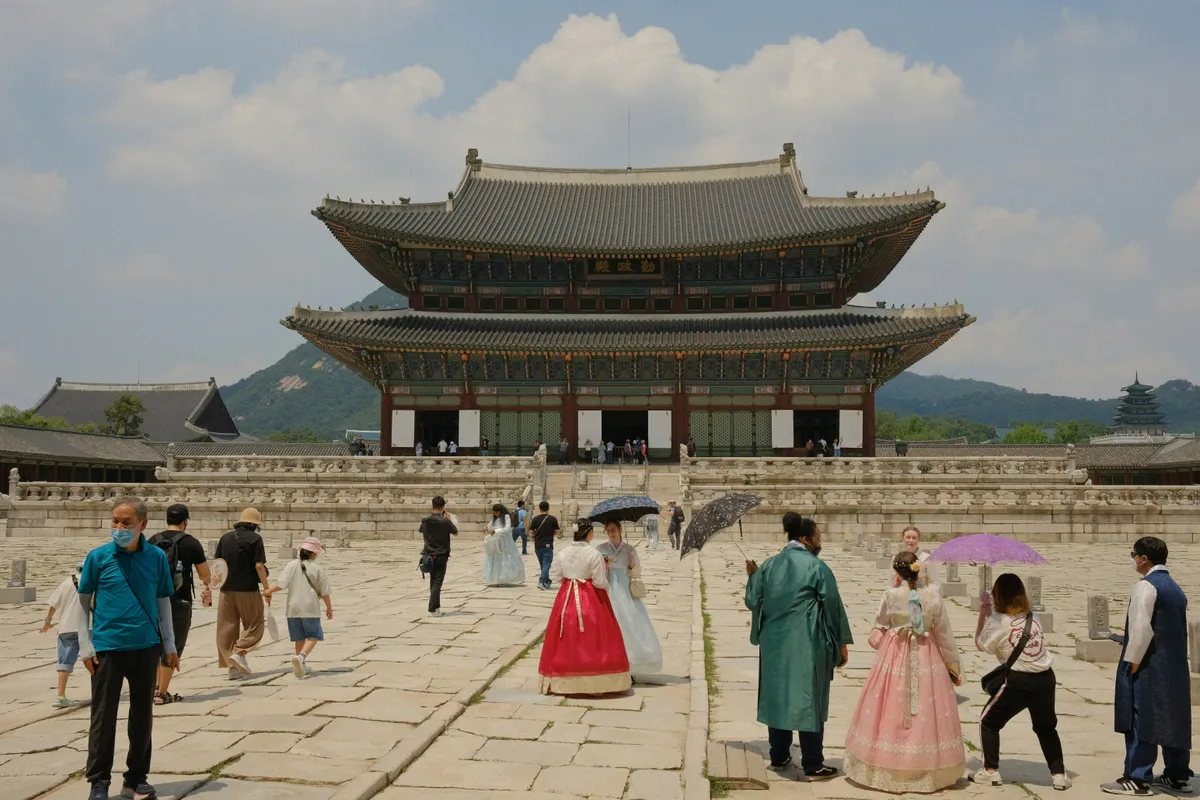
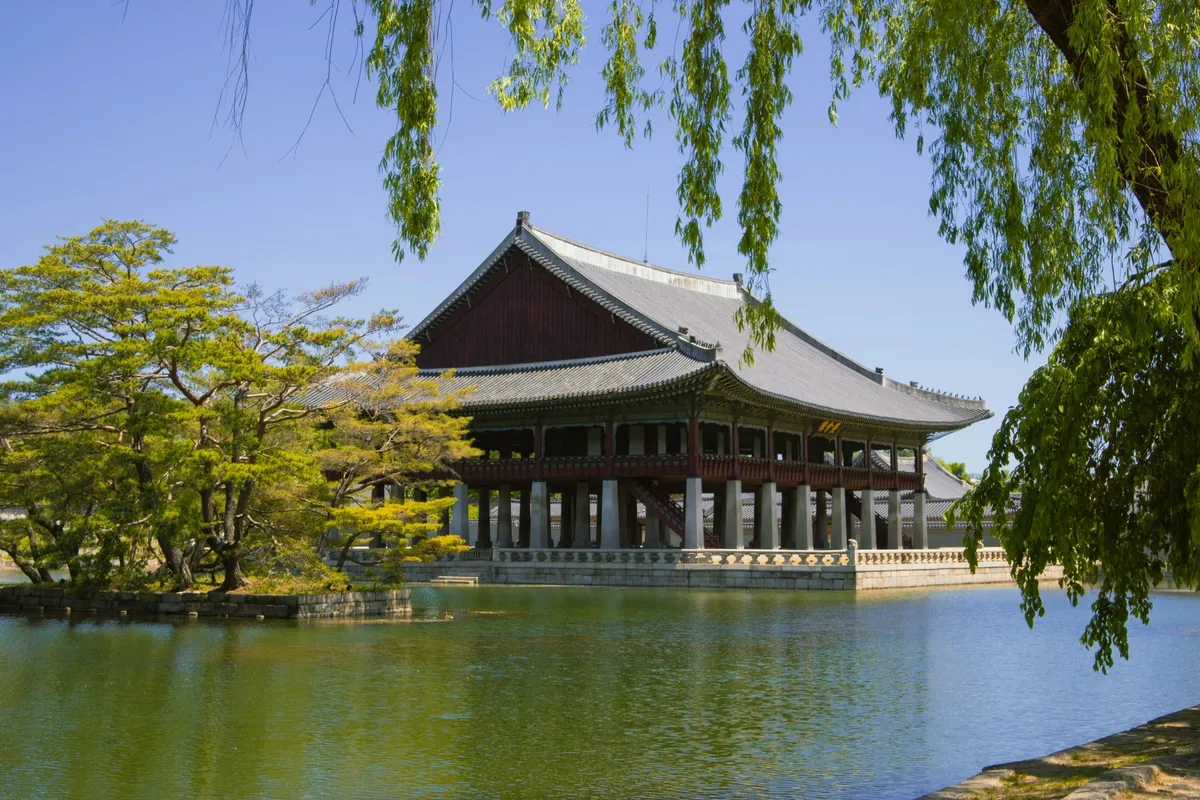
Gyeongbokgung is a morning destination. Walk in at 9:00 when it opens and the vast courtyard in front of Geunjeongjeon Hall is nearly empty. Dancheong, the painted patterns under the eaves, glow sharp in the early light. In spring, forsythia draws a yellow line along the base of every wall. After 10:00, tour buses arrive. See the essentials before that.
It's the largest of Korea's five Joseon-era palaces. You understand what "large" means once you walk it. Geunjeongjeon to Gyeonghoeru Pavilion, Gyeonghoeru to Hyangwonjeong Pond, around every corner you stop again, and before you know it 2-3 hours have passed.
Wearing Hanbok Changes Everything
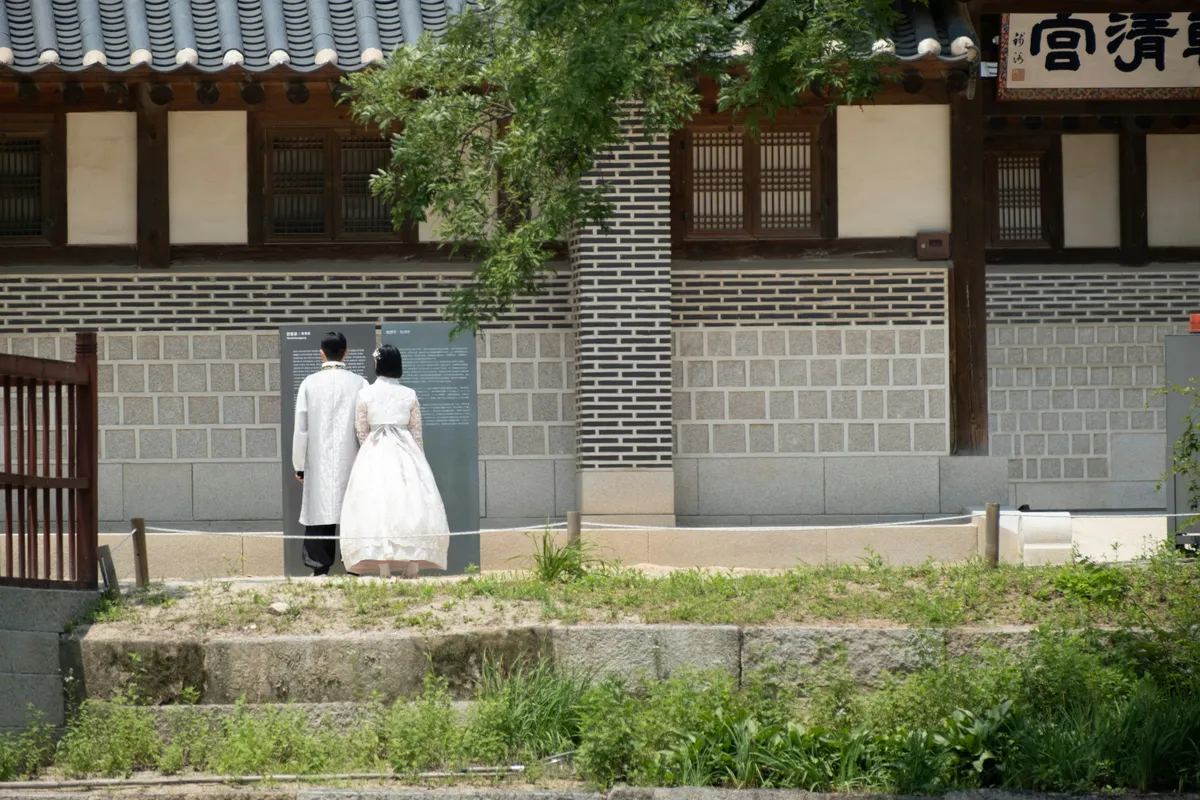
Wear hanbok and admission is free. Rental shops line the street in front of the palace. About ₩10,000 for 2-3 hours. The savings are nice, but the real reason is different. Under the eaves, against the stone walls, by the lotus pond, the hanbok seeps into the backdrop. Teal jacket, red skirt, blue dancheong overhead. Wear it and stand there, and the palace looks different.
Royal Guard Ceremony
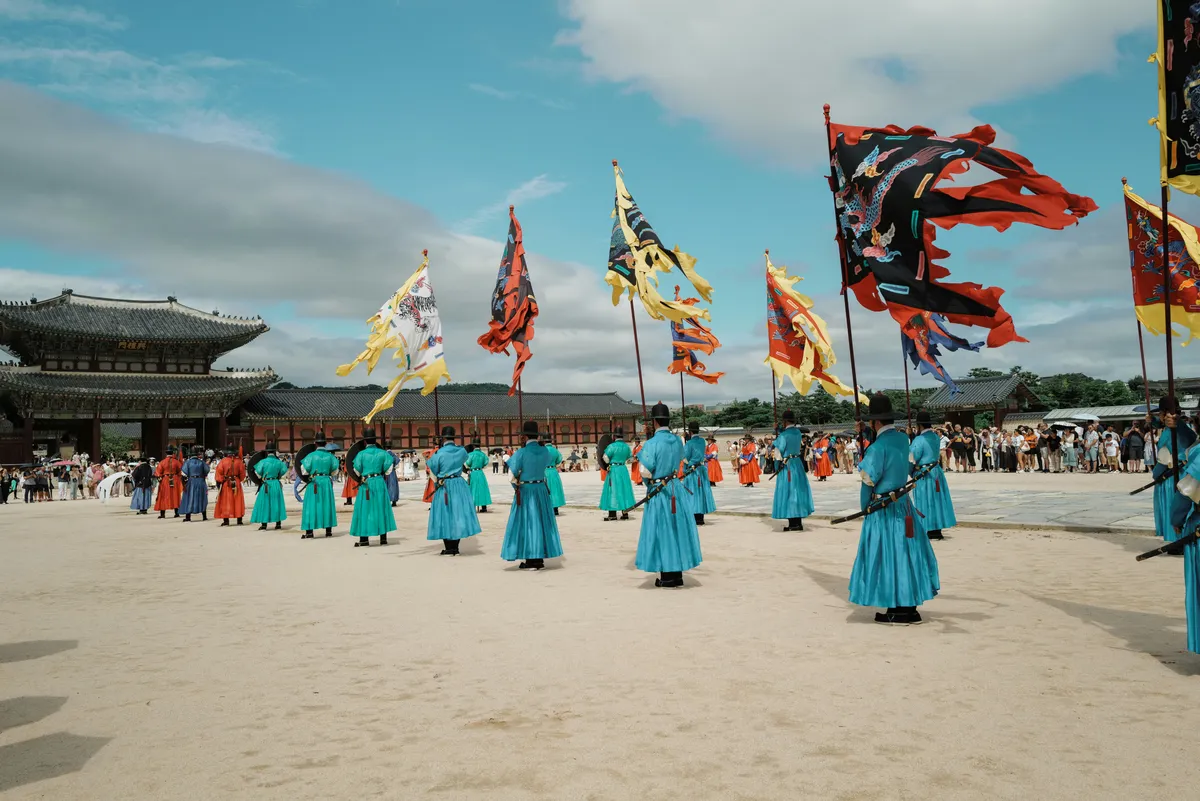
Every day at 10:00 and 14:00, the Royal Guard Changing Ceremony takes place at Gwanghwamun Gate. When the drums hit, guards in full Joseon court dress move in unison. You can hear their footsteps strike the stone ground. Free to watch, but arrive at least 15 minutes early for a decent spot. The natural flow: enter at 9:00, explore the palace first, catch the 10:00 ceremony on the way out.
Closed Tuesdays. Check before you plan.
National Folk Museum: If You Have Time
Inside the palace grounds, the National Folk Museum of Korea is free with your palace ticket. It covers traditional Korean daily life, and has air conditioning, which matters in summer. The outdoor exhibits work as backdrops too. Thirty minutes is enough.
Gungjang: The Spot Most People Miss
Most visitors only shoot inside the palace and leave. A missed opportunity. Step outside and try the gungjang (宮墻), the tall stone walls surrounding Gyeongbokgung, as your backdrop.
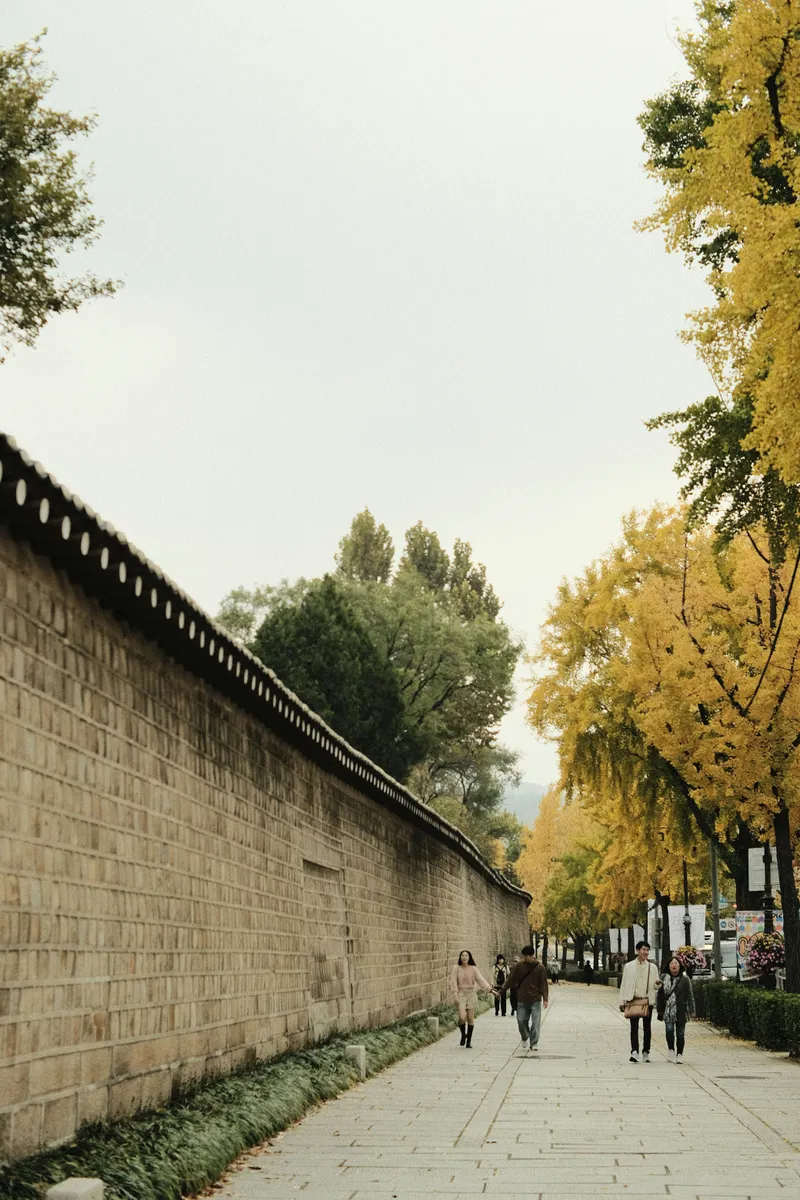
Ginkgo trees line the path beside the stone wall. In autumn, yellow leaves spill over the roof tiles. A frequent K-drama filming location. Walk this road in hanbok and you step into a period drama.
Insadong: Eat, Touch, Take Home
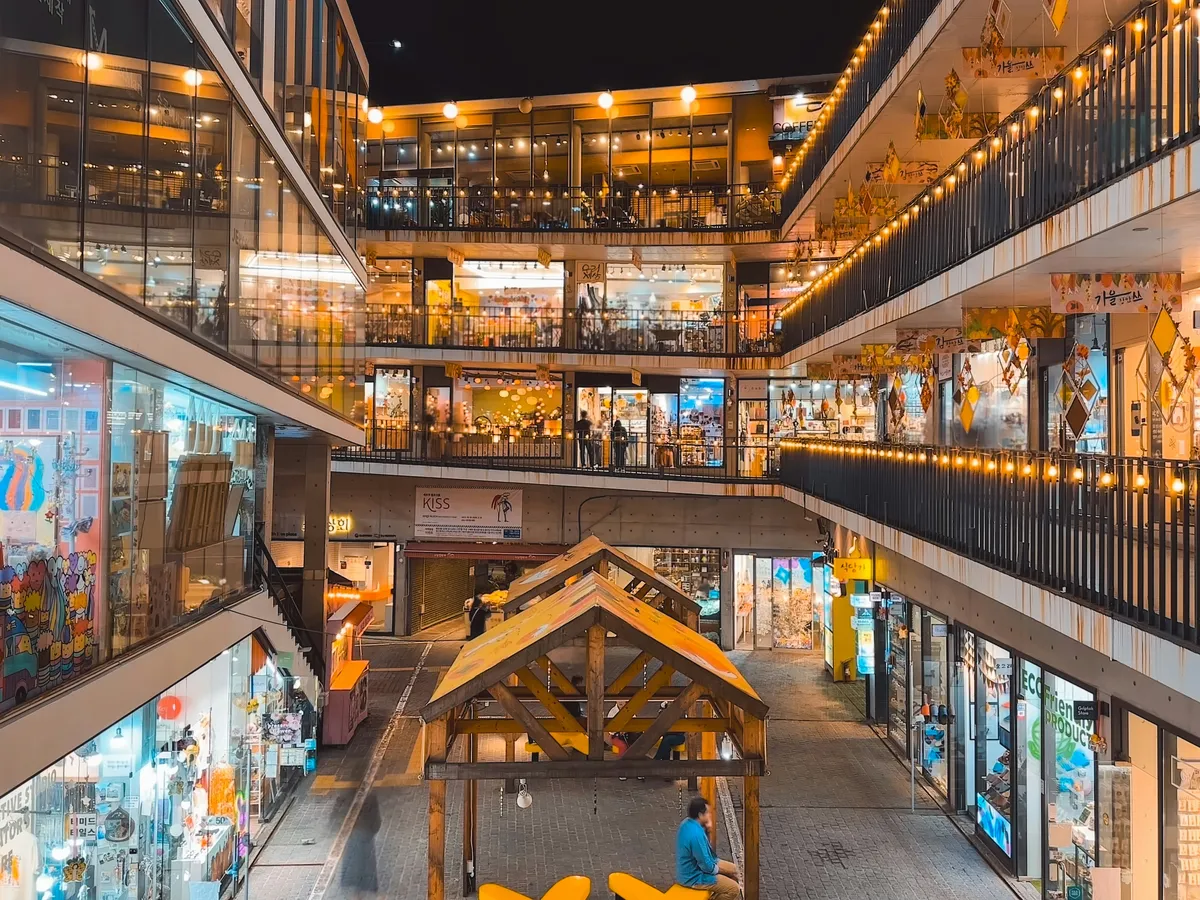
Ten minutes south of Bukchon, you reach Insadong. Traditional teahouses, galleries, souvenir shops, it's a culture street. If Gyeongbokgung and Bukchon were about the eyes, Insadong is about the hands and the mouth.
Weekends are better. Saturday 14:00-22:00, Sunday 10:00-22:00 the street goes car-free. Traffic is blocked off, the whole road turns pedestrian. Somewhere a haegeum plays, hotteok smoke fills the alley. Sunday afternoon is the busiest.
Ssamziegil
Insadong's landmark. A multi-story complex with a spiraling walkway. Craft workshops line the narrow corridor, leather smell, ceramic glaze smell, all mixed. From the upper floors, you look down over the Insadong street below. If you're buying souvenirs, this beats the mass-produced stuff outside. More things made by actual hands.
Street Hotteok
Hotteok, flat pancakes filled with brown sugar syrup and crushed nuts, are sold from carts along the street. ₩2,000-3,000 for a fresh one. The sweet caramel smell hits you first, then one bite in: crispy shell, and hot syrup bursts inside. You'll burn your tongue. Especially good in winter, but sold year-round.
Traditional Teahouses
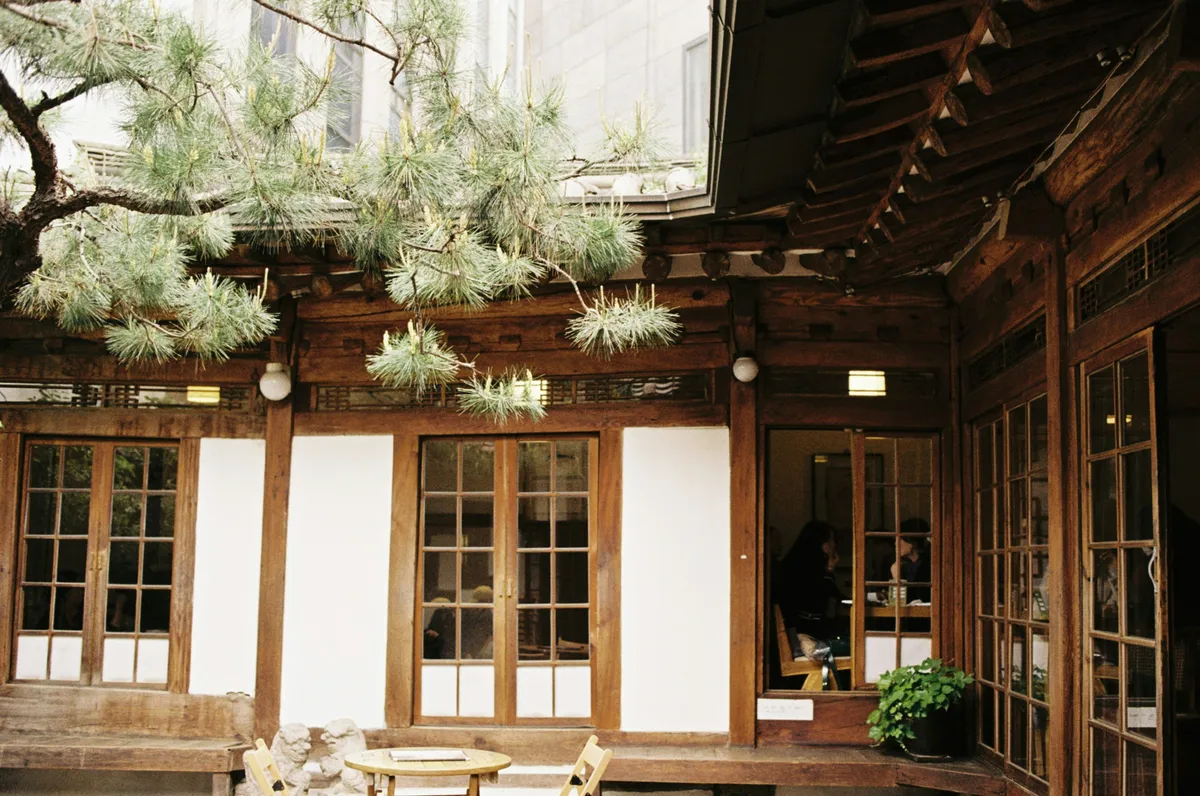
Insadong has several teahouses in converted hanok buildings. Order jujube tea, yuzu tea, or ssanghwa-cha and it arrives with a small plate of traditional rice cookies. Sit on the wooden floor, look out at the courtyard. Wrap your hands around the warm cup and the fatigue from walking starts to fade.
Practical Info
| Route | Gyeongbokgung Stn Exit 5 → Palace → Gungjang → Bukchon (15 min walk, or village bus) → walk down → Insadong |
| Hours | 09:00-17:00 |
| Total Time | 6-7 hours |
| Budget | ₩30,000-50,000 per person (hanbok rental + meals + cafe + souvenirs) |
| Transport | Gyeongbokgung Stn Exit 5 or Gwanghwamun Stn Exit 2 |
| Apps | KakaoMap (navigation), Kakao T (taxi) |
| Watch Out | Gyeongbokgung closed Tuesdays, Bukchon Red Zone 10:00-17:00 only |
| Best Season | Spring (March-May): forsythia, cherry blossoms framing the hanok |
| Tip | Wear hanbok for free palace admission: the palace comes alive when you're in it |
Why This Route Works
If someone visiting Seoul asked me for a single-day itinerary, this would be it. Three spots connected on foot. Palace history to hanok backstreets to a culture street where you eat and buy things to bring home. Rent one hanbok and the whole day shifts.
For dinner, walk from Insadong toward Jongno 3-ga. The Pimatgol alley is close.
Sore feet, dead camera battery, hotteok oil still on your fingers. That's how the day ends. That kind of day.
Got Questions? We Can Help
No question is too small. We'll look into it and get back to you.