Seoul Transit Cards 2026: 3 Questions. 1 Card. (Ditch the Comparison Tables)
You've stared at the comparison tables long enough. Answer 3 questions, get the one card you need. Plus the 5 traps that catch every tourist.
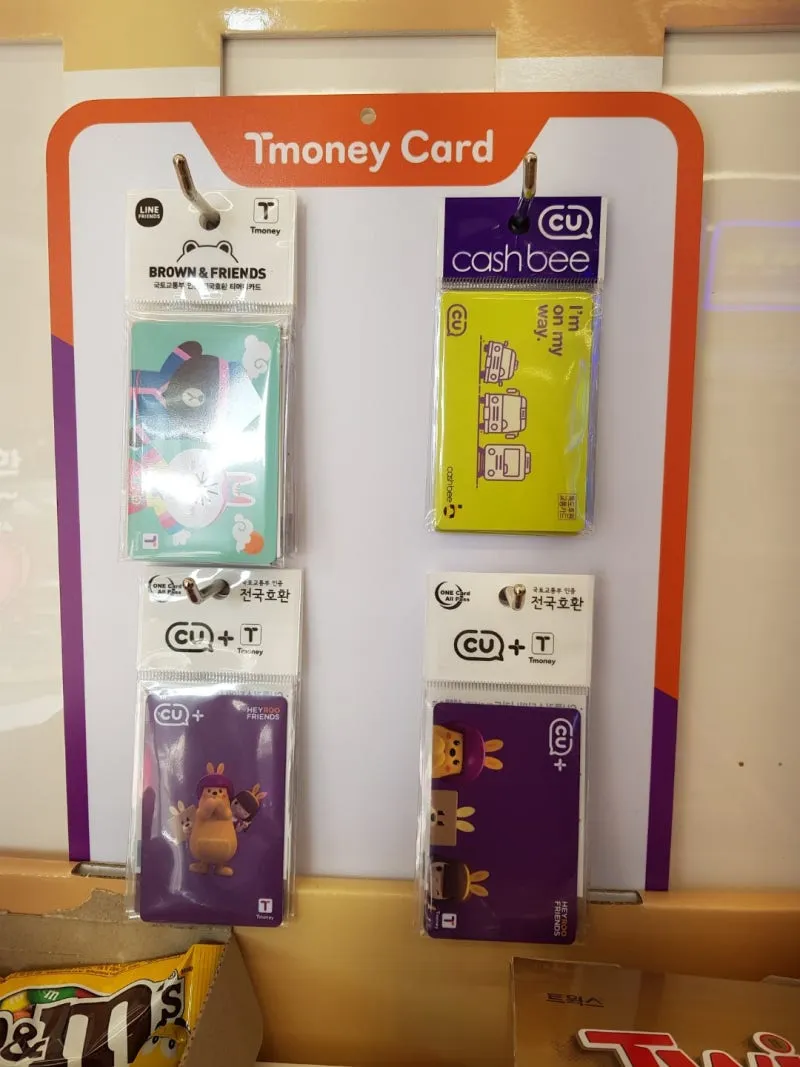
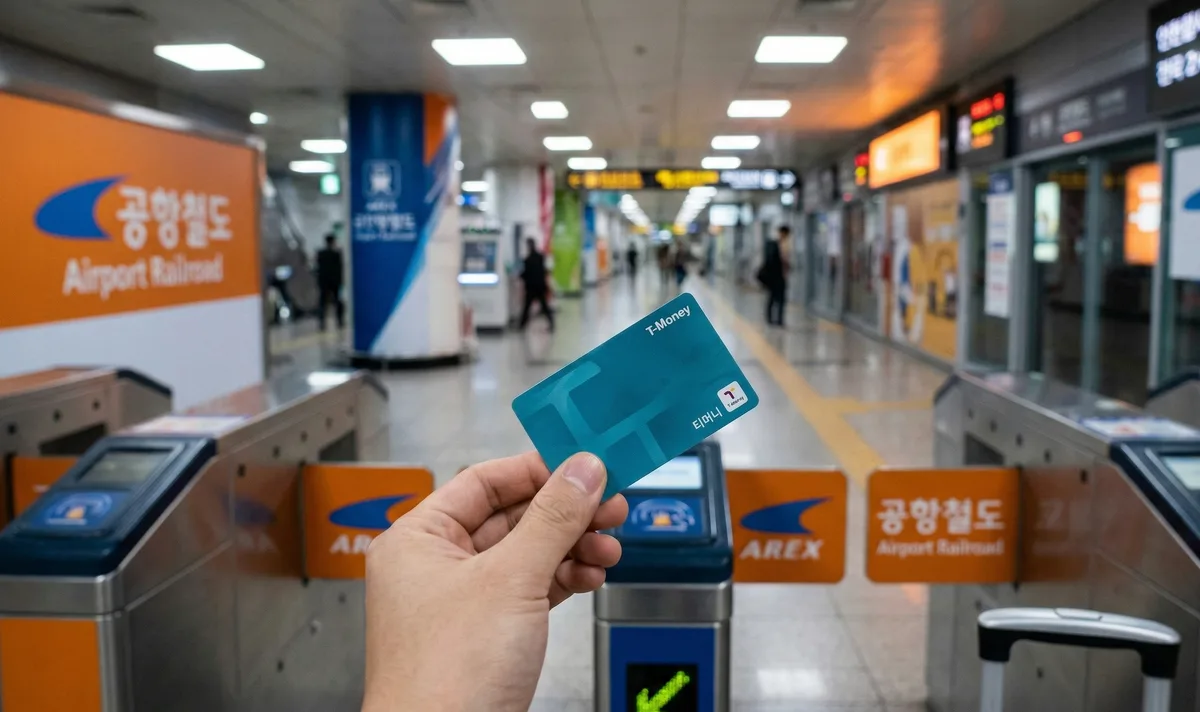
Incheon Airport arrivals. Wi-Fi's connected, SIM card's in. There are four transit cards hanging in the convenience store by the exit. The person behind you has already tapped through the gate. You're still reading the back of the card.
You don't need to compare. Just answer three questions.
3 Questions. 1 Card.
Q1. Staying in Seoul the whole trip?
There's a reason this is the first question. The biggest fork in Korean transit cards is Seoul vs. everywhere else.
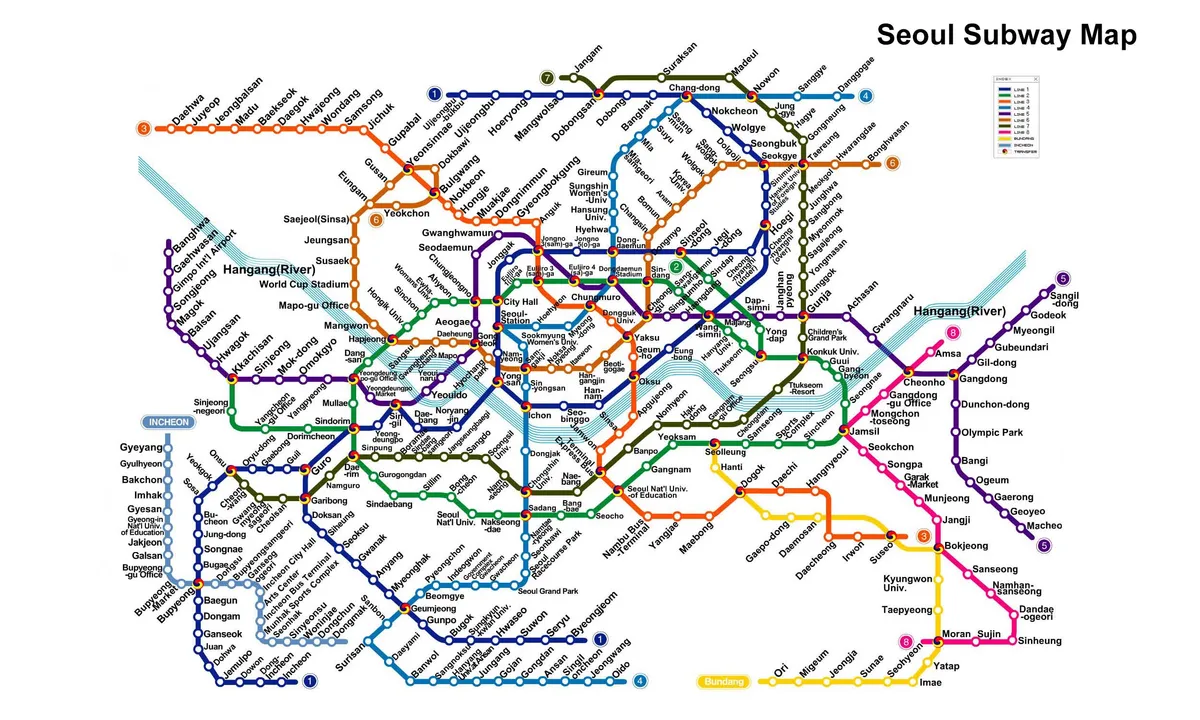
The Climate Card only works inside Seoul. One stop outside the city line and you pay the full fare from scratch (more on that later).
WOWPASS's transit function is just a T-Money chip underneath. Outside Seoul, T-Money is the only game in town.
No, I'm going outside Seoul too → T-Money
Seoul, Busan, Daegu, Gwangju, Daejeon, every subway and bus in the country. Taxis too. Convenience store payments too. ₩3,000 at the 7-Eleven you're standing in right now.
You're done reading.
Yes, Seoul only → go to Q2
Q2. Riding subway or bus 3+ times a day?
Think about a typical day in Seoul. Hotel to Gyeongbokgung (1), Gyeongbokgung to Hongdae (2), Hongdae to Myeongdong (3), Myeongdong back to hotel (4). Three tourist spots, four gate taps. Each time you hold the card up, hear the beep, watch the gate swing open.
Base fare ₩1,400 x 4 rides = ₩5,600. A Climate Card day pass is ₩5,000. From the fourth tap on, you're riding free.
Honestly, riding fewer than 3 times a day in Seoul is rare. Unless your hotel's smack in the middle of Myeongdong and everything's walking distance.
Yes, 3+ times → Climate Card
₩5,000/day up to ₩20,000/7 days. Subway, bus, Ttareungi rental bikes, unlimited. Four rides and it's already paid for itself.
No, not riding much → go to Q3
Q3. Do you hate carrying cash?
Korea is a card payment paradise. Convenience stores, street vendors, even the fish-shaped pastry guy on the corner, they all take cards. Your foreign Visa or Mastercard works almost everywhere. You barely need cash.
Except for one thing: topping up your transit card. If you're a foreigner using T-Money, you need cash. Stand in front of the subway top-up machine, feed it a ₩10,000 bill, run low, feed it another one.
In a country where everything takes cards, the transit card is the one thing that doesn't. That's exactly why WOWPASS exists.
WOWPASS lets you insert dollars or yen at an airport kiosk and get Korean won. Better rates than most exchange counters. One card from currency exchange to transit.
The catch: transit balance needs a separate top-up (see Trap 2). It's not perfect, but it's the closest you'll get to a cashless trip.
Yes, hate cash → WOWPASS
Exchange + shopping + transit. But read Trap 2 before you tap the subway gate.
No, cash is fine → T-Money
₩3,000. Load cash. Ride. If you want simple, this is it. There's a reason most Koreans use this card.
You've got your card. Now just don't make the mistakes everyone else makes.
5 Traps
Every blog tells you what each card can do. Here's what they can't.
Trap 1: Climate Card can't board at Incheon Airport
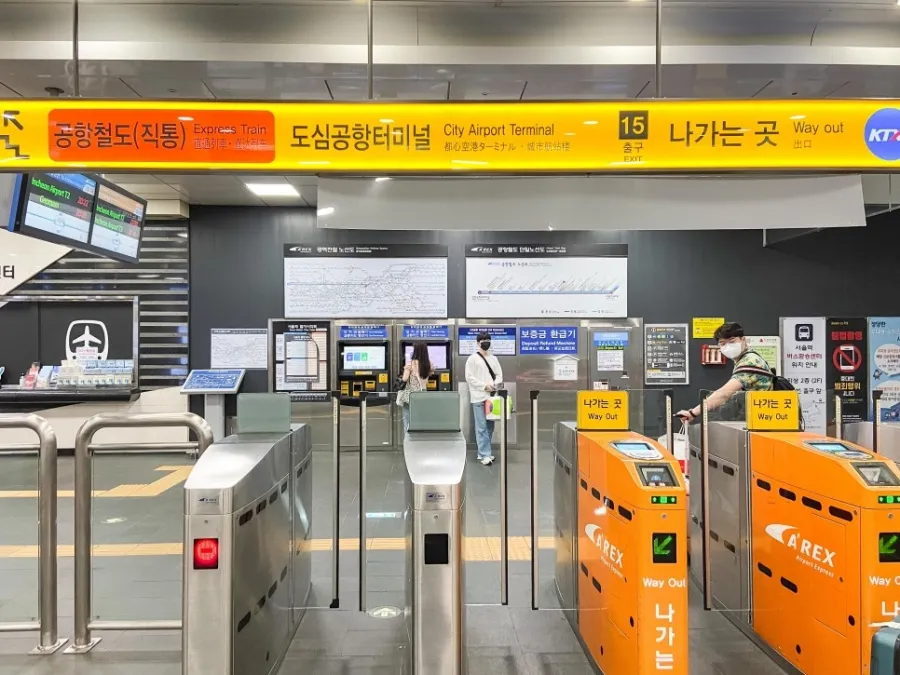
You land at Incheon. Through immigration, suitcase wheels rolling across the marble floor. Down the escalator to the basement transit center, the air changes. Ventilation fans, PA announcements, a queue forming at the gates.
AREX (Airport Railroad), the train from Incheon Airport to Seoul. You tap your Climate Card. Beep. The gate doesn't open.
Your card isn't broken. The Climate Card can't board at Incheon Airport T1 or T2. It's policy. On your last day, riding from Seoul to the airport? That works, tap out, no problem. But day one, airport to Seoul? Nope.
So how do you get from the airport to Seoul?
- AREX All-Stop Train, ₩4,950. About 60 minutes to Seoul Station. Buy a single-ride ticket at the machine next to the gate. Cash or foreign cards accepted. Cheapest option.
- Airport Limousine Bus, ₩16,000-18,000. Direct to a stop near your hotel. Buy a ticket at the 1F bus counter, or tap a T-Money. Climate Card doesn't work here either.
- Taxi, ₩65,000-80,000 to central Seoul. Most expensive, but convenient if you've got a lot of luggage.
Bottom line: day one, you need cash or T-Money on top of your Climate Card. The "unlimited Seoul transit" pass doesn't cover the very first ride every tourist takes. Weird, but that's how it works.
Trap 2: WOWPASS has two wallets
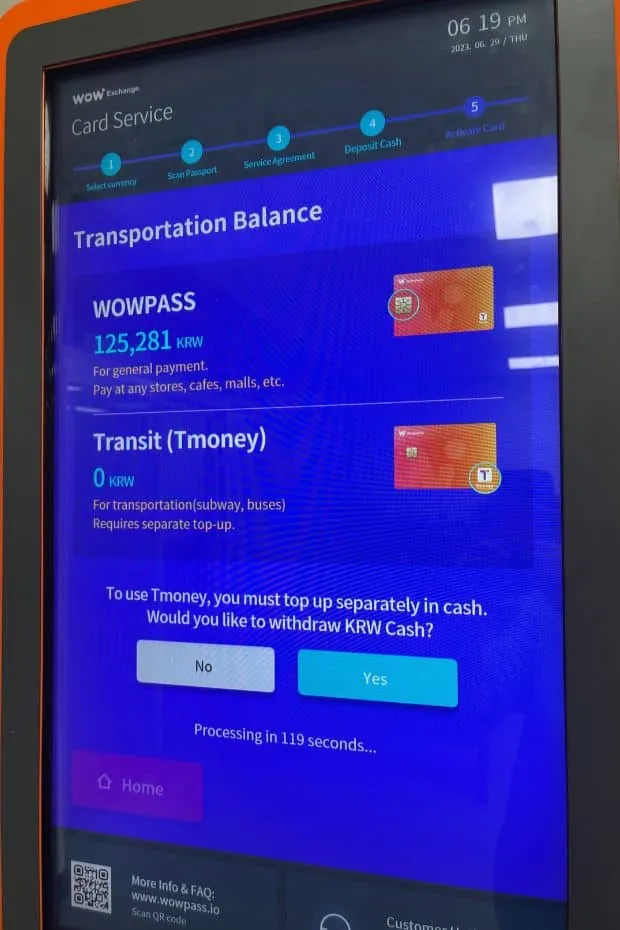
You're standing at the WOWPASS machine, feeding in $200. The screen shows ₩260,000. "Subway, food, shopping, I'm set." You walk to the subway gate. Tap. Rejected.
What just happened? The money's right there.
WOWPASS has two separate wallets.
- Pay Balance, for shopping, restaurants, convenience stores. Your exchanged money goes here.
- Transit Balance, for subway and bus only. This one only takes KRW cash.
That ₩260,000? It's all in the Pay wallet. Transit wallet: ₩0. That's why the gate said no.
Right after exchanging, do this:
- Option A, Find a subway top-up machine (blue kiosk). Place your WOWPASS on it, insert ₩10,000-20,000 in cash. Hit "Transit Card Top-up." Done.
- Option B, Download the WOWPASS app. You can transfer from Pay balance to Transit balance inside the app. No cash needed. Almost nobody knows this exists.
- Option C, Walk into any convenience store (CU, GS25, 7-Eleven) and say "Transit card top-up please." They'll load cash onto the transit side.
One card, two wallets. Top up the transit side the moment you exchange. The people who get stuck at the gate are always the ones who didn't know.
Trap 3: Apple Pay T-Money won't work for you
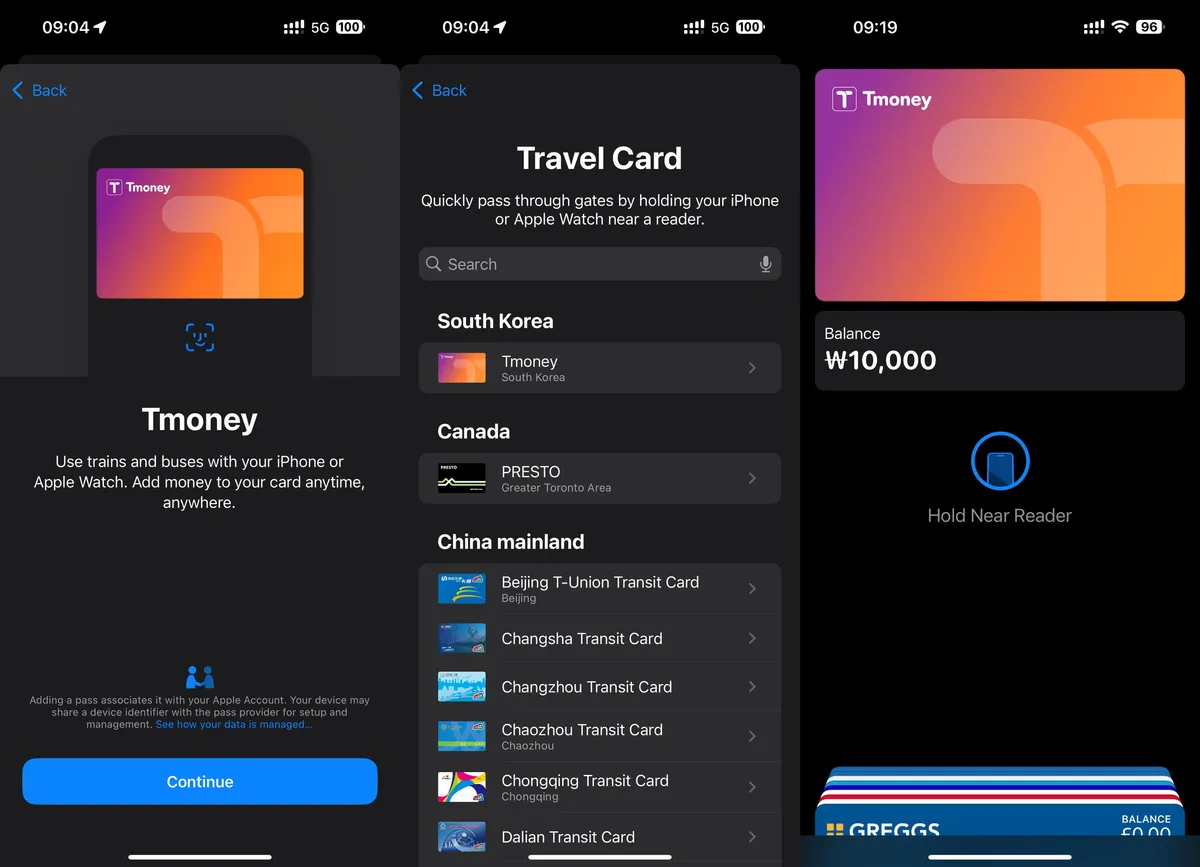
Since July 2025, you can add T-Money to Apple Wallet. Tap your iPhone at the gate. No physical card. Sounds perfect for tourists.
Setup works fine. T-Money card appears in Apple Wallet. Then you try to top up. You need a Korean-issued bank card.
US Visa? No. Japanese Mastercard? No. UK Amex? No. Only a card linked to a Korean bank account. If you don't have a Korean bank account, your Apple Wallet T-Money stays at ₩0. Just a card-shaped icon on your screen.
The reality: foreign visitors need a physical T-Money card. Buy one at a convenience store. Load cash. Tap. Apple Pay T-Money is a feature for Korean residents. Not for travelers.
Trap 4: Climate Card: when does the clock start?
Tourist short-term passes are straightforward. The countdown starts from your first tap, not when you buy it. Buy it Tuesday, first ride Thursday, it starts Thursday. No rush.
Monthly passes are different. You pick a start date when you charge it, within 5 days of the charge date. Charge on the 1st, pick the 3rd, runs until the 2nd of next month. Charge it and forget to ride? You just burned days.
Once you've ridden even once, no refunds.
Trap 5: Leave Seoul, pay full fare
You board at Seoul Station with your Climate Card. Ride down to Suwon to see Hwaseong Fortress. Tap off at Suwon Station.
"Seoul portion was free, I just pay the Suwon leg, right?" Wrong. The entire fare gets recalculated from scratch. Not "Seoul free plus Suwon extra." The whole fare gets wiped. The gate won't open. You walk to the station office, wait in line, pay the full Seoul Station-to-Suwon fare in cash or card. Standing in that line stings a little.
Expanded coverage areas (Seongnam, Hanam, Gimpo, Goyang, Uijeongbu) are fine. But Suwon? Chuncheon? Incheon proper? Outside the zone. Check the route map before you ride.
Each Card in 60 Seconds
T-Money
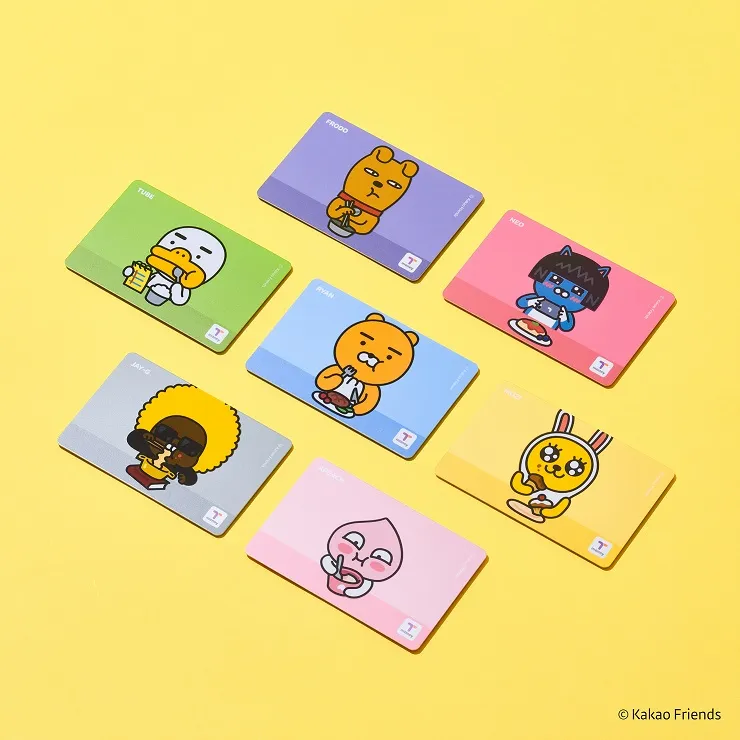
Walk into a convenience store. They're hanging right next to the counter. CU, GS25, 7-Eleven, doesn't matter which. Five or six cards on hooks under the fluorescent lights. Grab one, set it on the counter. Basic cards ₩3,000-4,000. Kakao Friends character ones ₩4,000-5,000. Say "T-Money please" and they'll know what you mean.
Load cash. Tap. Ride. Seoul, Busan, Daegu, Gwangju, works nationwide. The most-used transit card in Korea. If you want zero hassle, this is the only card you need.
Taxis too. Hand the card to the driver and it's paid. Though 90% of Korean taxis are hailed via KakaoT, Korea's main ride-hailing app. For foreigners, Uber Korea or K-ride are easier, foreign cards link directly.
Leaving Korea with money left on it? Get a refund at any convenience store. ₩500 fee.
The one downside: foreigners can only load cash. Stand at the subway top-up machine, insert a ₩10,000 bill, run low, insert another. No auto-top-up without a Korean bank account.
Climate Card
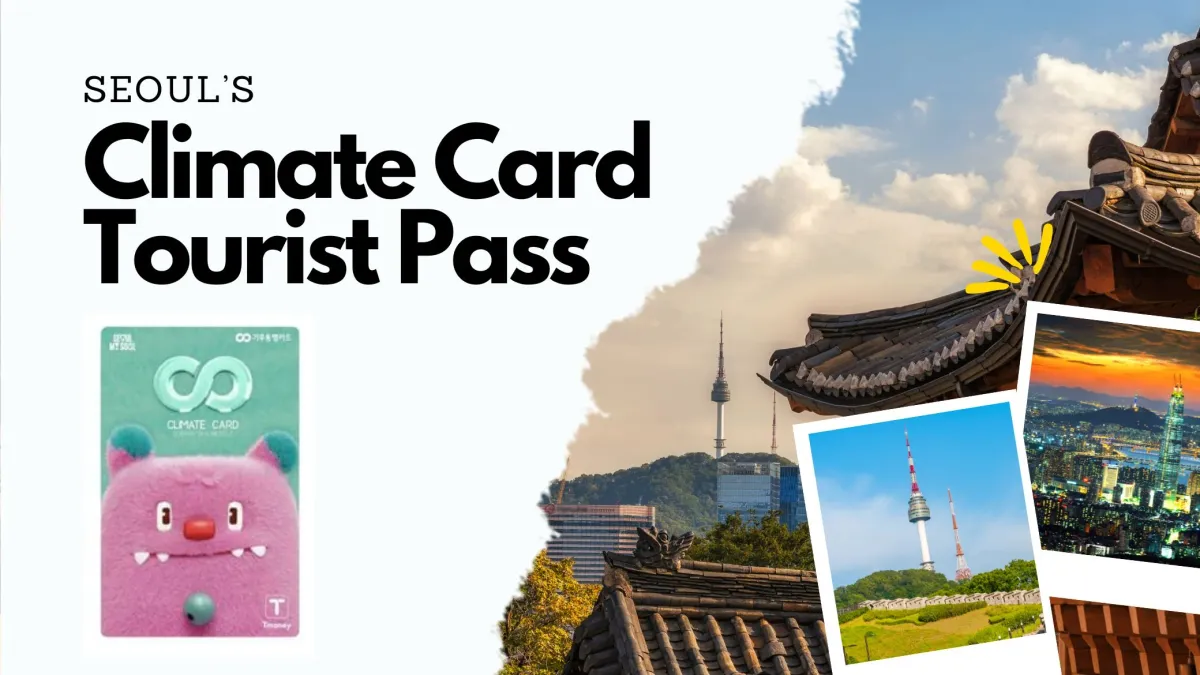
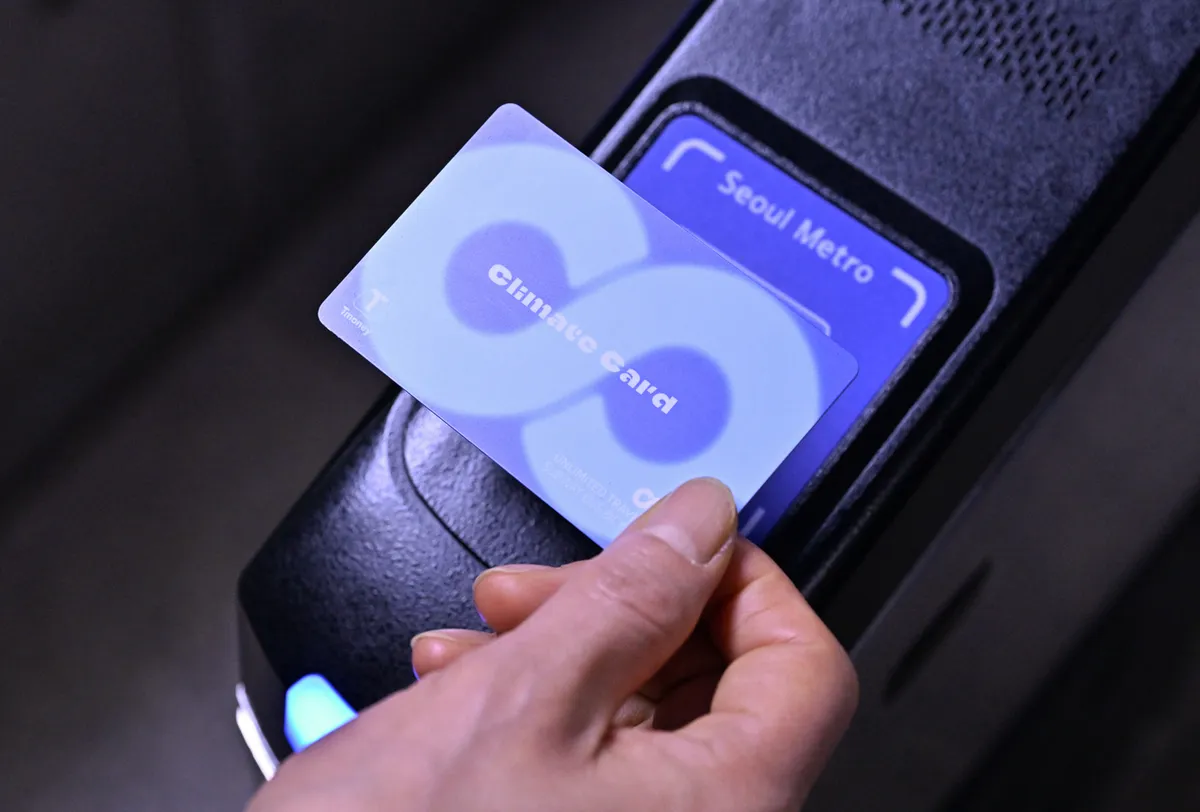
For people who stay inside Seoul. Subway, bus, Ttareungi bikes, all unlimited.
| Duration | Price |
|---|---|
| 1 day | ₩5,000 |
| 2 days | ₩8,000 |
| 3 days | ₩10,000 |
| 5 days | ₩15,000 |
| 7 days | ₩20,000 |
3 days for ₩10,000 works out to ₩3,333/day. A single subway ride is ₩1,400, so three rides and you've broken even.
Gyeongbokgung, then Hongdae, then Jamsil, a typical Seoul day means 4-5 rides. Not having to check your balance every time feels better than you'd expect.
Step outside Seoul, though, and the card's dead. Can't board at the airport (Trap 1), leave Seoul and you pay full fare (Trap 5). Seoul-only trip? This card. Seoul plus other cities? T-Money.
WOWPASS
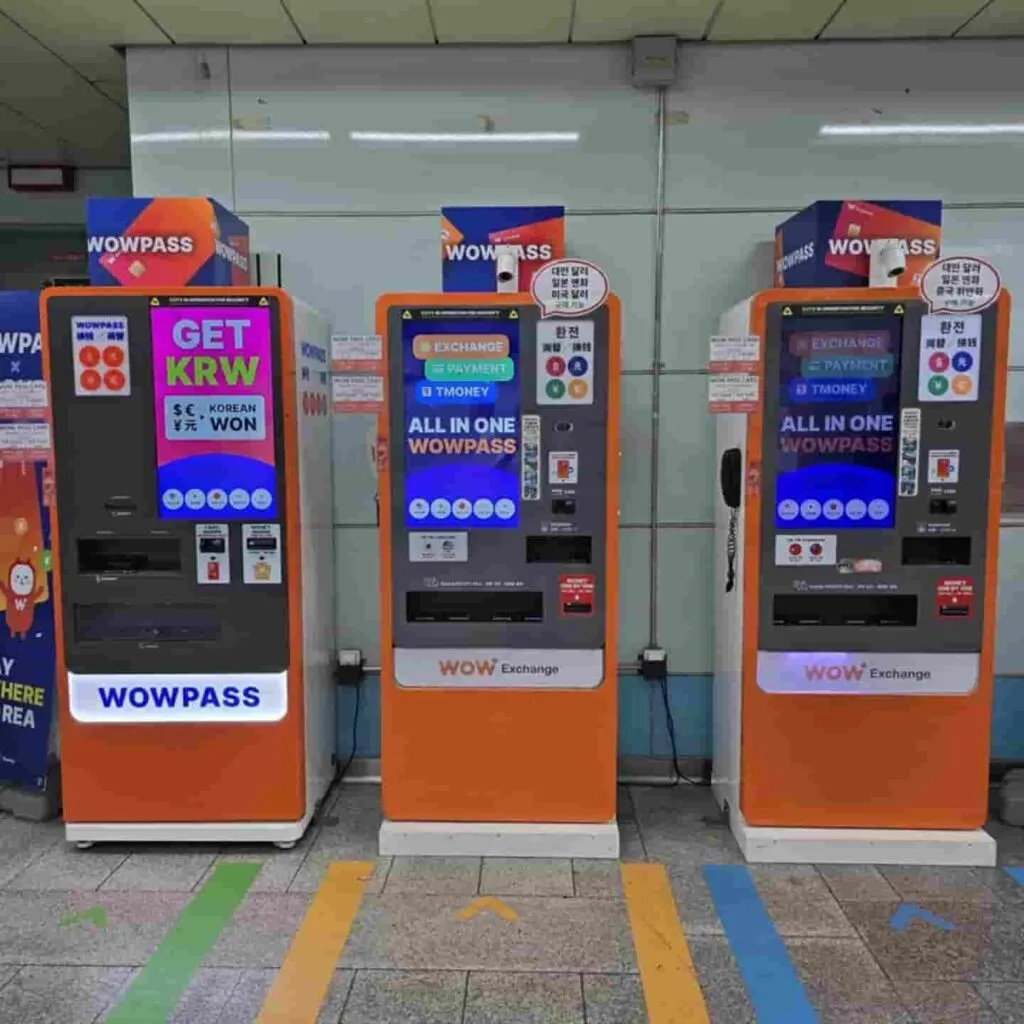
Feed dollars or yen into the WOWPASS machine at the airport. Out comes Korean won at rates better than most exchange counters. Use that money to shop, eat, and ride the subway.
Shopping in Myeongdong, lunch in Hongdae, subway in between, that's a WOWPASS day. No coins to deal with.
Just remember Trap 2. Transit balance needs a separate cash top-up. You can't ride the subway with your exchanged money right away. Either transfer in the app or top up at a machine, one extra step.
NAMANE
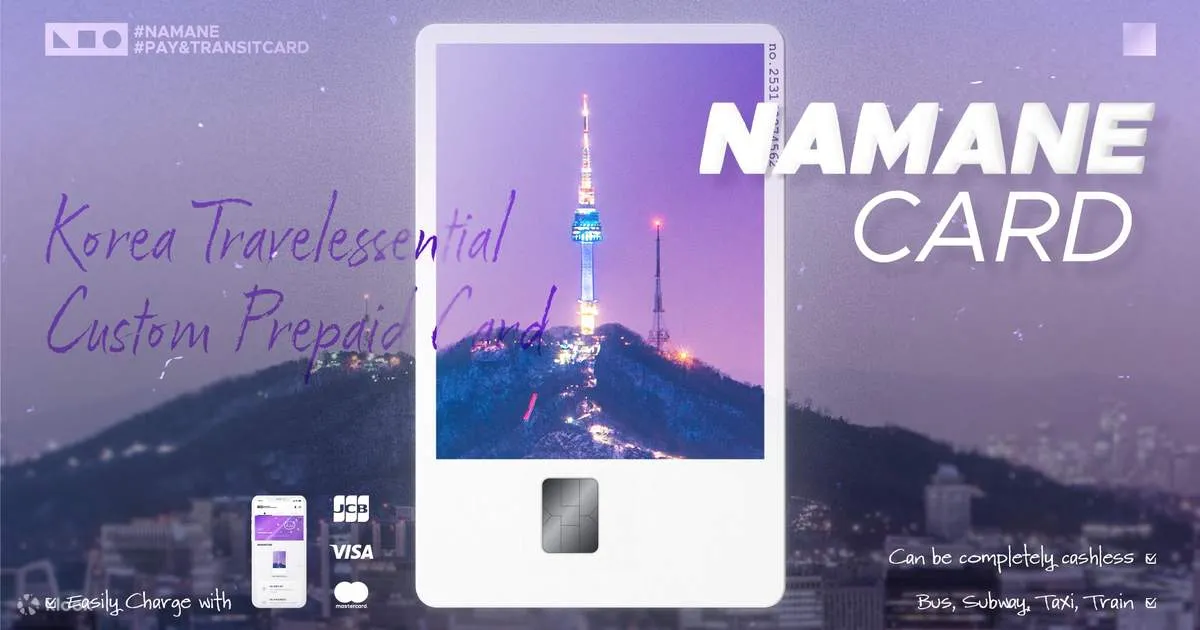
₩7,000. Upload any photo at a kiosk and it gets printed on the card. Your selfie, your favorite idol, your dog. Functions exactly like T-Money.
Why pay ₩7,000 instead of ₩3,000 for a regular T-Money? One reason: the custom print. It's a souvenir, not a feature upgrade. Over 200 kiosks at airports and downtown.
Korea Tour Card
₩4,000. T-Money function plus discounts at 160+ attractions. N Seoul Tower 30% off, COEX Aquarium 20% off, and more.
If your itinerary hits Gyeongbokgung, N Seoul Tower, and COEX, the discounts stack up. Available at Incheon Airport Transit Centre. But if you skip those specific spots, it's just a pricier T-Money.
Korail Pass Plus (new in 2026)
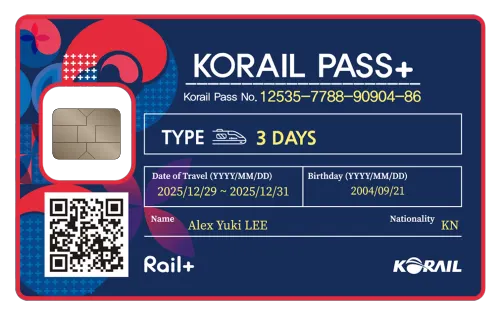
Launched in 2026. Korail Pass (unlimited KTX) combined with a NAMANE card. Foreign travelers only.
Seoul to Busan by KTX, Busan to Gyeongju, Gyeongju back to Seoul, ride all those trains, then use the same card for local subway and bus at each stop. No juggling a train pass and a transit card.
Buy the Korail Pass online, get a QR code, pick up the physical card at an airport or station kiosk. Top up the local transit balance separately.
Match Your Itinerary
Seoul 3 Days: palaces, food, shopping
Third morning, you tap through the Gyeongbokgung Station gate and realize you haven't checked your balance once.
Climate Card 3-day pass, ₩10,000. Tap at Gyeongbokgung, off at Hongdae, on at Euljiro, off at Jamsil. Four or five rides a day. Fifteen rides over three days. ₩10,000 covers it all.
Seoul + Suwon day trip
You're walking along the Hwaseong Fortress walls in Suwon when you discover your Climate Card doesn't work here. Too late.
Suwon is outside Climate Card coverage. Two options: Climate Card for Seoul days plus T-Money for Suwon, or just T-Money for the whole trip. If it's a single Suwon day trip, the second option's simpler.
Seoul + Busan (KTX)
The KTX pulls into Busan Station. You tap through the subway transfer gate with the same card. No switching.
That's the Korail Pass Plus advantage. Seoul to Busan, Busan to Gyeongju, Gyeongju to Seoul, three or more train legs and the pass pays off. If it's just one round trip, separate KTX tickets plus T-Money might be cheaper. Do the math.
One thing: Seoul Station has 20+ KTX kiosks lined up, but only 2 accept foreign cards. And one of those is frequently broken. Don't get caught out, book on the Korail website (letskorail.com) ahead of time. Foreign cards work there.
Seoul + Chuncheon / Nami Island
The Bukhangang River flows past the ITX-Cheongchun window. But this isn't a train you ride with a transit card.
T-Money. Climate Card doesn't cover Chuncheon. You take the ITX-Cheongchun from Yongsan or Cheongnyangni, that's a separate ticket. Ride the Seoul subway with T-Money to the station. Buy the ITX ticket separately. Get off at Chuncheon and use T-Money again for the local bus.
Shopping-focused: Myeongdong, Hongdae, Gangnam
Tap your WOWPASS at the Olive Young checkout in Myeongdong. Subway to Hongdae, tap again. Nothing else to pull out.
WOWPASS works best here. Exchange, shop, ride, all on one card. Just keep the transit balance topped up (see Trap 2). Alternatively, use T-Money for transit and your foreign credit card for shopping. Most stores in Myeongdong, Hongdae, and Gangnam take Visa and Mastercard.
Oh, and Google Maps doesn't work in Korea
You've got your card. It's loaded. You're standing at the gate.
You open Google Maps. The map loads. You search "Seoul Station to Gyeongbokgung." Route results, nothing. No transit, no walking, no driving. The app isn't broken.
Korea restricts map data exports for national security reasons. Google Maps directions are completely missing. You can drop a pin, but it won't tell you how to get from A to B. Korea is one of the very few countries where Google Maps just... doesn't do directions.
Download Naver Map. It has an English interface and shows subway transfers, real-time bus arrivals, and walking routes. KakaoMap works too, but its English support isn't as good as Naver's.
This is the app you should install before your transit card.
What's changing
This article is current as of February 2026. Korean transit policy moves fast.
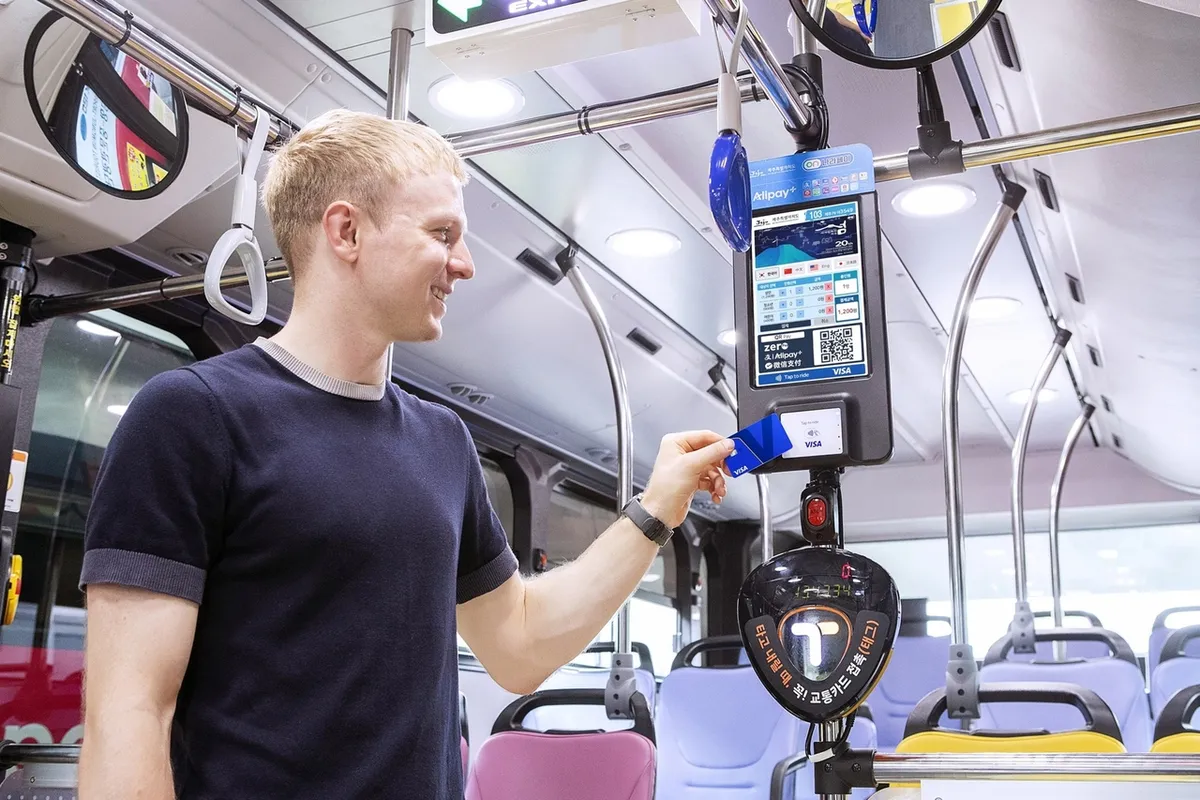
By 2030 or so, this article might not be necessary at all. Pull your Visa out of your pocket, tap the gate, done. Seoul's installing EMV contactless terminals now. Buses in late 2026, subway Lines 1-8 in 2027, the entire metro area by 2030. The day you can ride with a foreign credit card is coming.
Climate Card coverage keeps growing too. It started as Seoul-only, then added Gimpo, Goyang, Seongnam, Hanam, and Uijeongbu. A nationwide integration under the name K-Pass is in the works.
But not yet. When things change, we'll update this article.
You spend three minutes picking a transit card at the convenience store counter. You feed a bill into the top-up machine the wrong way and have to flip it around. The gate beeps and the guy behind you clicks his tongue. But once that first tap goes through, Seoul's subway is the easiest thing in the world. Trains every two minutes, anywhere in 30 minutes, air conditioning on full blast. Spend as long as this article took picking your card. Spend the rest of your time outside.
Got Questions? We Can Help
No question is too small. We'll look into it and get back to you.