Eating, Riding, and Shopping in Korea : The Stuff You Can't Google (2026)
Side dishes are free, tipping doesn't exist, and you pay at the counter. Korean restaurant rules, the truth about taxi apps, and how tax refunds actually work.
You walk into a restaurant. Sit down. The menu is entirely in Korean. There's a tablet stuck to the wall. Six small dishes show up that you never ordered. You finish eating but have no idea where to pay.
Don't panic. There are rules for all of this.
Restaurants: Korea's Unwritten Rules
How to Order
You're seated. The menu's all in Korean. The staff are busy. Now what?
If there's a tablet on the table, you're in luck. Tap the menu items, set the quantity. Some have an English toggle, some don't. No English? Just go by the photos. Over the past 3-4 years, more than half of Seoul's restaurants have switched to this system.
No tablet? Hit the call button on the table. It's a red button. Press it, and a staff member comes over. Point at what you want on the menu. You don't need to speak Korean, just point and hold up fingers for the quantity. It works.
Some restaurants use a counter-first system. You order and pay at the front before sitting down. You get a number, find a seat, and wait. This is common at franchise spots and bunsikjip (casual Korean eateries).
Banchan Are Free
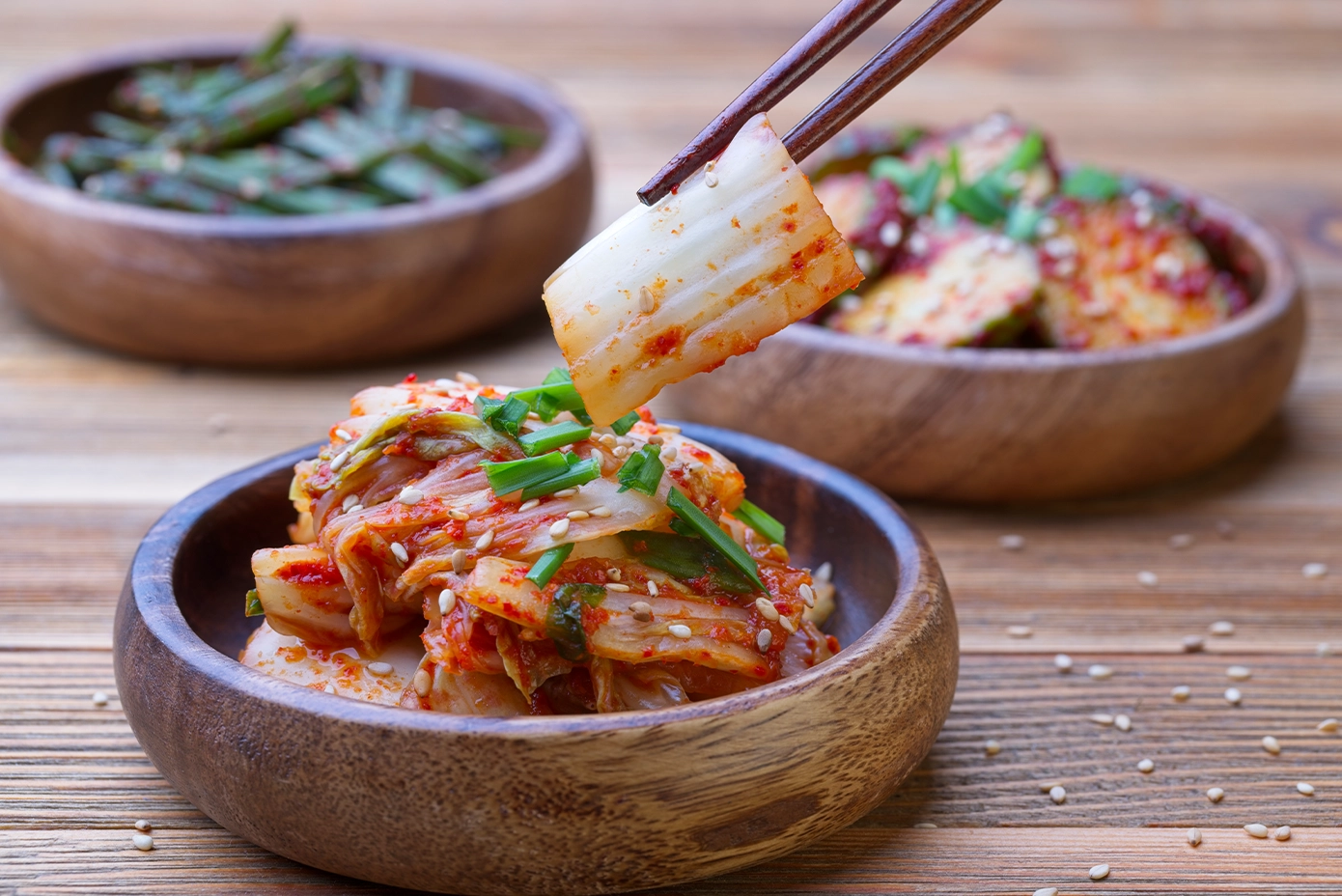
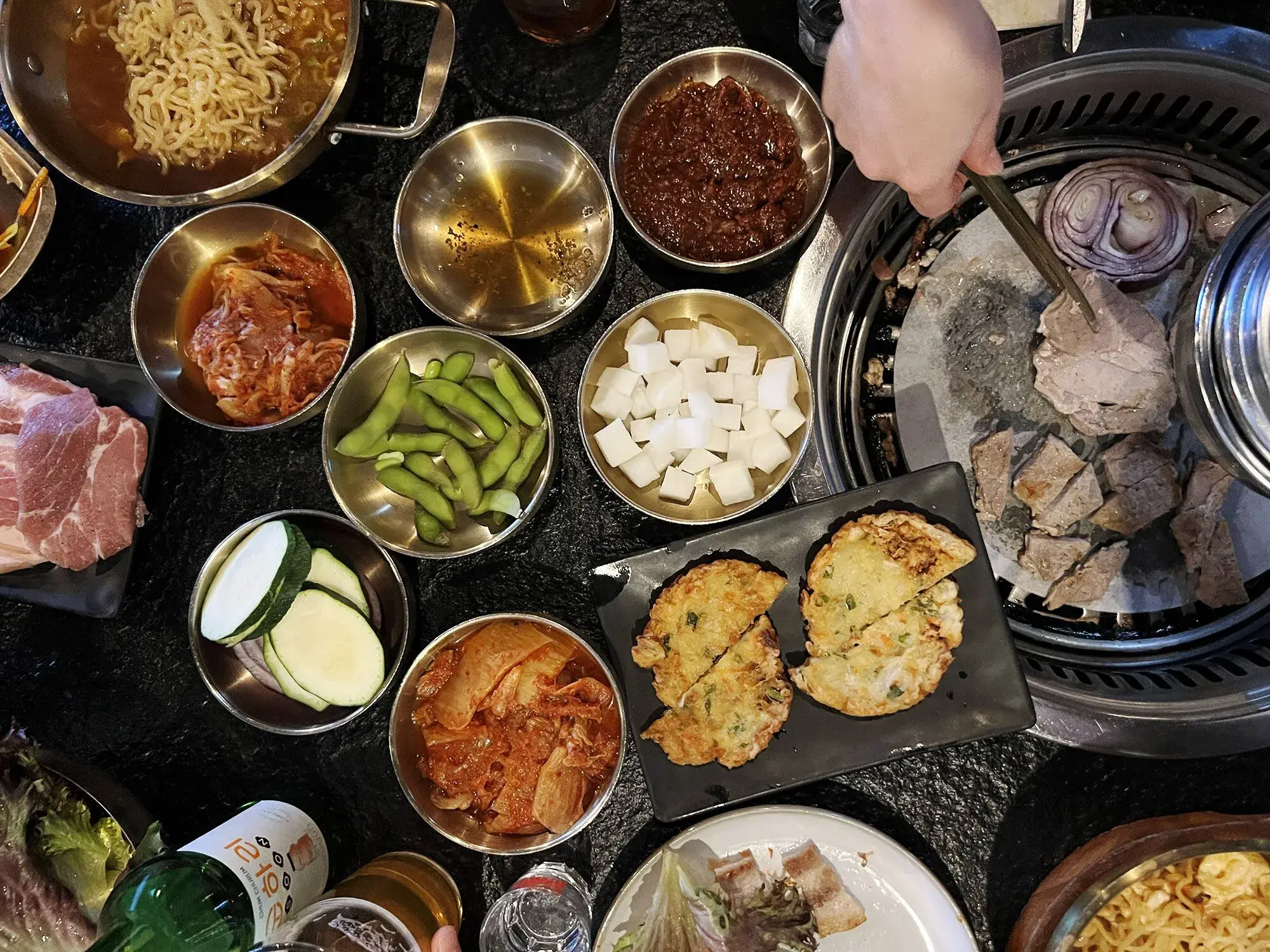
Order a main dish and 3-6 small plates come with it. Kimchi, bean sprouts, spinach, stir-fried anchovies, pickled radish. All free. They don't show up on the bill.
When they're empty, just say "banchan deo juseyo" or show them the empty plate. You can translate it on Papago and show your phone, or simply hold up the empty dish so the staff can see it. Don't feel awkward about it. Refills are always free. That's how Korean restaurants work.
You Pay at the Counter
Finish your meal, stand up, and walk to the counter near the entrance. That's where you pay. Sitting at the table and calling out for the check isn't how it's done in Korea.
That said, things are changing. Some tablet-order restaurants now have QR payment at the table. If you're not sure, just head to the counter. You can't go wrong.
There's No Tipping
Korea has no tipping culture. Restaurants, cafes, taxis, hotels, nowhere. The price on the bill is the total. If you leave money on the table, the staff might chase you down to return it.
If It's Red, It's Probably Spicy
See red in the menu photos? Good chance it's spicy. Tteokbokki, kimchi jjigae, jeyuk bokkeum, dakbokkeum-tang, all built on gochujang or gochugaru (red pepper paste or flakes). If you can't handle heat, go for non-red dishes: doenjang jjigae, galbitang, samgyetang, or bibimbap (just ask them to leave out the gochujang).
Don't Linger Too Long
Especially at popular lunch spots. If you've finished eating and sit chatting for over 30 minutes, you might get some looks, particularly when there's a line outside. Eat at the restaurant, then move to a cafe to keep the conversation going. That's the Korean rhythm. There's a reason there are so many cafes.
Convenience Stores: Korea's 24-Hour Kitchen
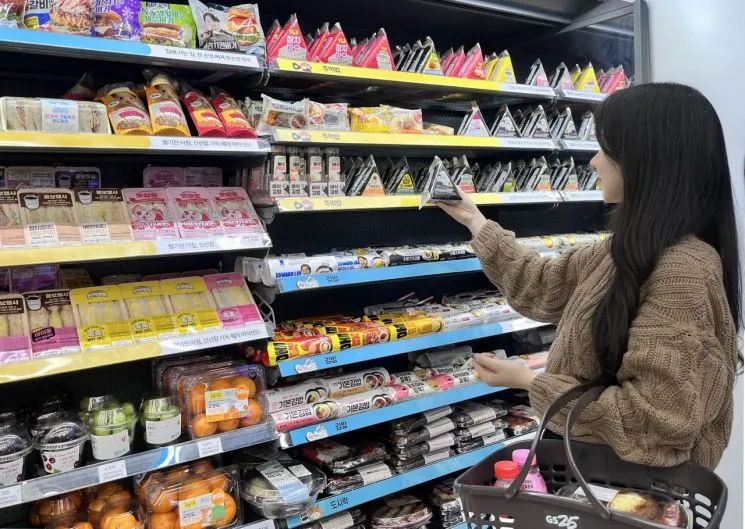
2 AM. You're hungry. No restaurants open near your hotel. Then you spot the glow of fluorescent lights. CU, GS25, 7-Eleven, Emart24, Korean convenience stores are open 24 hours, and the food quality is surprisingly close to a proper meal.
Triangle kimbap ₩1,200. Lunch box ₩4,000-5,500. Cup noodles ₩1,500. Pop it in the microwave for 30 seconds. The beep sounds, you pull it out, sit at the table outside the store. Steam rises off the top.
Bibimbap lunch box ₩4,500, tuna mayo triangle kimbap ₩1,300, banana milk ₩1,500. "Convenience store food is actually good" is not an exaggeration. The GS25 Kim Hyeja lunch box and CU Baek Jongwon lunch box series are celebrity-branded, and they're genuinely tasty. The convenience store is Korea's hidden restaurant.
Taxis: KakaoT vs Uber, the Real Numbers
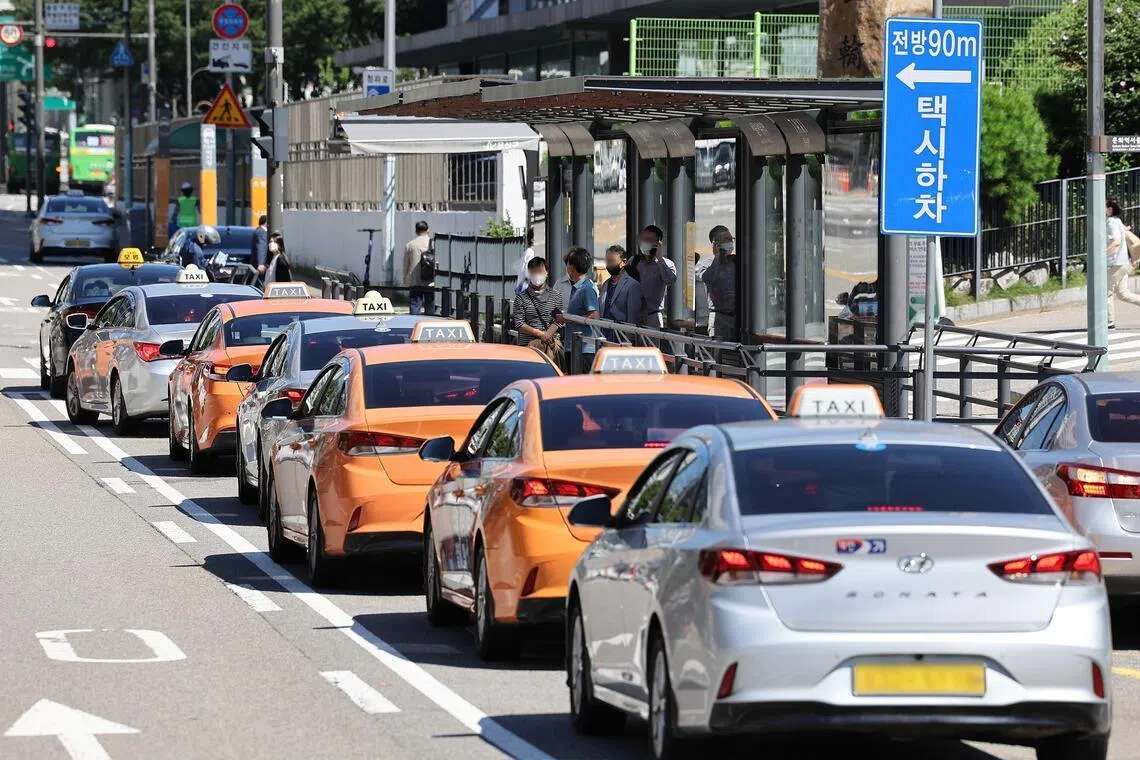
"Uber works great in Korea", you'll see this a lot. It's only half true.
KakaoT
90% of Korea's taxi market. 9.21 million monthly users. Seoul or Busan, you'll usually get a ride within 3 minutes.
It supports English, Japanese, and Chinese interfaces. Foreigners can use the app itself. The problem is payment. Only Korean bank cards link to it. Foreign cards don't work. You can select cash payment to get a ride, but you need a Korean phone number to sign up. Data-only eSIMs won't cut it.
Uber (Uber Korea)
7-8% market share in Seoul. 850,000 monthly users. Rebranded from UT to Uber Taxi in March 2024. Foreign cards work, the English interface is familiar, so the barrier to entry for foreigners is low.
Reality check: Matching is slow. Even in central Seoul, you might wait 5-10 minutes. Outside Seoul, you might not get a match at all. It's 850K vs 9.21M users. The driver pool gap is the wait time gap.
"Uber works for most situations" is an overstatement. If Uber can't find you a ride in Seoul, flagging down an empty taxi on the street might be faster.
The Practical Choice
| Situation | Recommendation |
|---|---|
| Central Seoul, want to pay with a foreign card | Uber |
| Central Seoul, want fast pickup | KakaoT (Korean number + cash) or flag one down |
| Outside Seoul | Flag a taxi or KakaoT |
| Getting to/from the airport | Limousine bus or AREX is more cost-effective |
K-ride (Seoul's official taxi app) also exists. Multi-language support. Built specifically for foreigners.
Shopping: Tax Refunds, 3 Ways
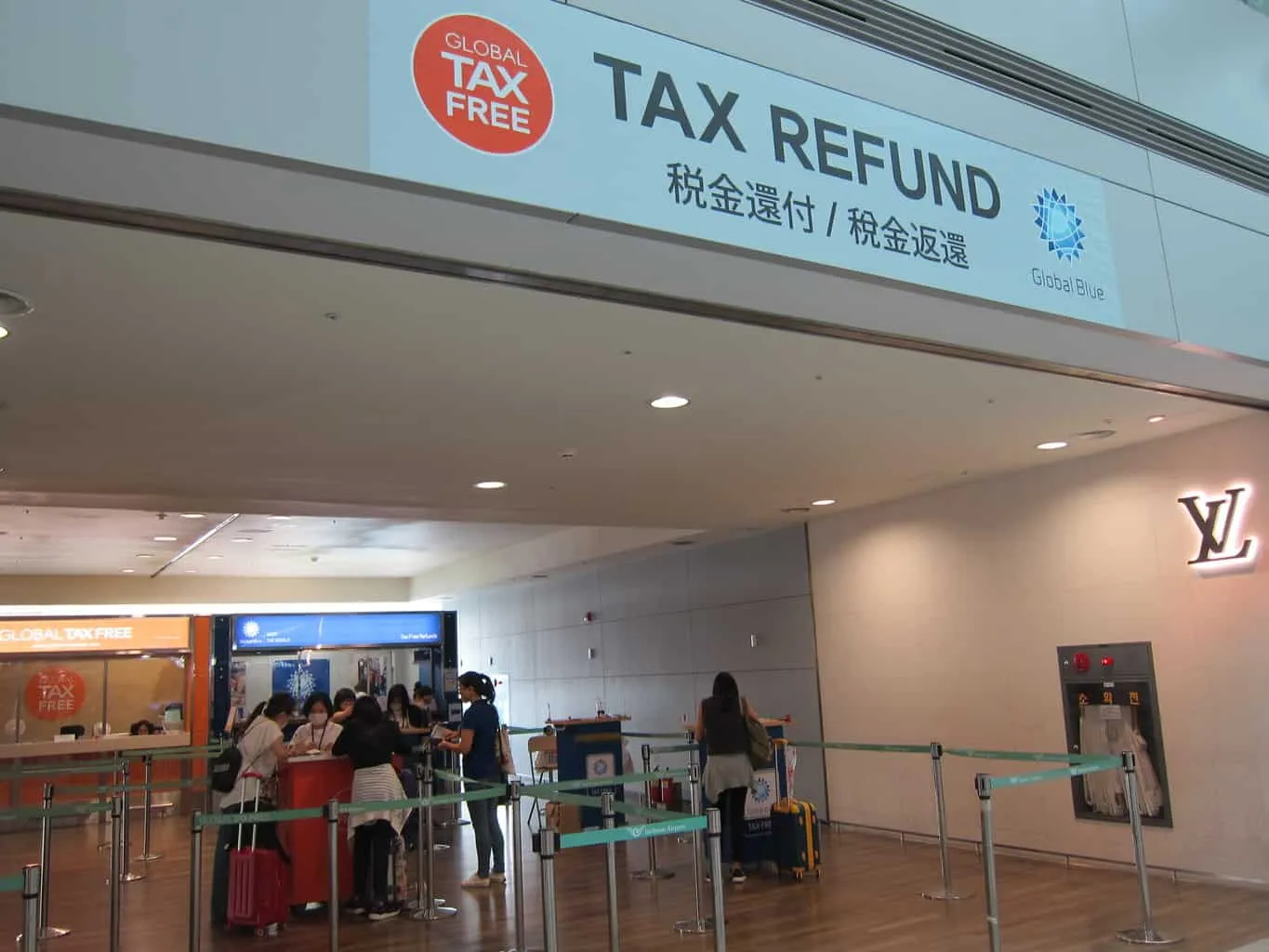
Foreign visitors can get the 10% VAT back on purchases in Korea. There are 3 methods, but you only need to know one.
1. Instant Refund: Just Remember This One
The limits went up significantly. Under ₩1,000,000 per transaction, up to ₩5,000,000 total, the tax gets deducted right at the register. Minimum purchase is ₩15,000. Show your passport at checkout and ask "Tax Free?" That's it. No airport lines needed.
2. Store Documents, Airport Refund
For purchases over ₩1,000,000 or when your total exceeds ₩5,000,000. Get the Tax Free paperwork at the store. At the airport before departure, scan the documents at the refund kiosk. You get the money back in cash or on your card. Lose the paperwork and you're out of luck, so keep it safe.
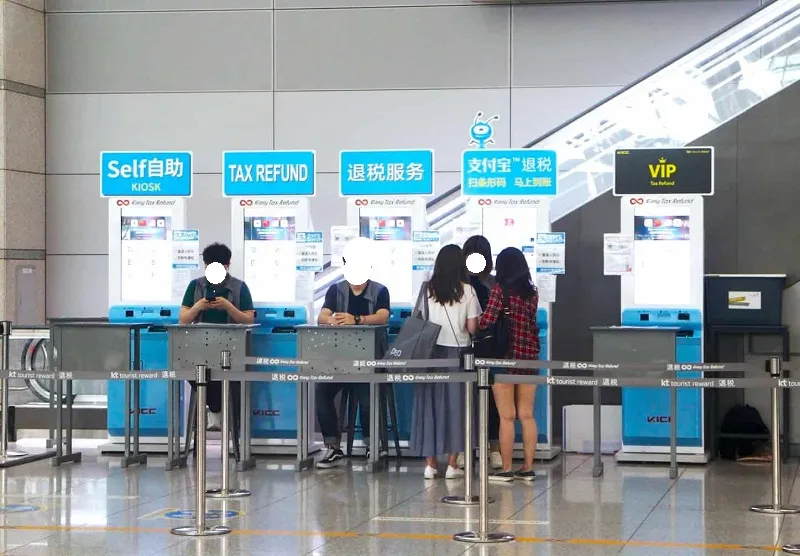
3. In-Mall Kiosks
Global Blue and Global Tax Free kiosks are in major shopping malls. You can get your refund right there.
Bottom line: Under ₩1,000,000? Use method 1 (instant refund). Over that? Method 2 (airport). Method 3 is a bonus. It sounds complicated, but in practice, just say "Tax Free?" and the store staff handle the rest.
Cultural Survival: Things That Make Life Easier
There Are No Trash Cans
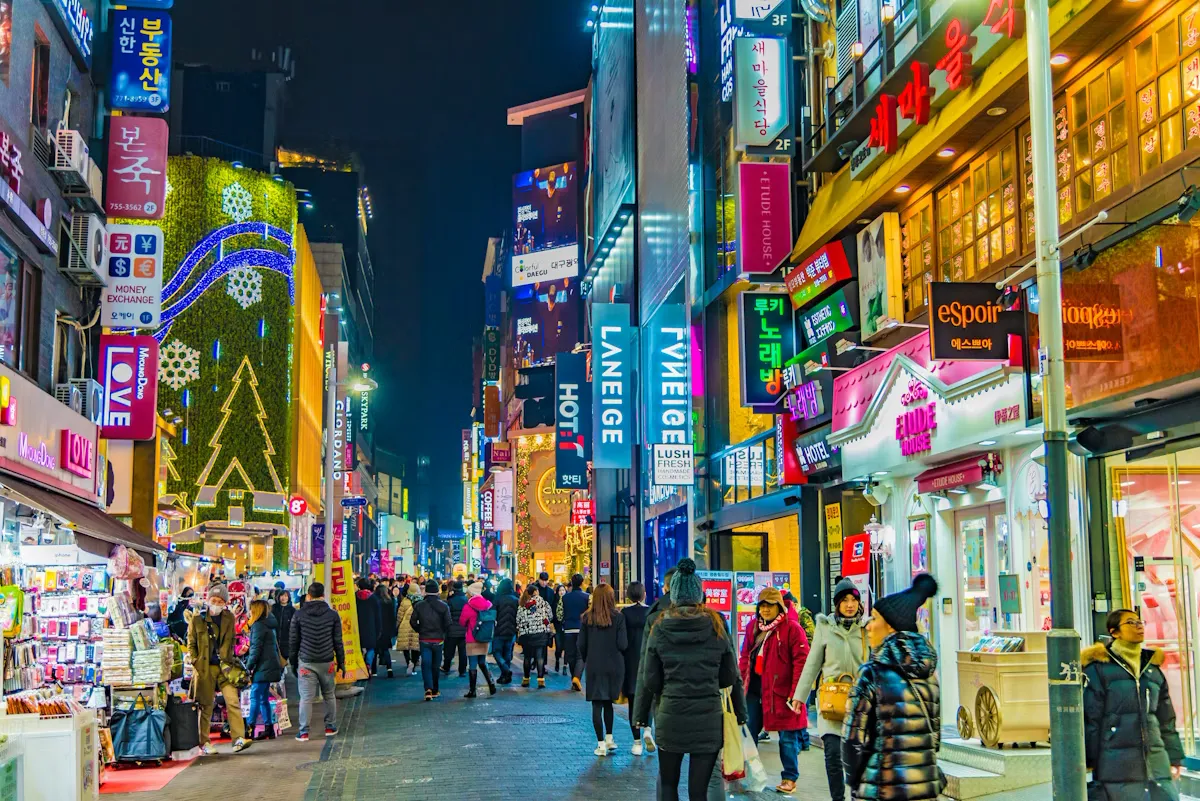
There are almost no public trash cans on the streets. Seriously. You'll buy a hotteok, eat it, and carry the greasy wrapper for three blocks. Korea takes recycling very seriously, the country has one of the highest recycling rates in the world. Toss your trash at a convenience store, use subway station bins, or take it back to your accommodation. Carrying a small plastic bag with you makes life a lot easier.
Don't Trust the Weather
Korean spring and fall have huge temperature swings. Same day: 5°C in the morning, 20°C in the afternoon. Summer (June-August) brings sudden downpours during monsoon season. Winter is dry with biting wind.
Layer your clothes and keep a foldable umbrella in your bag. Most Koreans do exactly the same.
People Who Approach You Near Universities
Near Hongdae, Sinchon, or Gangnam Station, someone might walk up and start speaking English. Almost always religious solicitation. It starts with "Do you have a moment?" If you're not interested, just say "No, thank you" and keep walking. Not dangerous. Just a time sink.
Restrooms Are Everywhere
Korean public restrooms are generally clean. Many have bidets. Subway stations, department stores, convenience stores, you can use them anywhere. There are no coin-operated pay toilets like in Europe.
Business Hours
Cafes typically open 8:00-22:00. Restaurants serve lunch 11:00-15:00, dinner 17:00-21:00. Convenience stores are 24 hours. Department stores run 10:30-20:00. Quite a few restaurants close on Mondays. Check Naver Map ahead of time to avoid wasted trips.
Emergency Contacts
| Purpose | Number | Notes |
|---|---|---|
| Police | 112 | |
| Fire / Ambulance | 119 | |
| Tourist Helpline | 1330 | 24 hours, KR/EN/JP/CN |
1330 is the number for foreign tourists. Lost? Got overcharged? Can't communicate with your taxi driver? Call, and they'll help in Korean, English, Japanese, or Chinese, including live interpretation. It's available 24 hours. In a taxi, hand your phone to the driver and the 1330 operator will translate your destination. Might be the most useful number in Korea.
More Reading
- Seoul Transit Cards 2026: The Complete Breakdown, T-Money, Climate Card, WOWPASS comparison and 5 traps that catch every tourist
- Your First Day in Korea, Immigration, airport transit, SIM, apps, and cash
Resources
Helpful links mentioned in this article.
We may earn a small commission at no extra cost to you.
Korea is a country that runs on systems. Banchan are free, tipping doesn't exist, convenience stores never close, and the subway comes every two minutes. The first two days feel foreign. Tablet ordering is awkward, paying at the counter is confusing, and you keep looking around for a trash can. By day three, your body remembers. You hold up an empty plate for more banchan, walk straight to the counter to pay, and stuff your trash into a convenience store bag. Once you know the rules, few countries are this easy to get around.
Got Questions? We Can Help
No question is too small. We'll look into it and get back to you.