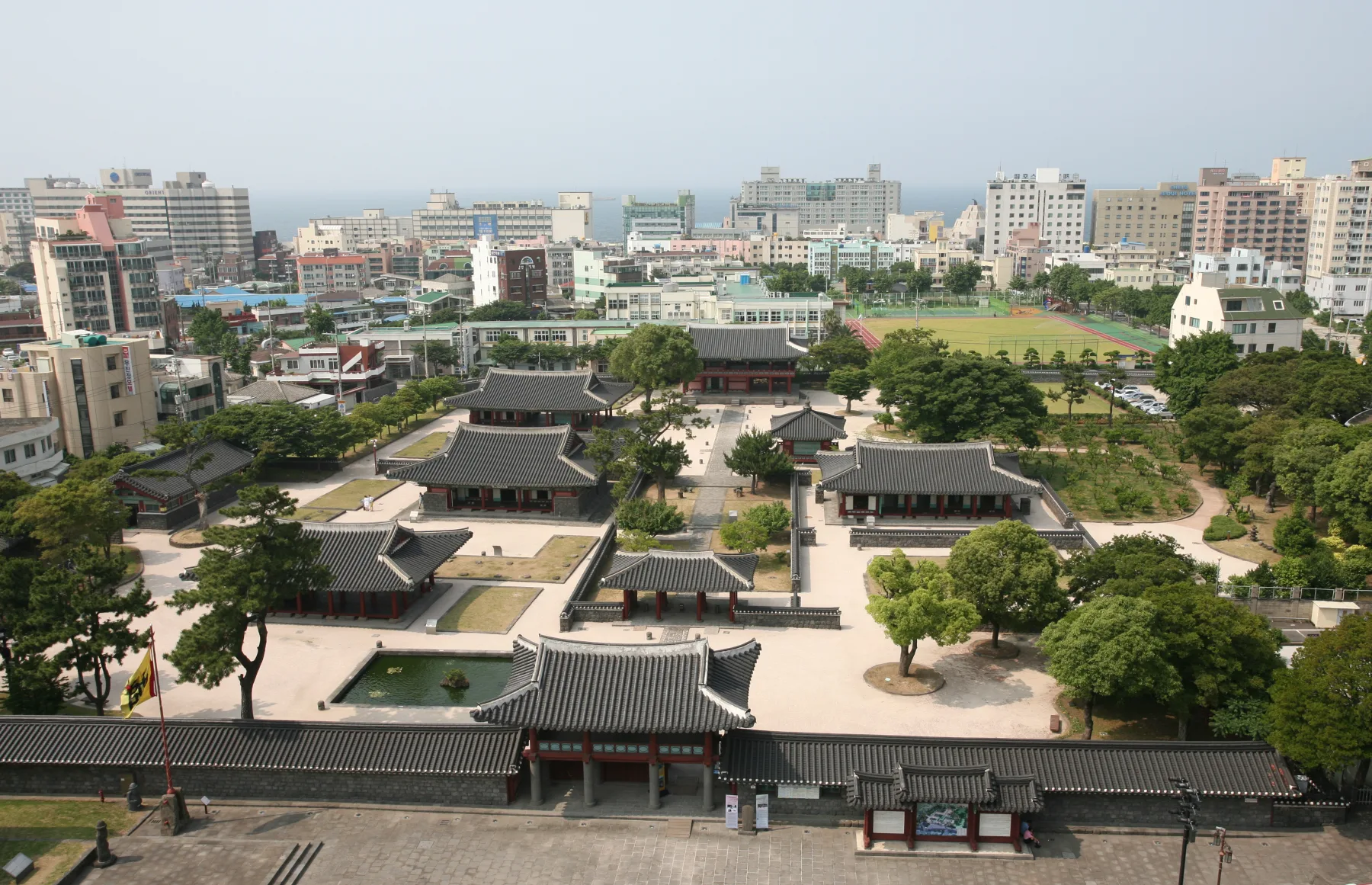
A windy half-day in Mokpo's old town: two museums and a short walk between them
Base the day on Mokpo Modern History Museums 1 and 2, add the National Routes 1 and 2 origin marker between them, and walk on to Ogeori Culture Center only if the wind drops. Includes hours, fees and the open spots to leave for a calmer day.
When the wind makes a long walk unappealing, build a half-day in Mokpo's old town around Mokpo Modern History Museums 1 and 2. They're about a three-minute walk apart, and the only outdoor stop between them is the marker for the start of National Routes 1 and 2.1 If the wind drops, walk on to Ogeori Culture Center. If it doesn't, leave exposed spots like Yudalsan and Mokpojin for another day. Both museums close on Mondays.
Check the hours before you go
Mokpo City lists Museum 1 as open 9 a.m. to 6 p.m., with tickets sold until an hour before closing.2 The Korea Tourism Organization's accessible-travel listing gives 5:30 p.m. as the closing time instead, but both put last entry at 5 p.m., so arrive before then. The same listing says that when a Monday is a public holiday, the museum closes the following day.3
Hours for the old town's indoor stops
- Place
- Mokpo Modern History Museum 1
- Hours
- 9 a.m. to 6 p.m., last entry 5 p.m.
- Closed
- Mondays
- Place
- Mokpo Modern History Museum 2
- Hours
- Tue to Sun, 9 a.m. to 6 p.m.
- Closed
- Mondays
- Place
- Ogeori Culture Center
- Hours
- 9 a.m. to 6 p.m.
- Closed
- Mondays; call to check Sundays and holidays
| Place | Hours | Closed |
|---|---|---|
| Mokpo Modern History Museum 1 | 9 a.m. to 6 p.m., last entry 5 p.m. | Mondays |
| Mokpo Modern History Museum 2 | Tue to Sun, 9 a.m. to 6 p.m. | Mondays |
| Ogeori Culture Center | 9 a.m. to 6 p.m. | Mondays; call to check Sundays and holidays |
Museum 1 costs ₩2,000 for adults, ₩1,000 for teenagers and military personnel and ₩500 for elementary school children; preschoolers enter free.4 Museum 2 is free.5
From Mokpo Station, where the KTX high-speed trains stop, take bus 10 from the Youth Culture Center (청소년문화센터) stop to the Mokpo Modern History Museum (목포근대역사관) stop, then walk two minutes.6 The travel app Triple puts the walk from the station at about 15 minutes.7 Drivers can use the free lot at Museum 2. Museum 1 has no parking of its own, and one family travel site reports that the Museum 2 lot fills up on weekends, so have a public lot nearby in mind.8
Museum 1, the former Japanese consulate and its air-raid shelter
Mokpo Modern History Museum 1
- 9 a.m. to 6 p.m.
- Last entry 5 p.m.
- Closed Mondays
- Adults ₩2,000
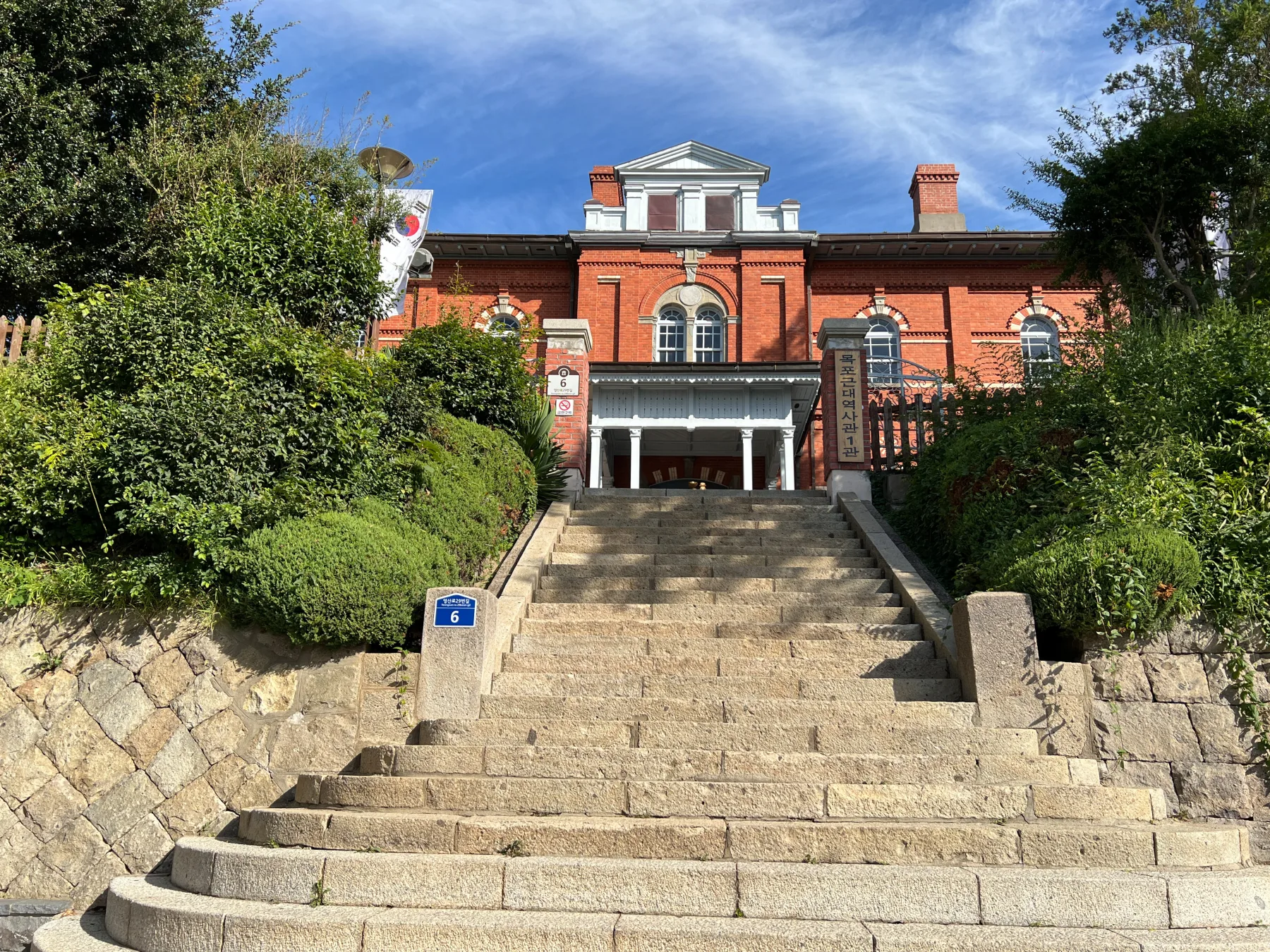
Museum 1 is a red-brick building put up in 1900 as the Japanese consulate, the oldest building in Mokpo. After liberation it housed Mokpo City Hall and later the Mokpo Cultural Center, and it reopened as a museum in 2014. Its seven themed sections run from Mokpojin, a Joseon-era naval base, through the port's opening in 1897 to resistance such as the April 8, 1919, independence protests. The last section has detailed models of the modern buildings around Ogeori, including the temple you can visit later, so you get a preview of the walk.9 Mokpo was the port where rice from the Honam plains and seafood from the southwest coast were shipped to Japan, which is why the city's tourism site says the consulate and the Oriental Development Company set up here.10
Behind the building is an air-raid shelter dug during the Pacific War. It's about 2 meters high and wide and 82 meters long; a siren sounds as you enter, and inside are re-creations of Koreans who were forced to dig it.11 The same family travel site warns that the dark tunnel and life-size figures can frighten young children, so talk it over with yours before you go in.12
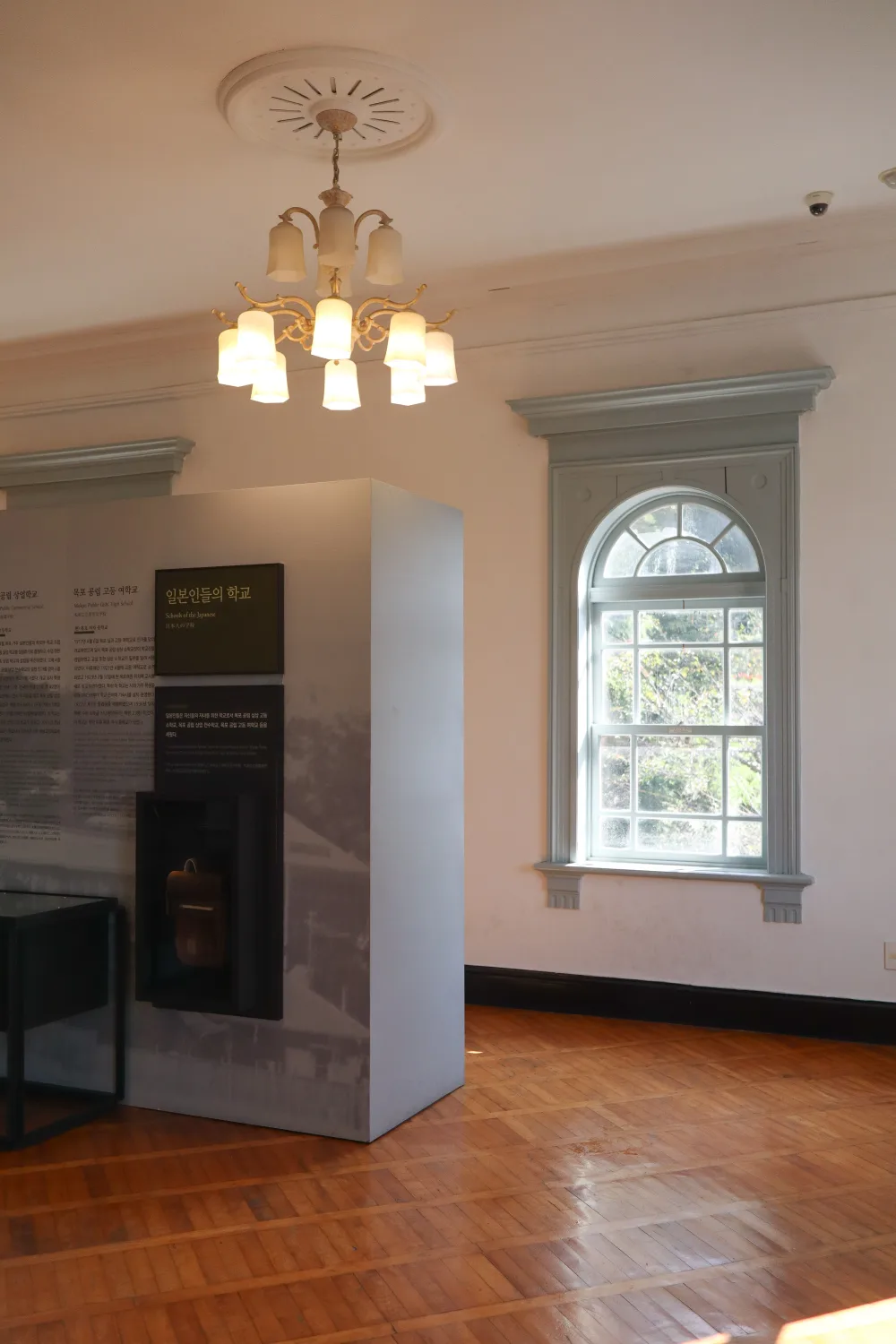
The museum sits on a hill, reached by stone steps like the ones in the photo at the top or by a sloping path. Since this is where you'll shelter from the wind, give the galleries and the shelter about an hour.
The road marker at the foot of the hill
National Routes 1 and 2 origin marker
- Outdoors
- At the foot of the path to Museum 1
Where the path to Museum 1 begins, about 30 meters from Museum 2, a monument marks the starting point of National Routes 1 and 2.13 Route 1 opened in 1911 and ran from Mokpo to Sinuiju, in what is now North Korea. After Mokpo Bridge opened, its starting point moved to Gohado island in May 2013. Route 2 started here and ran to Busan until 2001. A small road origin marker stands just in front of the monument.14
You only need a few minutes outside here, so it's an easy stop even on a gusty day.
Museum 2, the former Oriental Development Company branch
Mokpo Modern History Museum 2
- Tue to Sun, 9 a.m. to 6 p.m.
- Closed Mondays
- Free
Museum 2 occupies the Mokpo branch of the Oriental Development Company, built in 1921. The company led Japan's seizure of Korean farmland and the exploitation of Korean farmers. Only two of its branch buildings survive in South Korea, here and in Busan, and Mokpo's is the larger.15 After liberation it was used by the maritime police and the navy's military police. It was nearly torn down as a symbol of colonial rule before it became a museum in 2006.16
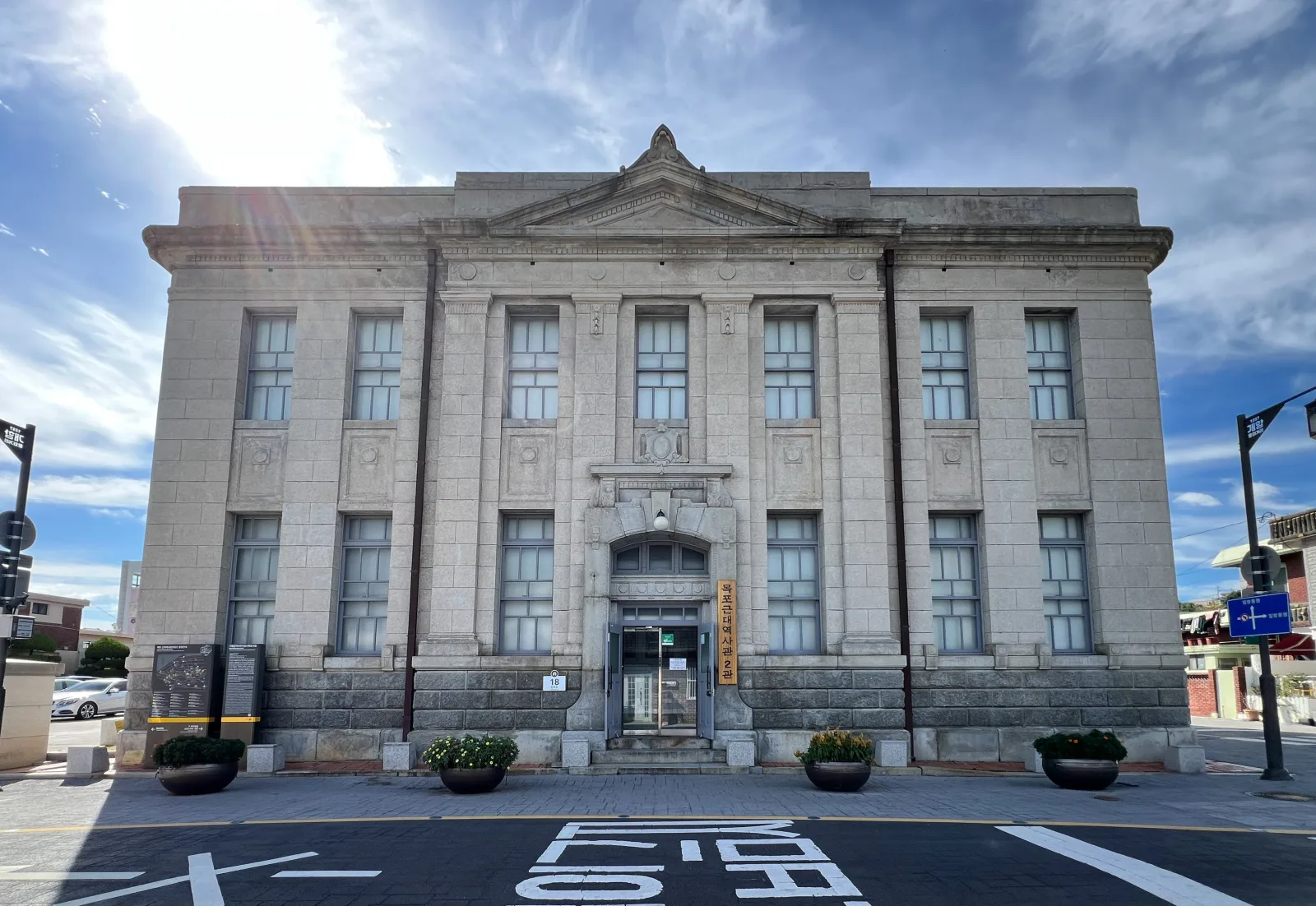
The first floor shows Mokpo's streets, buildings and daily life in the late 1920s, along with the company's large old vault, which now holds a game where you throw bombs at a virtual Oriental Development Company. The second floor covers independence movements of the 1920s, including the April 8 protests. Culture and tourism guides give 30-minute talks at 10:30 a.m., 11:30 a.m., 1:30 p.m. and 3 p.m. Parking is free, and the city's listing records no accessibility facilities.17
If the wind drops, walk to Ogeori Culture Center
Ogeori Culture Center
- 9 a.m. to 6 p.m.
- Closed Mondays
- Free
If the wind has eased, follow the main road toward Ogeori, the old five-way intersection. The city's tourism site puts the walk between the culture center and the route marker at about eight minutes, and says the building opened as a culture center in January 2010.18
It began around 1905 as the Mokpo branch of Higashi Honganji, the city's first Buddhist temple, and served as a church from 1957. Ogeori sat a little outside the center of the Japanese quarter, on the edge where Koreans and Japanese met.19 Its listing gives the closing days only as "every Monday, Sunday public holiday closed," which can be read more than one way, so if you're going on a Sunday or a holiday, call +82-61-245-8833 first.20
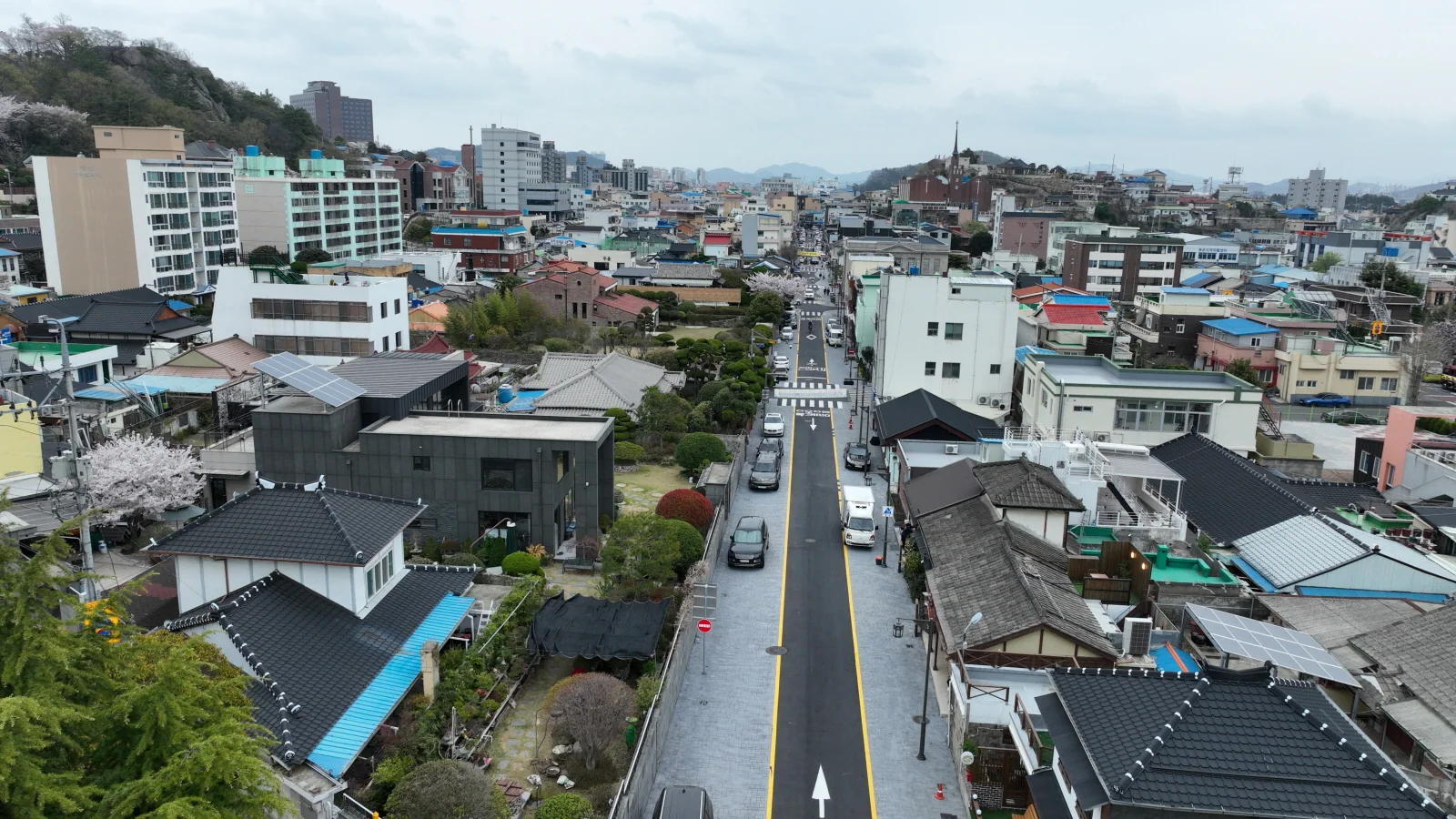
The area was registered as national heritage in 2018 as the Mokpo Modern History Cultural Space.21 The photo below looks down over it in April 2023.
Leave the exposed spots for a calmer day
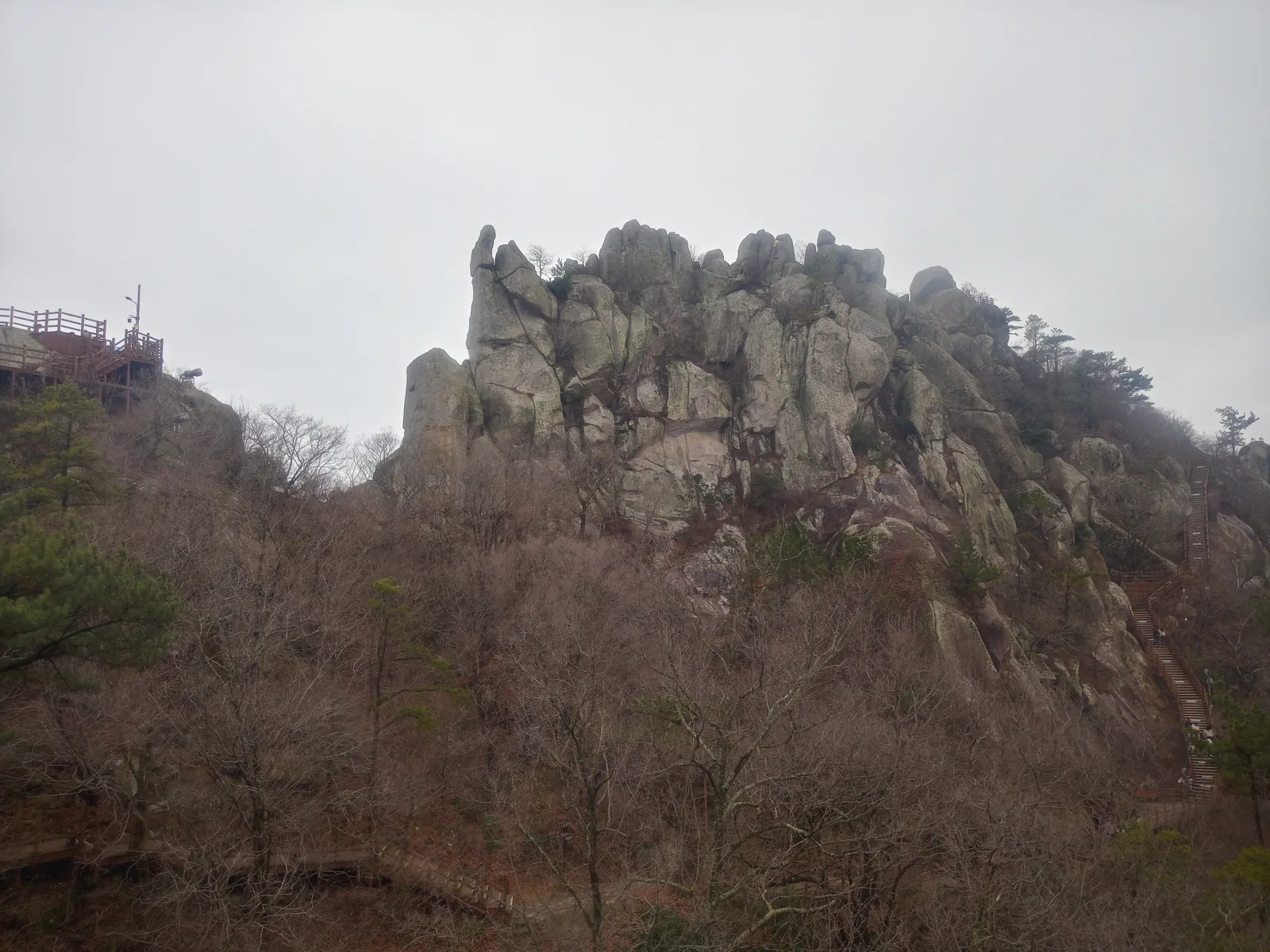
Yudalsan, the hill behind the old town, has rocky peaks with stairways climbing beside them, as the photo below shows. Mokpojin Historical Park looks out over the sea toward Samhakdo island.22 If the wind is bothering you, save these open places for another day and spend the time in the two museums instead.
An hour for Museum 1 and the shelter, 40 minutes for Museum 2 and half an hour to walk to Ogeori and back comes to about two and a half hours. In strong wind, drop Ogeori and keep to the two museums and the marker.
Places and visitor information
- Mokpo City Tourism, admission and hours (Korean)
- Mokpo City Tourism, Mokpo Modern History Museum 1 (Korean)
- Mokpo City Tourism, Mokpo Modern History Museum 2 (Korean)
- Mokpo City Tourism, National Routes 1 and 2 origin marker (Korean)
- Mokpo City Tourism, former Higashi Honganji Mokpo branch (Korean)
- Mokpo City Tourism, Mokpojin (Korean)
- Visit Mokpo, modern history theme tour
- Korea Tourism Organization accessible travel, Mokpo Modern History Museum 1 (Korean)
- Korea Heritage Service portal, Mokpo Modern History Cultural Space (Korean)
- Triple, Mokpo Modern History Museum (Korean)
- Mom-mom, Mokpo Modern History Museum 1 (Korean)